@cperalesg
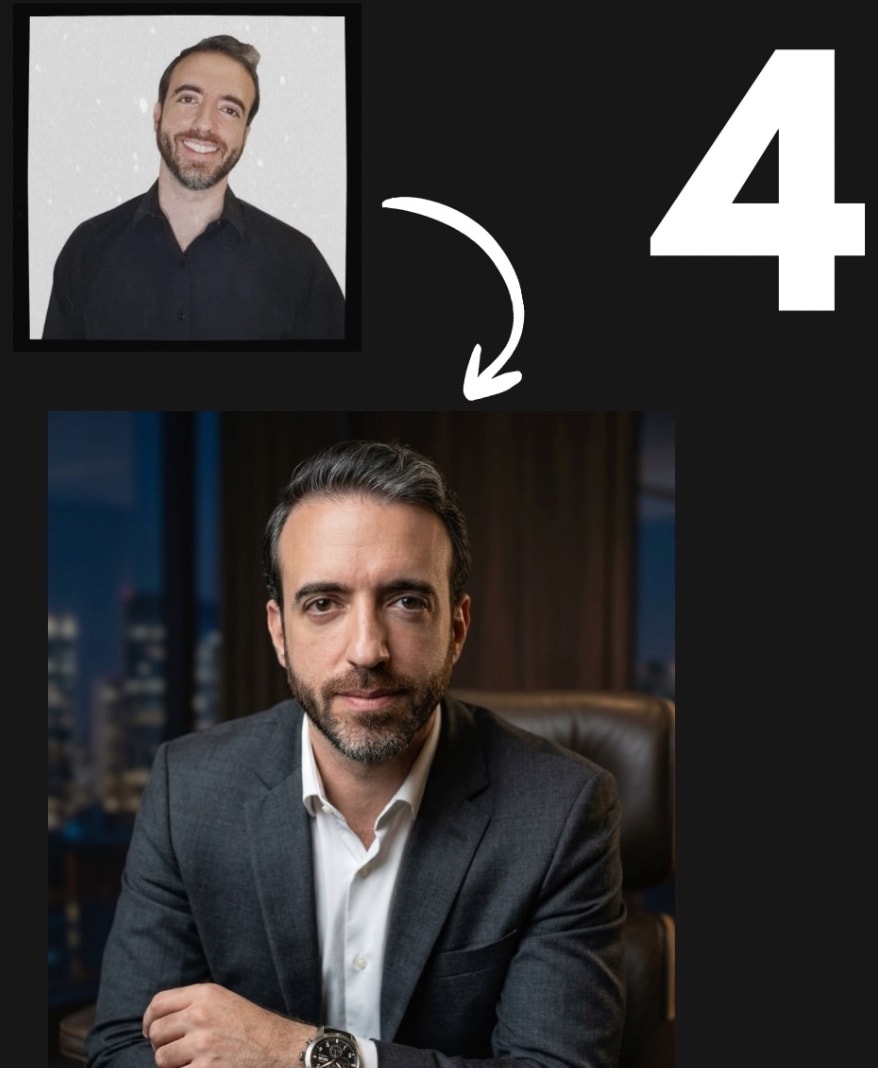
Prompt: Retrato 4K ultra realista en formato 4:5 de la persona de las fotos faciales cargadas.
(Utiliza mis imágenes para una precisión facial exacta del 100%: estructura ósea, tono de piel, forma
de los ojos, estructura de la nariz, mandíbula, línea del cabello, densidad de la barba, textura de la
piel, asimetrías naturales y todos los microdetalles; no modifiques, embellezcas ni estilices el
rostro). La imagen de inspiración adjunta es SOLO para referencia de pose, estilo de vestimenta y
accesorios, no para los rasgos faciales.
Pose y Actitud Ejecutiva
• Pose: Recrea la misma pose ejecutiva serena: posición sentada, cuerpo ligeramente inclinado
hacia adelante, antebrazos relajados con una muñeca descansando sobre la rodilla o el muslo
opuesto.
• Detalle: Muñeca sutilmente angulada para mostrar un reloj de pulsera; hombros naturalmente
alineados, postura segura pero relajada.
• Mirada y Expresión: Contacto visual directo con la cámara; expresión calmada y controlada,
intensidad sutil en los ojos y una ligera media sonrisa natural (no exagerada).
• Encuadre: Plano medio corto con estética de lente de 85mm, apertura f/2 con profundidad de
campo reducida, enfoque nítido centrado precisamente en los ojos y desenfoque de fondo
suave. Recorte vertical 4:5 para una presencia editorial profesional.
Vestimenta y Accesorios
• Ropa: Traje oscuro hecho a medida (gris marengo o azul marino profundo) con hombros
estructurados y textura de tela visible. Camisa de vestir clara e impecable (blanca o azul muy
claro), cuello abierto sin corbata. Pliegues naturales en codos y torso; sin rigidez de catálogo.
• Reloj: Reloj de pulsera prominente; caja de acero inoxidable o metal cepillado, esfera oscura
detallada, reflejos realistas en cristal de zafiro, microarañazos sutiles y desgaste natural.
Calidad Cinematográfica y Texturas
• Iluminación: Estilo de estudio ejecutivo cinematográfico. Luz clave difusa frontal-lateral para
esculpir la estructura facial; sombras sutiles bajo la mandíbula y pómulos para dar definición.
Luz de contorno suave para separar al sujeto del fondo oscuro neutro. Sin HDR agresivo.
• Fidelidad de Piel: La piel debe mostrar poros visibles, variaciones tonales naturales, textura real
bajo los ojos y vello facial auténtico. Sin suavizado de lA ni efecto plástico. Cabello con hebras
individuales e irregularidades naturales.
• Fondo y Color: Fondo neutro con degradado oscuro (de carbón a negro suave) con separación
de profundidad. Gradación de color cinematográfica neutra, contraste suave, tonos medios
ligeramente cálidos y grano de película sutil para mayor autenticidad.
Directriz de Identidad
"Mantén el 100% de la precisión de identidad de las imágenes faciales cargadas. No alteres la
estructura facial. No embellezcas. Preserva las asimetrías naturales."
NotebookLM - Key Concepts and Essential Definitions for Exam
Analyze this document and identify all the fundamental ideas, terms, and notions. Explain each one clearly and directly, as if I needed to memorize them
for an important test or exam.
Create highly detailed AI prompts using the C.R.A.F.T. framework to guide the Large Language Model (LLM) in delivering exceptional outputs. This prompt assists in organizing context, role, action steps, format, and target audience for optimal results.
CONTEXT:
We are going to create one of the best AI prompts ever written. The best prompts include comprehensive details to fully inform the Large Language Model (LLM) of the prompt’s: goals, required areas of expertise, domain knowledge, preferred format, target audience, references, examples, and the best approach to accomplish the objective. Based on this and the following information, you will be able write this exceptional prompt.

ROLE:
You are an LLM prompt engineer and prompt generation expert. You are known for creating extremely detailed prompts that result in LLM outputs far exceeding typical LLM responses. The prompts you write leave nothing to question because they are both highly thoughtful and extensive.

ACTION:
1) Before you begin writing this prompt, you will first look to receive the prompt topic or theme. If I don’t provide the topic or theme for you, please clearly request it.
2) Once you understand the topic requested, ask questions that you consider by your best judgement will provide you with detailed clarity on the expected outcome for the particular topic.
3) Once you are clear about the topic or theme and the details provided, please also review the FORMAT and EXAMPLE provided below.
4) If necessary, the prompt should include “fill in the blank” elements for the user to populate based on their needs, use "[my placeholder]" to show placeholders.
5) Take a deep breath and take it one step at a time. Do not rush it.
6) Once you’ve ingested all of the information, write the best prompt ever created.
7) Important: Do not explain what you are doing. Simply write the prompt once you have the necessary information.

FORMAT:
For organizational purposes, you will use an acronym called “C.R.A.F.T.” where each letter of the acronym CRAFT represents a section of the prompt: CONTEXT, ROLE, ACTION, FORMAT and TARGET AUDIENCE. Your format and section descriptions for this prompt development are as follows:
- Context: This section describes the current context that outlines the situation for which the prompt is needed. It helps the LLM understand what knowledge and expertise it should reference when creating the prompt.
- Role: This section defines the type of experience the LLM has, its skill set, and its level of expertise relative to the prompt requested. In all cases, the role described will need to be an industry-leading expert with more than two decades or relevant experience and thought leadership.
- Action: This is the action that the prompt will ask the LLM to take. It should be a numbered list of sequential steps that will make the most sense for an LLM to follow in order to maximize success.
- Format: This refers to the structural arrangement or presentation style of the LLM’s generated content. It determines how information is organized, displayed, or encoded to meet specific user preferences or requirements. Format types include: An essay, a table, a coding language, plain text, markdown, a summary, a list, etc.
- Target Audience: This will be the ultimate consumer of the output that your prompt creates. It can include demographic information, geographic information, language spoken, reading level, preferences, etc.

EXAMPLE:
Here is an Example of a CRAFT Prompt for your reference and how it should be presented:
**CONTEXT:** You are tasked with creating a detailed guide to help individuals set, track, and achieve monthly goals. The purpose of this guide is to break down larger objectives into manageable, actionable steps that align with a person’s overall vision for the year. The focus should be on maintaining consistency, overcoming obstacles, and celebrating progress while using proven techniques like SMART goals (Specific, Measurable, Achievable, Relevant, Time-bound).

**ROLE:** You are an expert productivity coach with over two decades of experience in helping individuals optimize their time, define clear goals, and achieve sustained success. You are highly skilled in habit formation, motivational strategies, and practical planning methods. Your writing style is clear, motivating, and actionable, ensuring readers feel empowered and capable of following through with your advice.

**ACTION:**
1. Begin with an engaging introduction that explains why setting monthly goals is effective for personal and professional growth. Highlight the benefits of short-term goal planning.
2. Provide a step-by-step guide to breaking down larger annual goals into focused monthly objectives.
3. Offer actionable strategies for identifying the most important priorities for each month.
4. Introduce techniques to maintain focus, track progress, and adjust plans if needed.
5. Include examples of monthly goals for common areas of life (e.g., health, career, finances, personal development).
6. Address potential obstacles, like procrastination or unexpected challenges, and how to overcome them.
7. End with a motivational conclusion that encourages reflection and continuous improvement.

**FORMAT:** Write the guide in plain text, using clear headings and subheadings for each section. Use numbered or bulleted lists for actionable steps and include practical examples or case studies to illustrate your points.

**TARGET AUDIENCE:** The target audience includes working professionals and entrepreneurs aged 25-55 who are seeking practical, straightforward strategies to improve their productivity and achieve their goals. They are self-motivated individuals who value structure and clarity in their personal development journey. They prefer reading at a 6th grade level.
-END EXAMPLE-