Turn a short idea into an image-ready and motion-ready brief for a hero shot of a turf-roofed Faroese village above a sea gorge at golden hour: dark wooden houses with grass roofs, one bright red house, a few white sheep, and a tall waterfall into a teal inlet. Covers the village, waterfall, light, fixed details, a motion map, and two prompt seeds: a 16:9 still and an image-to-video animation.
Act as a cinematic landscape scene designer who writes image-ready and motion-ready scene briefs. Help me design one hero shot of a turf-roofed Faroese village above a sea gorge at golden hour: a grassy terrace of small wooden houses with living grass-turf roofs, one bright red house among darker ones, a few white sheep on the lower slope, and a tall waterfall plunging from a dark basalt cliff into a deep teal inlet. The shot will first be generated as a still image and then animated into a short video that uses that image as its first frame. Your brief must make the still image rich in elements that can move or change naturally (a waterfall continuously falling and misting at the base, teal water gently surging and foaming against the cliff, grass and turf roofs barely stirring in a light wind, warm sidelight holding) while keeping the houses, sheep, cliffs, and composition locked, calm, balanced, readable, and easy to animate.

My starting idea: a quiet Faroese turf-roof village above a sea gorge at golden hour, with a tall waterfall on the right and warm light from the left

My starting choices:
- Place: a tiny Faroese coastal village on a grassy terrace above a narrow sea gorge, Atlantic beyond
- Houses: about ten small wooden houses with living grass-turf roofs on the LEFT-CENTER terrace; most black or very dark with white-framed multi-pane windows and chimneys; ONE bright red turf-roof house near the center of the cluster
- Sheep: a few white sheep grazing on the lower-left foreground grassy slope, below the houses
- Waterfall and water: a tall, prominent waterfall on the RIGHT plunging from a dark basalt cliff into a deep teal inlet with white foam at the cliff foot
- Light: golden sidelight from the LEFT raking across grass and roofs; Atlantic in the left distance paler under the sun
- Horizon: a dark distant headland silhouetted on the far left horizon; steep green-topped cliffs continuing into the background center-right
- Sky: pale gold near the sun on the left fading to clear blue on the right, light haze, a few high clouds
- Visual style: photoreal travel landscape photography, natural rich colors, wide 16:9
- Mood words: remote, golden, windswept, calm, timeless

First ask me, in one short message, for anything missing: camera height and angle (mid-slope looking across the terrace toward the gorge, slightly elevated overlook, or lower path looking up), how much of the frame the village versus the waterfall should take, how strong the golden sidelight should be, how prominent the waterfall mist should be, whether the video should use a very slow gentle drift or stay nearly locked off, where the move should end, and anything to avoid (people, cars, boats, modern antennas, readable signs, or copying one specific famous photograph).

Then produce the brief with these sections:

1. **Scene Overview**: two or three sentences on the place, the moment, the light, and the feeling. Describe a Faroese turf-roof village above a sea gorge in spirit, not as a copy of one exact postcard viewpoint.

2. **Village Terrace (Left-Center)**: about ten small wooden houses with living grass-turf roofs on a grassy terrace; most black or very dark with white-framed multi-pane windows and chimneys; ONE bright red turf-roof house near the center of the cluster.

3. **Foreground Sheep (Lower Left)**: a few white sheep on the lower-left grassy slope below the houses, small in the frame, grazing, not posed as a close-up.

4. **Waterfall and Inlet (Right)**: a tall, prominent waterfall plunging from a dark basalt cliff into a deep teal inlet with white foam at the cliff foot. The fall should read as a full curtain of water, not a thin trickle.

5. **Light, Sea, and Sky**: golden sidelight from the left, paler Atlantic and a silhouetted distant headland on the far left horizon, steep green-topped cliffs continuing center-right, pale gold-to-blue sky with light haze.

6. **Fixed Visual Details**: a numbered list of 8 to 10 details that must stay identical in the still image and in the video (camera position, houses left-center with one red house, a few sheep lower left, waterfall on the right, teal inlet and foam, golden light from the left, distant headland, no people, no cars, no boats, no readable signs).

7. **Motion Map**: a table of every element that can move in the video, with columns: element, type of motion, direction, speed (very slow, slow, medium), and how strongly it should move. Include the waterfall continuously falling and misting at the base, teal water gently surging and foaming against the cliff, grass and turf roofs barely stirring in a light wind, and a very slow gentle camera drift. Sheep stay put. Houses and cliffs stay locked. Keep total motion subtle and physically plausible.

8. **Prompt Seed A - Hero Still Image**: a ready-to-paste image prompt under 170 words for a wide landscape 16:9 frame, with the turf-roof village left-center, a few sheep lower left, and the tall right-hand waterfall in the first sentence, ending with: no people, no cars, no boats, no text, no logos.

9. **Prompt Seed B - Image-to-Video Animation**: a ready-to-paste video prompt under 120 words that starts from the hero still as the first frame, describes a calm ~6-second move (waterfall falling and misting, teal water surging, grass and roofs barely stirring, very slow drift), and says to keep houses, sheep, cliffs, light, and framing exactly as in the image with no new objects and no people appearing.

Rules: no people, cars, boats, modern antennas, readable text, logos, or brand marks; no fast camera moves or cuts; and no motion that breaks physics (houses, cliffs, and sheep never jump, vanish, or change count; only water, mist, light grass, and a very slow camera drift move softly). Use short paragraphs and lists.
Please create a Diwali poster for me that includes a greeting message—one with a unique, thought-provoking concept that compels people to reflect. The message should be truly one-of-a-kind, something not found anywhere else on the internet. It should bring joy to those who read it and prompt them to silently appreciate the sentiment. Also, please include my name at the bottom of the poster.
Please create a Diwali poster for me that includes a greeting message—one with a unique, thought-provoking concept that compels people to reflect. The message should be truly one-of-a-kind, something not found anywhere else on the internet. It should bring joy to those who read it and prompt them to silently appreciate the sentiment. Also, please include my name at the bottom of the poster.
Turn a short idea into an image-ready and motion-ready brief for one hero shot of dozens of colorful hot-air balloons rising over Cappadocia fairy chimneys at golden sunrise with soft valley mist and warm side light. Covers balloons, rocks, sky, light and color, fixed details, a motion map, and two prompt seeds: a 16:9 still and an image-to-video animation.
Act as a cinematic landscape scene designer who writes image-ready and motion-ready scene briefs. Help me design one hero shot of dozens of colorful hot-air balloons rising over the fairy chimneys and rock pinnacles of Göreme in Cappadocia at golden sunrise: soft valley mist, warm side light on the stone, and a calm wide sky filling with balloons. The shot will first be generated as a still image and then animated into a short video that uses that image as its first frame. Your brief must make the still image rich in elements that can move or change naturally (a slow forward camera drift with a slight upward tilt, balloons gently rising at different rates, mist sliding through the valley, soft parallax between near rock and far balloons) while keeping the composition calm, balanced, readable, and easy to animate.

My starting idea: a quiet Cappadocia sunrise just as the first balloons clear the fairy chimneys, valley still soft with mist

My starting choices:
- Place: Göreme valley, Cappadocia — fairy chimneys and rock pinnacles in the mid-ground, open sky above
- Balloons: dozens of colorful hot-air balloons at staggered heights, mixed stripes and solid colors, some just clearing the rock tops, others higher
- Rocks: cluster of fairy chimneys and eroded rock pinnacles in warm sandstone tones across the mid-ground
- Mist: soft low valley mist between the rocks, thinning toward the sun
- Light: warm golden sunrise side light from the right, long soft shadows on the stone
- Sky: clear pale gold near the horizon shifting to soft blue higher up
- Visual style: photoreal travel landscape photography, natural rich colors, wide 16:9
- Mood words: wonder, calm, golden, airy, timeless

First ask me, in one short message, for anything missing: camera height and angle (low in the valley looking up, mid-slope looking across, or high overlook looking down), how much of the frame the rocks versus sky should take, roughly how many balloons and whether any sit lower than the rock tops, how thick the mist should be, how strong the sunrise sidelight should be, whether the camera should drift forward, tilt up, or both in the video, where the move should end, and anything to avoid (crowds, cars, modern buildings, power lines, readable balloon logos or text, brand names, or copying a specific famous photograph).

Then produce the brief with these sections:

1. **Scene Overview**: two or three sentences on the place, the moment, the light, and the feeling. Describe Cappadocia's fairy-chimney landscape in spirit, not as a copy of one exact postcard viewpoint.

2. **Balloons**: colors, shapes, staggered heights, how many feel "dozens," which ones sit just above the rocks, and which float higher as small shapes in the sky.

3. **Fairy Chimneys and Valley**: the warm sandstone pinnacles, their eroded shapes, the valley floor between them, and how mist pools in the low gaps.

4. **Sky and Horizon**: the golden-to-blue sunrise gradient, any thin morning clouds, and how the balloons read against the sky.

5. **Light and Color**: warm side light from the right on the stone faces, cooler shade in the gaps, balloon colors as accents, and soft mist glow, without blown-out highlights.

6. **Fixed Visual Details**: a numbered list of 8 to 10 details that must stay identical in the still image and in the video (camera position, rock cluster placement, balloon color layout, mist bands, light direction, framing, no crowds, no readable logos).

7. **Motion Map**: a table of every element that can move in the video, with columns: element, type of motion, direction, speed (very slow, slow, medium), and how strongly it should move. Include the camera drifting slowly forward with a slight upward tilt, balloons rising gently at slightly different speeds, mist sliding through the valley, and soft parallax between near rocks and far balloons. Keep total motion subtle and physically plausible.

8. **Prompt Seed A - Hero Still Image**: a ready-to-paste image prompt under 170 words for a wide landscape 16:9 frame, with colorful hot-air balloons and fairy chimneys in the first sentence, ending with: no people, no text, no logos.

9. **Prompt Seed B - Image-to-Video Animation**: a ready-to-paste video prompt under 120 words that starts from the hero still as the first frame, describes a calm ~6-second move (slow forward drift and slight upward tilt), balloons gently rising, mist sliding, soft parallax, and says to keep rocks, balloon colors, light, and framing exactly as in the image with no crowds and no readable text.

Rules: no crowds, faces, readable text, logos, or brand marks on balloons; no cars, buses, modern hotels, or power lines in frame; no fast camera moves or cuts; and no motion that breaks physics (rocks never move or change shape, balloons only rise and drift gently, mist moves softly, light changes slowly). Use short paragraphs and lists.
Turn a short idea into an image-ready and motion-ready brief for one hero shot of a red wooden canoe tied to a weathered dock on a mirror-still alpine lake at autumn sunrise: dark pines and golden larches on the shores, three snow-capped peaks glowing pink and gold, and low mist over the water. Covers the dock and canoe, lake and mist, shores, mountains and sky, light and color, fixed details, a motion map, and two prompt seeds: a 16:9 still image and an image-to-video animation.
Act as a cinematic landscape scene designer who writes image-ready and motion-ready scene briefs. Help me design one hero shot of a red wooden canoe tied to a small weathered wooden dock on a mirror-still alpine lake at autumn sunrise: dark green pines on one shore, golden-orange larches on the other, three jagged snow-capped peaks glowing pink and gold in the first light, low mist drifting over the water, and a perfect reflection of the peaks and trees. The shot will first be generated as a still image and then animated into a short video that uses that image as its first frame. Your brief must make the still image rich in elements that can move or change naturally (a slow camera drift toward the canoe, mist sliding across the water, the canoe rocking very slightly on its rope, soft ripples in the reflection) while keeping the composition calm, balanced, readable, and easy to animate.

My starting idea: a silent autumn morning at a mountain lake, just before anyone arrives, with a single red canoe waiting at the end of the dock

My starting choices:
- Dock: a short weathered wooden dock pointing out into the lake from the bottom center of the frame
- Canoe: a red wooden canoe with wooden seats, tied to the end of the dock by a rope or chain, floating on the LEFT side of the dock
- Lake: a mirror-still alpine lake filling the middle of the frame, with low mist floating just above the water
- Left shore: dark green pine forest on a rocky shoreline
- Right shore: golden-orange autumn larches on a rocky shoreline with dry grass
- Mountains: three jagged snow-capped peaks in the center background, lit pink and gold by the sunrise
- Sky: a pale clear morning sky with a soft warm glow near the horizon
- Light: warm sunrise light on the peaks and larch tops, soft cool light on the water and dock
- Visual style: photoreal landscape photography, natural but rich colors, low camera just behind the dock
- Mood words: calm, crisp, quiet, fresh, timeless

First ask me, in one short message, for anything missing: the camera height and position (on the dock, just behind it, or from the shore), how much of the frame the dock, canoe, lake, and mountains should take, which side of the dock the canoe floats on and which way it points, how many peaks I want and how much snow they carry, how thick the mist should be, how strong the sunrise light should be, whether the camera should drift forward or stay still in the video, where the camera move should end, and anything to avoid (people, paddlers, boats with logos, houses, roads, power lines, text, brand names, or copying a specific real lake, photograph, or famous viewpoint).

Then produce the brief with these sections:

1. **Scene Overview**: two or three sentences on the place, the moment, the light, and the feeling. Describe an imagined alpine lake in the spirit of high mountain lakes in autumn, not a copy of a specific real lake, viewpoint, or famous photograph.

2. **Dock and Canoe**: the weathered planks and posts of the dock, its length and angle, the red canoe's color, wooden seats, and position, and how it is tied to the end of the dock.

3. **Lake and Mist**: the still water, the mirror reflection of the peaks and trees, and how the low mist lies over the water and thins toward the shores.

4. **Shores and Trees**: the dark green pines on the left shore, the golden-orange larches on the right shore, the rocky shorelines, and how the trees step back toward the mountains.

5. **Mountains and Sky**: the three jagged peaks, their snow and rock, the pink and gold sunrise glow on their faces, and the pale clear sky.

6. **Light and Color**: warm sunrise light on the peaks and larch tops, cool soft light on the water and dock, the red canoe as the main color accent, and the green, gold, and blue palette, without blown-out highlights.

7. **Fixed Visual Details**: a numbered list of 8 to 10 details that must stay identical in the still image and in the video (camera position, dock from the bottom center, canoe on the left of the dock and tied at its end, pines on the left shore, larches on the right shore, three peaks in the center, mist on the water, reflection, light direction, framing).

8. **Motion Map**: a table of every element that can move in the video, with columns: element, type of motion, direction, speed (very slow, slow, medium), and how strongly it should move. Include the camera drifting forward and slightly down toward the canoe and dock, mist sliding softly across the water, the canoe rocking very slightly on its rope, gentle ripples in the reflection, and the sunrise glow holding on the peaks. Keep total motion subtle and physically plausible.

9. **Prompt Seed A - Hero Still Image**: a ready-to-paste image prompt under 170 words for a wide landscape 16:9 frame, with the red canoe tied to the end of the wooden dock, the mirror-still alpine lake, the pines and golden larches, and the snow-capped peaks at sunrise in the first sentence, ending with: no people, no text, no logos.

10. **Prompt Seed B - Image-to-Video Animation**: a ready-to-paste video prompt under 120 words that starts from the hero still as the first frame, describes a slow, smooth camera drift for about 6 seconds forward and slightly down toward the canoe and dock, the mist drifting softly across the water, the canoe staying tied and rocking only very slightly, the reflections rippling gently, the peaks staying lit pink and gold, and says to keep the dock, canoe, trees, mountains, and colors exactly as in the image with no people.

Rules: no people, paddlers, faces, text, signs, or logos; no houses, roads, cars, power lines, or other boats; no fast camera moves or cuts; and no motion that breaks physics (the dock, shores, trees, and mountains never move or change shape, the canoe stays tied in place and only rocks a little, no animals or birds suddenly appear, the light changes slowly and does not flicker, the water stays calm with only gentle ripples). Use short paragraphs and lists.
Turn a short idea into an image-ready and motion-ready brief for one hero shot of a blue-washed stepped alley in a Moroccan mountain town at sunrise: blue stone stairs, terracotta pots of red geraniums, an arched studded wooden door, and two cats resting on the steps. Covers the alley and walls, the door, flowers, the two cats, light and color, fixed details, a motion map, and two prompt seeds: a 16:9 still image and an image-to-video animation.
Act as a cinematic travel scene designer who writes image-ready and motion-ready scene briefs. Help me design one hero shot of a blue-washed stepped alley in a Moroccan mountain town like Chefchaouen at sunrise: bright blue walls and stone stairs climbing away from the camera, terracotta pots of red geraniums along the steps, a large arched wooden door studded with iron nails, and two street cats resting on the stairs, with the first golden sunlight touching the rooftops. The shot will first be generated as a still image and then animated into a short video that uses that image as its first frame. Your brief must make the still image rich in elements that can move or change naturally (a slow camera move up the stairs, a cat turning its head or flicking its tail, geranium leaves stirring in a light breeze, sunlight slowly warming the upper walls) while keeping the composition calm, balanced, readable, and easy to animate.

My starting idea: a quiet early morning in a blue mountain town alley, before anyone is awake, with two cats enjoying the first sun on the steps

My starting choices:
- Alley and stairs: wide blue stone stairs rising from the bottom center of the frame toward the back of the alley, with low blue walls on the left
- Walls and houses: blue-washed walls on both sides, a blue house with a small blue window and an iron wall lantern at the upper left, sandy-colored rooftops and chimneys at the top
- Door: a large arched dark wooden door studded with iron nails, set in a deep blue arch on the right
- Flowers: terracotta pots with red geraniums on both sides of the stairs, and a big pot of geraniums beside the door at the bottom right
- Cats: a ginger tabby cat sitting in the middle of the stairs facing the camera, and a white cat curled up asleep on a lower step at the left
- Plants: a climbing green vine on the right wall above the stairs
- Sky and sun: a pale clear morning sky, low sunrise light hitting only the rooftops and upper walls
- Light: warm golden light above, cool blue shade on the lower stairs
- Visual style: photoreal travel photography, natural but rich colors, low camera at the bottom of the stairs
- Mood words: peaceful, sleepy, charming, fresh, timeless

First ask me, in one short message, for anything missing: the camera height and position (at the bottom of the stairs, on a step, or looking down from above), how much of the frame the stairs, door, and walls should take, how many cats I want and where they sit or lie, how many flower pots and on which side, how strong the sunrise light should be, whether the camera should push up the stairs or stay still in the video, where the camera move should end, and anything to avoid (people, faces, text, shop signs, logos, brand names, laundry with prints, trash, or copying a specific real street, photograph, or named house).

Then produce the brief with these sections:

1. **Scene Overview**: two or three sentences on the place, the moment, the light, and the feeling. Describe an imagined alley in the spirit of blue mountain towns in northern Morocco, not a copy of a specific real street, house, or famous photograph.

2. **Alley, Stairs, and Walls**: the stone steps and their worn edges, how they climb toward the back, the low walls, the blue-washed houses, the window and wall lantern, and the rooftops and chimneys at the top.

3. **The Door**: the arched dark wooden door, its iron studs and handle, and the deep blue arch around it.

4. **Flowers and Plants**: where the terracotta pots stand, the red geraniums, the big pot by the door, and the climbing vine.

5. **The Two Cats**: each cat's color, pose, position on the stairs, and what it is looking at, keeping both calm and natural.

6. **Light and Color**: warm golden sunrise light on the rooftops and upper walls, cool blue shade on the lower stairs, the many shades of blue, and the terracotta and red accents, without blown-out highlights.

7. **Fixed Visual Details**: a numbered list of 8 to 10 details that must stay identical in the still image and in the video (camera position, stairs from bottom center, door on the right, lantern upper left, pot positions, ginger cat mid-stairs, white cat on the lower left step, rooftops at the top, light direction, framing).

8. **Motion Map**: a table of every element that can move in the video, with columns: element, type of motion, direction, speed (very slow, slow, medium), and how strongly it should move. Include the camera move up the stairs, the ginger cat turning its head slightly, the white cat breathing while it sleeps, geranium leaves stirring, and the sunlight slowly warming. Keep total motion subtle and physically plausible.

9. **Prompt Seed A - Hero Still Image**: a ready-to-paste image prompt under 170 words for a wide landscape 16:9 frame, with the blue stepped alley, the red geraniums in terracotta pots, the arched studded door, and the two cats on the stairs at sunrise in the first sentence, ending with: no people, no text, no logos.

10. **Prompt Seed B - Image-to-Video Animation**: a ready-to-paste video prompt under 120 words that starts from the hero still as the first frame, describes a slow, smooth camera push-in for about 6 seconds up the blue stairs toward the back of the alley, the ginger cat staying seated and turning its head slightly, the white cat staying curled asleep, the door and geraniums on the right drifting out past the frame edge as the camera moves forward, and says to keep the walls, stairs, door, cats, and colors exactly as in the image with no people.

Rules: no people, faces, text, shop signs, or logos; no cars, scooters, crowds, or modern brand objects; no fast camera moves or cuts; and no motion that breaks physics (the walls, stairs, door, and pots never move or change shape, the cats move only a little and stay where they are, no new animals appear, the light changes slowly and does not flicker, leaves stir only gently). Use short paragraphs and lists.
Turn a short idea into an image-ready and motion-ready brief for one hero shot of a whitewashed Aegean cliffside village at sunset: white cube houses with blue doors, a blue-domed chapel, a stone stairway with bougainvillea, and a calm sea with a small ferry. Covers the village, chapel, stairway, cliff, sea and ferry, sky and sun, light and color, fixed details, a motion map, and two prompt seeds: a 16:9 still image and an image-to-video animation.
Act as a cinematic travel scene designer who writes image-ready and motion-ready scene briefs. Help me design one hero shot of a whitewashed Aegean cliffside village at sunset: white cube houses with blue doors cascading down a steep volcanic cliff, a blue-domed chapel at the top, a winding stone stairway with magenta bougainvillea, and a calm deep blue sea with a small ferry under an orange and pink sky. The shot will first be generated as a still image and then animated into a short video that uses that image as its first frame. Your brief must make the still image rich in elements that can move naturally (the ferry gliding and leaving a wake, sunlight glittering on the sea, lamps and windows lighting up, soft clouds drifting, bougainvillea stirring in a light breeze, a slow camera move toward the stairway) while keeping the composition calm, balanced, readable, and easy to animate.

My starting idea: a quiet summer evening in a whitewashed village on a Greek island cliff, with the sun touching the horizon and a small ferry crossing the sea below

My starting choices:
- Village: white cube houses with flat roofs, blue doors, and small terraces stacked down a steep cliff on the left side of the frame
- Chapel: a small white chapel with a bright blue dome and a cross at the top-left
- Stairway: a winding stone stairway with low white walls leading down through the village in the lower left-center
- Flowers: big clusters of magenta bougainvillea along the walls and the stairway
- Sea and boat: a calm deep blue sea filling the right side, with one small white ferry mid-right leaving a thin wake
- Distance: dark volcanic cliffs curving away and hazy islands and headlands on the horizon
- Sky and sun: the sun just above the horizon on the right, an orange, pink, and violet sky with long thin clouds
- Lights: a few windows and wall lanterns already glowing warm in the village
- Visual style: photoreal travel photography, golden hour, natural but rich colors
- Mood words: warm, peaceful, romantic, timeless, summer evening

First ask me, in one short message, for anything missing: the camera height and position (on a terrace, on the stairway, or above the village), how much of the frame the village and the sea should take, how many boats I want and where, how low the sun should be, how many lights should be on, whether the camera should push in toward the stairway or stay still in the video, where the camera move should end (for example a lit doorway with lanterns), and anything to avoid (people, faces, text, signs with words, logos, brand names, cars, crowds, or copying a specific real hotel, photograph, or named place).

Then produce the brief with these sections:

1. **Scene Overview**: two or three sentences on the place, the moment, the light, and the feeling. Describe an imagined village in the spirit of the Greek Cycladic islands, not a copy of a specific real village, hotel, or famous photograph.

2. **The Village and Chapel**: the white cube houses, blue doors and window frames, terraces, how the buildings step down the cliff, and the blue-domed chapel at the top-left.

3. **Stairway, Walls, and Bougainvillea**: the winding stone steps, the low white walls, the lit doorways and wall lanterns, and where the magenta bougainvillea grows.

4. **Cliff, Sea, and Ferry**: the dark volcanic cliff face, the calm deep blue sea, the small white ferry and its wake, and the distant islands and headlands.

5. **Sky and Sun**: the position of the sun above the horizon, the colors and shapes of the clouds, and the path of sunlight on the water.

6. **Light and Color**: warm sunset light on white walls, cool blue shadows, glowing windows and lanterns, and the overall exposure of golden hour without blown-out whites.

7. **Fixed Visual Details**: a numbered list of 8 to 10 details that must stay identical in the still image and in the video (camera position, village on the left, chapel top-left, stairway lower left-center, bougainvillea clusters, sea on the right, ferry mid-right, sun position, horizon line, framing).

8. **Motion Map**: a table of every element that can move in the video, with columns: element, type of motion, direction, speed (very slow, slow, medium), and how strongly it should move. Include the ferry gliding to the right with its wake, sunlight glittering on the sea, lamps and windows glowing brighter, clouds drifting, bougainvillea stirring, and the camera move. Keep total motion subtle and physically plausible.

9. **Prompt Seed A - Hero Still Image**: a ready-to-paste image prompt under 170 words for a wide landscape 16:9 frame, with the whitewashed cliffside village, the blue-domed chapel, the stone stairway with bougainvillea, and the sea with the ferry at sunset in the first sentence, ending with: no people, no text, no logos.

10. **Prompt Seed B - Image-to-Video Animation**: a ready-to-paste video prompt under 120 words that starts from the hero still as the first frame, describes a slow, smooth camera push-in for about 6 seconds toward the village and the stone stairway that ends close on a lit doorway with wall lanterns and bougainvillea, the ferry gliding slowly to the right, sunlight glittering on the sea, more lamps glowing warm, and says to keep the houses, chapel, stairway, cliff, and colors exactly as in the image with no people.

Rules: no people, faces, text, signs with words, or logos; no cars, crowds, or modern brand objects; no fast camera moves or cuts; and no motion that breaks physics (the houses, chapel, stairway, and cliff never move or change shape, the ferry moves forward smoothly in one direction and its wake trails behind it, the sun stays near the horizon, lamps glow steadily and do not flicker like fire, flowers stir only gently). Use short paragraphs and lists.
Turn a short idea into an image-ready and motion-ready brief for one hero shot of glass igloos under the northern lights in Lapland: glass-domed cabins glowing with warm light in deep snow among snow-laden spruces, under a swirling green and violet aurora. Covers the igloos, snow, trail and signpost, the forest, aurora and stars, light and color, fixed details, a motion map, and two prompt seeds: a 16:9 still image and an image-to-video animation.
Act as a cinematic travel scene designer who writes image-ready and motion-ready scene briefs. Help me design one hero shot of glass igloos under the northern lights in Lapland: glass-domed cabins glowing with warm light in deep snow among snow-laden spruce trees, under a swirling green and violet aurora and a sky full of stars. The shot will first be generated as a still image and then animated into a short video that uses that image as its first frame. Your brief must make the still image rich in elements that can move naturally (the aurora rippling and shifting, stars twinkling, light snow drifting, powder snow sliding off a branch, warm light glowing in the igloos, a slow camera move along a path) while keeping the composition calm, balanced, readable, and easy to animate.

My starting idea: a quiet arctic night at a small glass igloo village in a snowy spruce forest, with a bright aurora overhead and one igloo glowing close to the camera

My starting choices:
- Igloos: three glass-domed igloo cabins with metal frames, one large one on the right-center close to the camera and two smaller ones further back on the left and in the center
- Inside the big igloo: warm golden light, a lit glass door, a cozy bed and armchairs visible through the glass
- Snow and ground: deep fresh powder snow with a trail of footprints leading from the camera toward the big igloo
- Trees: tall spruce trees heavily loaded with snow framing both sides and a dark forest line behind
- Small detail: a wooden signpost with three blank arrow boards in front of the big igloo
- Sky: a vivid green and violet aurora swirling in a wide arc across the upper half, with many stars
- Time and light: deep night, cold blue snow lit by the aurora and starlight, warm amber light from the igloos
- Visual style: photoreal travel photography, long-exposure night look, natural but vivid colors
- Mood words: magical, peaceful, cozy, silent, once-in-a-lifetime

First ask me, in one short message, for anything missing: the camera height (snow level, eye level, or a little above), how many igloos I want and how close the nearest one is, how much of the interior should be visible, how bright and which colors the aurora should be, whether snow should be falling or the night should be clear, whether the camera should push in along the path or stay still in the video, whether more igloos may come into view in the distance as the camera moves, and anything to avoid (people, faces, text, signs with words, logos, brand names, cars or snowmobiles, smoke, or copying a specific real resort, photograph, or named place).

Then produce the brief with these sections:

1. **Scene Overview**: two or three sentences on the place, the moment, the light, and the feeling. Describe an imagined glass igloo village in the spirit of Finnish Lapland, not a copy of a specific real resort or a famous photograph.

2. **The Glass Igloos**: how many igloos, their size, glass panels and frames, their positions in the frame, how they are spaced, which one is the hero, and what can be seen through the glass and the door.

3. **Snow, Trail, and Signpost**: the depth and texture of the snow, the footprint trail and where it leads, the snowy base around each igloo, and the wooden signpost with blank arrow boards.

4. **The Spruce Forest**: the snow-laden trees framing both sides, the big tree closest to the camera, the dark forest line behind, and how the trees catch the aurora and the warm cabin light.

5. **Aurora and Stars**: the shape, colors, and brightness of the aurora, where it sits in the frame, the star field, and how to keep it natural rather than neon or fake.

6. **Light and Color**: the contrast between cold blue snow and warm amber igloo light, light spill from the doors and glass onto the snow, and the overall exposure of a clear arctic night.

7. **Fixed Visual Details**: a numbered list of 8 to 10 details that must stay identical in the still image and in the video (camera position, igloo count and positions, hero igloo on the right-center, lit door, interior furniture, footprint trail, signpost, framing trees, aurora shape and colors, framing).

8. **Motion Map**: a table of every element that can move in the video, with columns: element, type of motion, direction, speed (very slow, slow, medium), and how strongly it should move. Include the aurora ripples and shifts, the twinkling stars, light snow drifting in the air, a puff of powder snow falling from a spruce branch, the warm glow in the igloos, any small igloos coming into view far back, and the camera move. Keep total motion subtle and physically plausible.

9. **Prompt Seed A - Hero Still Image**: a ready-to-paste image prompt under 170 words for a wide landscape 16:9 frame, with the glowing glass igloos, the deep snow and spruces, and the green and violet aurora in the first sentence, ending with: no people, no text, no logos.

10. **Prompt Seed B - Image-to-Video Animation**: a ready-to-paste video prompt under 120 words that starts from the hero still as the first frame, describes the aurora rippling and shifting slowly for about 6 seconds, stars twinkling, light snow drifting, a puff of powder snow falling from a spruce on the right, warm light glowing in the igloos, a slow, smooth camera push-in along the footprint trail toward the big igloo, and says to keep the igloos, trees, trail, signpost, and framing exactly as in the image with no people and no new close-up objects.

Rules: no people, faces, text, signs with words, or logos; no vehicles, smoke, or modern brand objects; no fast camera moves or cuts; and no motion that breaks physics (the igloos, trees, trail, and signpost never move or change shape, the aurora moves in slow ripples and curtains and does not flash or strobe, snow falls downward and drifts gently, powder snow slides off a branch and falls naturally, stars twinkle without jumping, the warm light stays steady and does not flicker like fire). Use short paragraphs and lists.
Creat this 3 design better then this , and describe why your design is best , the is for the brand to look real luxury. Why the people will chose my brand what the difference I should make for my brand to be best Seller in Amazon I am new with zero experience but other companies have much experience, design your best write every thing that important for luxury brand and chose the size of text every thing that important for a luxury brand
Creat this 3 design better then this , and describe why your design is best , the is for the brand to look real luxury. Why the people will chose my brand what the difference I should make for my brand to be best Seller in Amazon I am new with zero experience but other companies have much experience, design your best write every thing that important for luxury brand and chose the size of text every thing that important for a luxury brand
Turn a short idea into an image-ready and motion-ready brief for one hero shot of a floating market at sunrise: vendors in conical straw hats paddling long wooden boats piled with tropical fruit along a calm, misty canal lined with palms and a stilt house. Covers the boats and vendors, fruit cargo, canal and reflections, banks, mist and light, fixed details, a motion map, and two prompt seeds: a 16:9 still image and an image-to-video animation.
Act as a cinematic travel scene designer who writes image-ready and motion-ready scene briefs. Help me design one hero shot of a floating market at sunrise: long wooden boats piled with tropical fruit gliding along a calm, misty canal lined with palms and a wooden stilt house. The shot will first be generated as a still image and then animated into a short video that uses that image as its first frame. Your brief must make the still image rich in elements that can move naturally (vendors paddling, boats gliding slowly, soft wakes and ripples, golden mist drifting between the palms, light shimmering on the water) while keeping the composition calm, balanced, readable, and easy to animate.

My starting idea: a quiet floating market at sunrise, with women vendors in conical straw hats paddling wooden boats full of fruit along a misty tropical canal

My starting choices:
- Boats: five long, narrow wooden boats, each with one vendor, three in the foreground and two smaller ones further back, plus one tiny boat far away in the mist
- Cargo: bananas, pineapples, green mangoes, limes, pomelos, coconuts, and pink dragon fruit piled high
- Vendors: women in conical straw hats and long-sleeve patterned shirts, holding wooden paddles
- Canal: a calm brown-green canal running straight away from the camera into the distance
- Left bank: a weathered wooden stilt house with a rusty corrugated tin roof and a balcony full of potted plants
- Banks and trees: tall coconut palms and dense tropical greenery on both banks, fading into the mist
- Time and light: just after sunrise, soft golden backlight from the top right, warm haze
- Visual style: photoreal travel and documentary photography, natural colors
- Mood words: peaceful, warm, lively but unhurried, timeless

First ask me, in one short message, for anything missing: the camera height (water level, eye level from a boat, or a little above), how many boats and vendors I want and how close the nearest ones are, which fruits must be visible, how thick the mist should be, whether the boats should glide toward the camera or across the frame in the video, whether more boats may appear in the distance as the shot settles, and anything to avoid (signs, text, logos, motors, modern clothing, brand packaging, recognizable faces, or copying a specific real market, photograph, or named landmark).

Then produce the brief with these sections:

1. **Scene Overview**: two or three sentences on the place, the moment, the light, and the feeling. Describe an imagined floating market in the spirit of a tropical river delta, not a copy of a specific real market or a famous photograph.

2. **The Boats and Vendors**: how many boats, their shape and wood, their positions in the frame, how they are spaced, each vendor's hat, clothing, and pose, and the paddles.

3. **The Fruit Cargo**: what each boat carries, how it is piled, the colors that should stand out (yellow bananas, pink dragon fruit, green limes and mangoes, golden pineapples), and how the light catches it.

4. **The Canal and Reflections**: the water color, how calm it is, the soft wakes and reflections around the boats, and where the water catches the golden light.

5. **Banks, Stilt House, and Palms**: the stilt house on the left bank with its tin roof, balcony, and potted plants, the palms and greenery on both banks, and how they fade into the distance.

6. **Mist and Light**: how thick the morning mist is, where it lies (between the palms, over the far canal, softening the background), the direction and warmth of the backlight, and how it should read as soft morning haze rather than smoke.

7. **Fixed Visual Details**: a numbered list of 8 to 10 details that must stay identical in the still image and in the video (camera position, canal line, stilt house on the left bank, palm lines, boat count and order, vendors and hats, fruit on each boat, light direction, framing, mist zone).

8. **Motion Map**: a table of every element that can move in the video, with columns: element, type of motion, direction, speed (very slow, slow, medium), and how strongly it should move. Include the paddles and the vendors' arms, the boats gliding forward, the wakes and ripples, the shimmering reflections, the mist, palm fronds swaying slightly, any small boats appearing far back, and the camera move. Keep total motion subtle and physically plausible.

9. **Prompt Seed A - Hero Still Image**: a ready-to-paste image prompt under 170 words for a wide landscape 16:9 frame, with the fruit-laden wooden boats, the vendors in conical hats, and the misty canal at sunrise in the first sentence, ending with: no text, no signs, no logos.

10. **Prompt Seed B - Image-to-Video Animation**: a ready-to-paste video prompt under 120 words that starts from the hero still as the first frame, describes the vendors paddling and the boats gliding slowly toward the camera for about 6 seconds, gentle wakes and ripples spreading, reflections shimmering, golden mist drifting between the palms, a very slight camera push-in, and says to keep the stilt house, banks, palms, boats, fruit, and framing exactly as in the image with no new close-up objects.

Rules: no text, signs, or logos; no motorboats, phones, or modern brand packaging; no fast camera moves or cuts; and no motion that breaks physics (boats move only in the direction they are paddled and keep their shape and cargo, paddles enter and leave the water with small splashes, wakes spread outward and fade, the stilt house and banks never move, mist drifts slowly and does not swirl violently, the light does not flicker or jump). Use short paragraphs and lists.
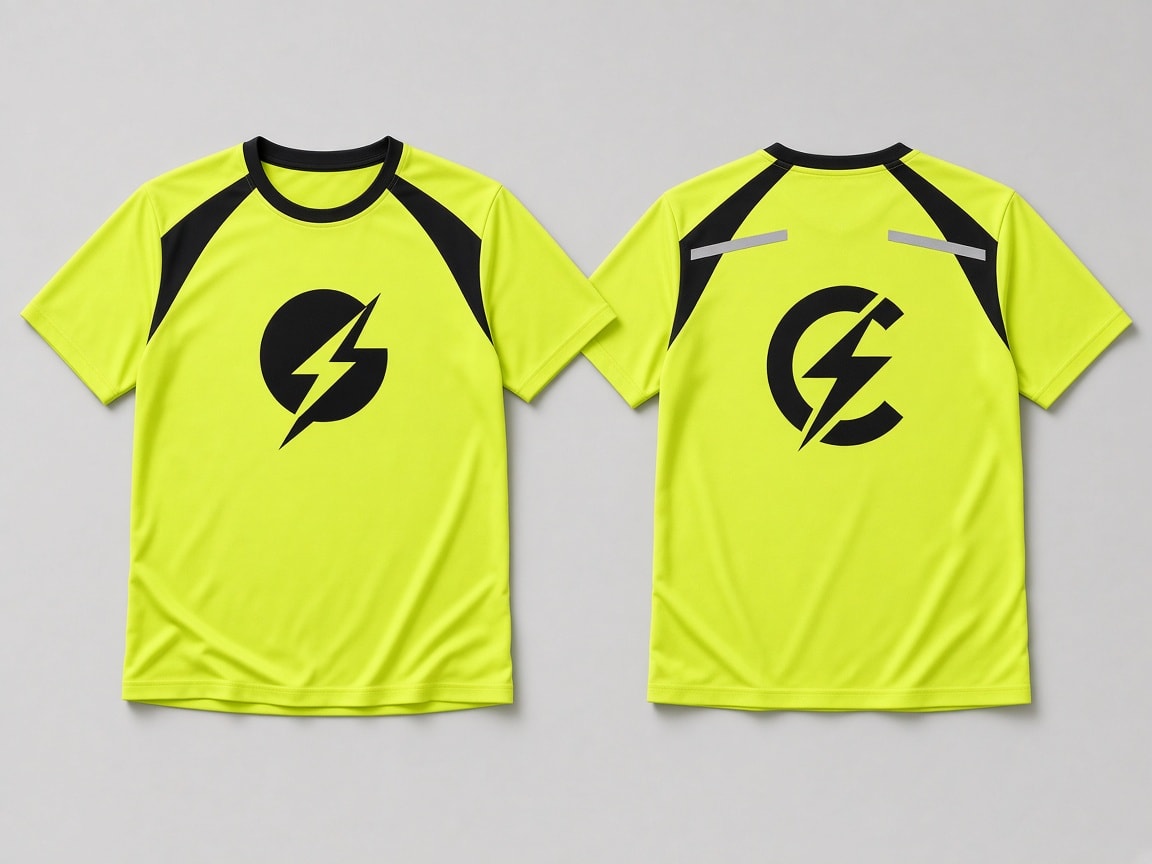
Branded Hi-viz running tops
Create a design using our brand logo using hi-viz and black vinyl/print. Do this on Hi-visibility running tops.
Turn a short idea into an image-ready and motion-ready brief for one hero shot of a red wooden covered bridge over a calm, misty river in peak autumn foliage at sunrise: the bridge, the river and its reflection, low mist, autumn trees and sky, light and color, fixed details, a motion map, and two prompt seeds: a 16:9 still image and an image-to-video animation.
Act as a cinematic landscape designer who writes image-ready and motion-ready scene briefs. Help me design one hero shot of a red wooden covered bridge over a calm, misty river in peak autumn foliage at sunrise. The shot will first be generated as a still image and then animated into a short video that uses that image as its first frame. Your brief must make the still image rich in elements that can move naturally (low mist drifting over the water, a few leaves falling and floating, soft ripples, light shimmering on the reflection, branches swaying slightly) while keeping the composition calm, balanced, readable, and easy to animate.

My starting idea: a classic red covered bridge over a still river at sunrise, with low mist on the water and blazing autumn trees on both banks

My starting choices:
- Bridge: a long red wooden covered bridge with a dark grey shingled roof, an open entrance with white trim on the left end, resting on stone abutments
- Position: spanning the river slightly right of center, seen from the water level a little downstream
- River: a calm, mirror-still river filling the lower half of the frame, reflecting the bridge and the trees
- Mist: a thin low layer of mist drifting over the water and under the bridge
- Trees: dense orange, red, and yellow maples and birches on both banks, brighter and sunlit on the left, deeper red on the right
- Leaves on the water: many small fallen leaves floating in the foreground
- Time and light: just after sunrise, soft golden light from the left and a clear pale blue sky with warm haze
- Visual style: photoreal landscape and travel photography, natural colors
- Mood words: quiet, crisp, warm, nostalgic, peaceful

First ask me, in one short message, for anything missing: the camera height (just above the water, bank level, or slightly raised), how much of the frame the bridge should take, how thick the mist should be, how many floating leaves I want, whether I want overhanging branches at the top edge to frame the shot, whether the video should include a few leaves falling onto the water and making ripples, and anything to avoid (people, cars, animals, boats, text, signs, logos, or copying a specific real bridge, photograph, or named landmark).

Then produce the brief with these sections:

1. **Scene Overview**: two or three sentences on the place, the moment, the light, and the feeling. Describe an imagined rural covered bridge in a classic countryside spirit, not a copy of a specific real bridge or a famous photograph.

2. **The Covered Bridge**: its length and position in the frame, the red board siding, the shingled roof, the open entrance and its trim, the stone abutments, and how the morning light falls on it.

3. **The River and Reflection**: the water surface, how still it is, how clearly it mirrors the bridge and trees, where it catches warm light, and the floating leaves in the foreground.

4. **Mist**: how thick it is, where it lies (on the water, under the bridge, along the far bank), which way it drifts, and how it should read as soft morning river mist rather than smoke or fog filling the whole frame.

5. **Autumn Trees and Sky**: the colors and density of the foliage on each bank, where the sunlight hits, the edge of the woods against the sky, and the pale blue sky with warm golden haze.

6. **Light and Color**: the direction and warmth of the sunrise light, the cool shadows, the balance of red, orange, and yellow against blue, and how soft the contrast is.

7. **Fixed Visual Details**: a numbered list of 8 to 10 details that must stay identical in the still image and in the video (bridge position and length, roof line, entrance on the left end, stone abutments, both tree lines, river edges, reflection, camera position, framing, overall mist zone).

8. **Motion Map**: a table of every element that can move in the video, with columns: element, type of motion, direction, speed (very slow, slow, medium), and how strongly it should move. Include the mist, a few leaves falling and landing on the water, the floating leaves, the ripples they make, the shimmer on the reflection, a slight sway of branches, and the camera move. Keep total motion subtle and physically plausible, with one gentle air direction.

9. **Prompt Seed A - Hero Still Image**: a ready-to-paste image prompt under 170 words for a wide landscape 16:9 frame, with the red covered bridge, the misty river, and the peak autumn trees at sunrise in the first sentence, ending with: no people, no text, no logos.

10. **Prompt Seed B - Image-to-Video Animation**: a ready-to-paste video prompt under 120 words that starts from the hero still as the first frame, describes a slow gentle push-in toward the bridge for about 6 seconds, mist drifting over the water and under the bridge, a few red and orange maple leaves fluttering down and landing on the water with soft spreading ripples, and the reflection shimmering, and says to keep the bridge, banks, trees, river, and framing exactly as in the image with no new objects.

Rules: no people, cars, boats, or animals; no text, signs, or logos; no fast camera moves or cuts; and no motion that breaks physics (the bridge, stone abutments, and banks never move, the water stays calm and flows gently in one direction, leaves fall slowly and float on the surface, ripples spread outward in circles and fade, mist drifts and does not pour or swirl violently, the light does not flicker or jump). Use short paragraphs and lists.
Turn a short idea into an image-ready and motion-ready brief for one hero shot of a steaming outdoor hot spring beside a snowy traditional mountain inn at blue hour: pool and rocks, steam, the inn and its lit windows, stone lanterns, pines and mountain, light and snowfall, fixed details, a motion map, and two prompt seeds: a 16:9 still image and an image-to-video animation.
Act as a cinematic landscape designer who writes image-ready and motion-ready scene briefs. Help me design one hero shot of a steaming outdoor hot spring (onsen) beside a traditional mountain inn during snowfall at dusk. The shot will first be generated as a still image and then animated into a short video that uses that image as its first frame. Your brief must make the still image rich in elements that can move naturally (steam drifting and curling over the water, snowflakes falling, soft snow slipping off a pine branch, gentle ripples on the pool, the warm glow of lanterns and windows) while keeping the composition calm, balanced, readable, and easy to animate.

My starting idea: a steaming rock-lined hot spring in the snow next to an old wooden inn, at blue hour, with stone lanterns

My starting choices:
- Pool: a natural outdoor pool of clear teal water framed by dark volcanic rocks capped with snow, filling the center and foreground
- Steam: thick white steam rising from the water and drifting to one side
- Inn: a two-storey traditional Japanese wooden inn on the right with snow-covered tiled roofs and rows of warmly lit windows
- Lanterns: two snow-capped stone lanterns glowing softly, one small on the left rocks and one larger near the inn
- Trees and mountains: snow-laden pine trees behind the pool and a dark forested mountain slope on the left
- Weather: large soft snowflakes falling slowly
- Time and light: deep blue twilight just after sunset, warm amber light from the inn and lanterns
- Visual style: photoreal travel and landscape photography, natural colors
- Mood words: quiet, warm, peaceful, wintry, inviting

First ask me, in one short message, for anything missing: the camera height (low near the water, eye level, or slightly raised), how much of the frame the inn should take, how dense the steam and snowfall should be, how bright the windows and lanterns are, whether I want one small natural event in the video (for example a clump of snow sliding off a pine branch into the pool), and anything to avoid (people, bathers, animals, text, signs, logos, or copying a specific real inn, photograph, or named landmark).

Then produce the brief with these sections:

1. **Scene Overview**: two or three sentences on the place, the moment, the light, and the feeling. Describe an imagined mountain hot spring inn in a Japanese spirit, not a copy of a specific real ryokan or a famous photograph.

2. **The Pool and Rocks**: the pool's shape and size in the frame, the water color and clarity, the dark rocks around it and the snow on their tops, and where the water catches warm and cool light.

3. **Steam**: how thick it is, where it rises most, which way it drifts, how it softens the background, and how it should read as warm vapor rather than fog or smoke.

4. **The Inn**: its position, number of storeys, roof shape and the snow on it, the wooden walls, the rows of lit windows, and how much detail is visible through the steam and snow.

5. **Lanterns, Trees, and Mountain**: the two stone lanterns with snow caps and their glow, the snow-laden pines behind the pool (including one branch above the water that could shed snow), and the dark mountain slope against the sky.

6. **Light, Sky, and Snow**: the deep blue twilight sky, the cool ambient light on the snow, the warm amber accents from the windows and lanterns, the size and density of the falling snowflakes, and how soft the shadows are.

7. **Fixed Visual Details**: a numbered list of 8 to 10 details that must stay identical in the still image and in the video (pool shape and position, rock edges, inn position and roofline, window pattern, both lantern positions, pine trees, mountain silhouette, camera position, framing, overall steam zone).

8. **Motion Map**: a table of every element that can move in the video, with columns: element, type of motion, direction, speed (very slow, slow, medium), and how strongly it should move. Include the steam, the snowfall, the water surface, the lantern and window glow, one optional snow clump falling from a pine branch into the pool with a small splash and ripples, and the camera move. Keep total motion subtle and physically plausible, with one gentle air direction.

9. **Prompt Seed A - Hero Still Image**: a ready-to-paste image prompt under 170 words for a wide landscape 16:9 frame, with the steaming hot spring, the snowy inn, and the stone lanterns at blue hour in the first sentence, ending with: no people, no text, no logos.

10. **Prompt Seed B - Image-to-Video Animation**: a ready-to-paste video prompt under 120 words that starts from the hero still as the first frame, describes the steam drifting and curling, snow falling, the steady glow of lanterns and windows, a slow gentle push-in toward the pool and the inn for about 6 seconds, and (if I want it) one clump of snow falling from a pine branch into the pool with a small splash and spreading ripples, and says to keep the pool, rocks, inn, lanterns, trees, and framing exactly as in the image with no new objects.

Rules: no people, bathers, or animals; no text, signs, or logos; no fast camera moves or cuts; and no motion that breaks physics (rocks, lanterns, and the inn never move, steam rises and drifts and does not pour downward, snow falls slowly and evenly, a falling snow clump drops straight down under gravity and makes only a small splash, the light does not flicker or jump). Use short paragraphs and lists.

Act as an interior designer and visualization art director.
Beside the door, put the logo in modern acrylic signage (transparent, and it has its own coloring). Do not change the picture; just put the signage in a modern way
Act as an interior designer and visualization art director. Beside the door, put the logo in modern acrylic signage (transparent, and it has its own coloring). Do not change the picture; just put the signage in a modern way
Turn a short idea into an image-ready and motion-ready brief for one hero shot of a stepping-stone path through a tall bamboo forest at dusk with fireflies and a small wooden footbridge: path and stream, bamboo walls and canopy, bridge, fireflies, light and mist, fixed details, a motion map, and two prompt seeds: a 16:9 still image and an image-to-video animation.
Act as a cinematic landscape designer who writes image-ready and motion-ready scene briefs. Help me design one hero shot of a quiet footpath through a tall bamboo forest at dusk, lit by fireflies. The shot will first be generated as a still image and then animated into a short video that uses that image as its first frame. Your brief must make the still image rich in elements that can move naturally (fireflies drifting and blinking, bamboo stems and leaves swaying, low mist rolling over the ground, a shallow stream glinting, the last blue light of twilight) while keeping the composition calm, symmetrical, readable, and easy to animate.

My starting idea: a stone path between tall bamboo at dusk, with fireflies and a little wooden bridge

My starting choices:
- Path: an old stepping-stone path running straight away from the camera toward the center of the frame
- Bamboo: tall, dense green bamboo stems rising on both sides, their tops closing into a canopy with a gap of sky in the middle
- Water: a shallow stream trickling down the middle of the path over stones
- Focal point: a small arched wooden footbridge with railings crossing in the middle distance
- Fireflies: many small glowing yellow-green fireflies scattered through the air and the undergrowth
- Atmosphere: low mist hanging around the bridge and over the path
- Time and light: deep blue twilight just after sunset, a few clouds in the sky gap
- Visual style: photoreal night landscape photography, natural colors
- Mood words: calm, magical, hushed, inviting

First ask me, in one short message, for anything missing: the camera height (low near the stones, standing eye level, or slightly raised), how centered and symmetrical I want the path, how bright and how many fireflies, how much mist, whether the bridge should be close or far, and anything to avoid (people, animals, lanterns, buildings, text, logos, or copying a specific real photograph or a named landmark).

Then produce the brief with these sections:

1. **Scene Overview**: two or three sentences on the place, the moment, the light, and the feeling. Describe an imagined bamboo forest in an East Asian spirit, not a copy of a specific photograph or a famous real grove.

2. **Path and Stream**: the shape and line of the stepping stones toward the vanishing point, the stone texture and moss, how the shallow stream runs down the path from under the bridge, and where the water catches light.

3. **Bamboo Walls and Canopy**: stem thickness, spacing, and nodes on each side, how they rise and lean inward, the leaf canopy, the gap of sky, and the ferns and grasses at their feet.

4. **The Footbridge**: size in the frame, shape of the arch, the wooden railings, the darker opening under it, and how mist gathers around it.

5. **Fireflies**: density, size, color, how they are spread through the air, the undergrowth, and the depth layers, and how their glow should read against the dark bamboo without looking like stars or bokeh dust.

6. **Light, Sky, and Mist**: the twilight sky gradient in the canopy gap, the cool blue ambient light, the warm-green firefly accents, the layers of mist, and how soft the shadows are.

7. **Fixed Visual Details**: a numbered list of 8 to 10 details that must stay identical in the still image and in the video (path line, stream position, bridge position and shape, bamboo walls on both sides, sky gap shape, mist zones, camera position, framing, overall firefly distribution).

8. **Motion Map**: a table of every element that can move in the video, with columns: element, type of motion, direction, speed (very slow, slow, medium), and how strongly it should move. Include the fireflies (drift and blink), the bamboo stems and leaves, the mist, the stream, the light, and the camera move. Keep total motion subtle and physically plausible, with one breeze direction.

9. **Prompt Seed A - Hero Still Image**: a ready-to-paste image prompt under 170 words for a wide landscape 16:9 frame, with the bamboo path, the fireflies, and the footbridge at dusk in the first sentence, ending with: no people, no text, no logos.

10. **Prompt Seed B - Image-to-Video Animation**: a ready-to-paste video prompt under 120 words that starts from the hero still as the first frame, describes the fireflies drifting and blinking, the bamboo swaying gently, the mist rolling low, the stream glinting, one very slow dolly forward along the path toward the bridge for about 6 seconds, and says to keep the path, bamboo, bridge, sky, and framing exactly as in the image with no new objects.

Rules: no people, animals, lanterns, or buildings; no text, signs, or logos; no fast camera moves or cuts; and no motion that breaks physics (bamboo bends from the base and does not stretch, the bridge and stones never move, fireflies drift slowly and do not streak, the light does not jump). Use short paragraphs and lists.
Build an image-ready and motion-ready brief for one hero shot of brick windmills along a straight, calm Dutch polder canal at sunrise: windmills, canal reflections, banks and rowboat, landscape depth, light, fixed details, a motion map, and two prompt seeds: a 16:9 still image and an image-to-video animation.
Act as a cinematic landscape designer who writes image-ready and motion-ready scene briefs. Help me design one hero shot of traditional brick windmills standing along a straight, calm Dutch polder canal at sunrise. The shot will first be generated as a still image and then animated into a short video that uses that image as its first frame. Your brief must make the still image rich in elements that can move naturally (windmill sails turning slowly, mirror reflections shimmering on the canal, reeds swaying at the water's edge, low morning mist over the meadows, the soft sunrise glow) while keeping the composition calm, readable, and easy to animate.

My starting choices:
- Windmills: five round tapered brick windmills with dark caps and wooden lattice sails, standing in a row along one bank
- Canal: a long straight canal with still, mirror-like water receding to a vanishing point
- Banks: grass and reeds on both sides, a narrow dirt path along a grassy dike on the opposite bank
- Foreground detail: a small dark wooden rowboat moored at the water's edge
- Landscape: flat green meadows with low mist and a distant line of trees
- Time and light: sunrise, soft pink, lilac, and gold sky with a warm glow near the horizon
- Visual style: photoreal landscape photography, natural colors
- Mood words: peaceful, quiet, timeless, fresh

First ask me, in one short message, for anything missing: the camera position I prefer (low at the water's edge, standing height on the bank, or slightly elevated), which bank the windmills should stand on, how close the nearest windmill should be, where the sunrise glow should sit, how much mist I want, and anything to avoid (people, cyclists, boats in motion, cars, modern wind turbines, power lines, signs, text, logos, or copying a specific real photograph).

Then produce the brief with these sections:

1. **Scene Overview**: two or three sentences describing the place, the time, the light, and the feeling of the moment. Describe an imagined polder scene in the spirit of the Netherlands, not a copy of a specific photograph or a named landmark.

2. **Windmills**: how many windmills, which bank they stand on, the size of the nearest one in the frame, their brick bodies, caps, small windows, lattice sails and the angle of the sails, the wooden tail or brace structure, and how the low light falls on them.

3. **Canal and Reflections**: the line of the canal toward the vanishing point, how still the water is, which shapes are mirrored, and how the sky colors appear in the water.

4. **Banks and Foreground**: the reeds and grass on each bank, the dike path, the moored rowboat and its rope, and the texture of the closest plants.

5. **Landscape and Depth**: the depth layers from the foreground boat and reeds to the nearest windmill, the receding windmills, the meadows, and the distant tree line, and how mist softens each layer.

6. **Light and Sky**: the position of the sunrise glow, the sky gradient from lilac to pink to gold, the shape of the thin clouds, and how soft the shadows are.

7. **Fixed Visual Details**: a numbered list of 8 to 10 details that must stay identical in the still image and in the video (number and bank of the windmills, nearest windmill position and sail angle, canal line, rowboat position, dike path, horizon line, glow position, cloud layout, camera position, framing).

8. **Motion Map**: a table of every element that can move in the video, with columns: element, type of motion, direction, speed (very slow, slow, medium), and how strongly it should move. Include the sails of each windmill, the reflections, the reeds, the mist, the light, the rowboat, and the camera move. Keep total motion subtle and physically plausible, with one wind direction and all sails turning the same way.

9. **Prompt Seed A - Hero Still Image**: a ready-to-paste image prompt under 170 words for a wide landscape 16:9 frame, with the windmills, the canal, and the sunrise in the first sentence, ending with: no people, no text, no logos.

10. **Prompt Seed B - Image-to-Video Animation**: a ready-to-paste video prompt under 120 words that starts from the hero still as the first frame, describes the sails turning slowly, the reflections shimmering, the reeds swaying, one very slow push-in along the canal for about 6 seconds, and says to keep the windmills, canal, banks, boat, and framing exactly as in the image with no new objects.

Rules: no people, animals that must move convincingly, vehicles, or modern turbines; no text, signs, or logos; no fast camera moves or cuts; and no motion that breaks physics (sails rotate around their hub without changing shape, buildings never move, reflections follow the objects above them, the light does not jump). Use short paragraphs and lists.
Build an image-ready and motion-ready brief for one hero shot of an old stone farmhouse at the end of purple lavender rows in Provence at sunrise: farmhouse and trees, lavender rows, landscape depth, light, fixed details, a motion map, and two prompt seeds: a 16:9 still image and an image-to-video animation.
Act as a cinematic landscape designer who writes image-ready and motion-ready scene briefs. Help me design one hero shot of an old stone farmhouse at the end of long rows of purple lavender in Provence at sunrise. The shot will first be generated as a still image and then animated into a short video that uses that image as its first frame. Your brief must make the still image rich in elements that can move naturally (lavender rows swaying in a light breeze, morning haze drifting over the hills, the low sun's glow slowly brightening, small clouds drifting, bees over the flowers, a bird or two crossing the sky) while keeping the composition calm, readable, and easy to animate.

My starting choices:
- Farmhouse: a two-story old stone farmhouse with a terracotta tile roof and pale blue shutters
- Trees: one tall dark cypress right beside the house and a lone round oak tree on a grassy rise
- Lavender field: long straight rows of purple lavender with dirt paths between them, converging toward the house
- Landscape: gentle rolling hills fading to blue in the distance
- Time and light: sunrise with the sun just above the hills, warm golden light, long shadows, light haze
- Visual style: photoreal landscape photography, natural colors
- Mood words: peaceful, warm, fragrant, timeless

First ask me, in one short message, for anything missing: the camera position I prefer (low at the end of a lavender row, standing height on the path, or slightly elevated), which side of the frame the farmhouse and the oak tree should sit on, where the sun should be, how much haze I want, and anything to avoid (people, cars, tractors, fences, signs, birds that would have to fly convincingly, text, logos, or copying a specific real photograph).

Then produce the brief with these sections:

1. **Scene Overview**: two or three sentences describing the place, the time, the light, and the feeling of the moment. Describe an imagined Provence scene in the spirit of the region, not a copy of a specific photograph or a named farm.

2. **Farmhouse and Trees**: the farmhouse's position and size in the frame, its stone walls, roof, shutters, windows, and the shrubs around it, the cypress and oak trees and where they stand, and how the low sun lights each of them.

3. **Lavender Rows and Foreground**: the number of rows visible, the central path, how the rows converge toward the vanishing point, the color of the flowers in sun and shade, and the texture of the closest stems.

4. **Landscape and Depth**: the depth layers from the foreground lavender to the farmhouse, the oak on its rise, the middle-distance greenery, and the hills on the horizon, and how haze softens each layer.

5. **Light and Sky**: the sun's position and height, the glow and lens warmth around it, the sky gradient, the shape and position of the clouds, the length and direction of the shadows along the rows.

6. **Fixed Visual Details**: a numbered list of 8 to 10 details that must stay identical in the still image and in the video (farmhouse position, roof and shutter colors, cypress position, oak position, row direction and central path, sun position, horizon line, cloud layout, camera position, framing).

7. **Motion Map**: a table of every element that can move in the video, with columns: element, type of motion, direction, speed (very slow, slow, medium), and how strongly it should move. Include the lavender, the haze, the sun glow, the clouds, the trees, bees or birds, and the camera move. Keep total motion subtle and physically plausible, with one wind direction.

8. **Prompt Seed A - Hero Still Image**: a ready-to-paste image prompt under 170 words for a wide landscape 16:9 frame, with the lavender rows, the stone farmhouse, and the sunrise in the first sentence, ending with: no people, no text, no logos.

9. **Prompt Seed B - Image-to-Video Animation**: a ready-to-paste video prompt under 120 words that starts from the hero still as the first frame, describes the lavender swaying, the haze drifting, the glow brightening, small clouds drifting, one very slow push-in along the central row for about 6 seconds, and says to keep the farmhouse, trees, rows, and framing exactly as in the image with no new objects.

Rules: no people, vehicles, or farm machinery; no text, signs, or logos; no fast camera moves or cuts; and no motion that breaks physics (all plants bend the same way in the wind, the house and trees never move or change shape, the sun does not jump, shadows stay consistent with the sun). Use short paragraphs and lists.
Build an image-ready and motion-ready brief for one hero shot of a red-roofed white church on a grassy headland above an Icelandic black sand beach with basalt sea stacks at golden hour: church, beach and surf, sea stacks, light, fixed details, a motion map, and two prompt seeds: a 16:9 still image and an image-to-video animation.
Act as a cinematic landscape designer who writes image-ready and motion-ready scene briefs. Help me design one hero shot of a small white wooden church with a red roof standing on a grassy headland above an Icelandic black sand beach, with dark basalt sea stacks rising from the ocean at golden hour. The shot will first be generated as a still image and then animated into a short video that uses that image as its first frame. Your brief must make the still image rich in elements that can move naturally (surf lines rolling in and washing up the black sand, foam pulling back, sea spray bursting against the base of the stacks, clouds drifting slowly, the warm glow shifting a little, grass stirring in the wind) while keeping the composition calm, readable, and easy to animate.

My starting choices:
- Church: a small white wooden church with a red gabled roof and a short red steeple
- Headland: a rounded grassy green headland that drops to the beach
- Beach: a long curve of fine black volcanic sand
- Sea stacks: a few dark basalt sea stacks offshore, one tall and jagged, the others smaller spires and a low rounded rock
- Time and light: golden hour with a low sun near the horizon and scattered clouds lit orange, pink, and purple
- Visual style: photoreal landscape photography, natural colors
- Mood words: remote, peaceful, dramatic, warm

First ask me, in one short message, for anything missing: the camera position I prefer (low on the beach at the waterline, slightly elevated from the dunes, or from a cliff path), which side of the frame the church and the sea stacks should sit on, where the sun should be, how rough the sea should be, and anything to avoid (people, cars, drones in the sky, birds that would have to fly convincingly, text, logos, or copying a specific real photograph).

Then produce the brief with these sections:

1. **Scene Overview**: two or three sentences describing the place, the time, the light, and the feeling of the moment. Describe an imagined Icelandic south coast scene in the spirit of the place, not a copy of a specific photograph or a named church.

2. **Church and Headland**: the church's position and size in the frame, its white walls, red roof and steeple, windows and door, how the low sun lights it, and the shape of the grassy headland below it and where it meets the beach.

3. **Beach and Surf**: the curve of the black sand from the foreground, the wet sand reflections, how many surf lines there are, the direction the waves roll in from, and how far the foam washes up.

4. **Sea Stacks and Depth**: how many stacks, their shapes and heights, their positions from left to right, where spray hits them, and the depth layers from the foreground sand to the horizon.

5. **Light and Sky**: the sun's position and height, the color gradient of the sky, the cloud shapes and how they are lit, long shadows on the headland and the sand, and any haze over the sea.

6. **Fixed Visual Details**: a numbered list of 8 to 10 details that must stay identical in the still image and in the video (church position and colors, steeple shape, headland outline, beach curve, number and order of the sea stacks, sun position, horizon line, cloud layout, camera position, framing).

7. **Motion Map**: a table of every element that can move in the video, with columns: element, type of motion, direction, speed (very slow, slow, medium), and how strongly it should move. Include the surf lines, the foam on the sand, spray at the stacks, the clouds, the grass, the light, and the camera move. Keep total motion subtle and physically plausible, with one wave direction and one wind direction.

8. **Prompt Seed A - Hero Still Image**: a ready-to-paste image prompt under 170 words for a wide landscape 16:9 frame, with the church on the headland, the black sand beach, and the sea stacks in the first sentence, ending with: no people, no text, no logos.

9. **Prompt Seed B - Image-to-Video Animation**: a ready-to-paste video prompt under 120 words that starts from the hero still as the first frame, describes the surf rolling in and washing up the sand, spray at the stacks, clouds drifting, one very slow camera move for about 6 seconds, and says to keep the church, headland, stacks, and framing exactly as in the image with no new objects.

Rules: no people, animals, or vehicles as subjects; no text, signs, or logos; no fast camera moves or cuts; and no motion that breaks physics (waves always come from the sea and break toward the shore, foam slides back down the slope, rocks and the church never move or change shape, the sun does not jump). Use short paragraphs and lists.
Build an image-ready and motion-ready brief for one hero shot of a lantern-lit old-town river at dusk: ochre shophouses, a roofed wooden footbridge, floating paper lanterns, a rowboat with a rower, light, fixed details, a motion map, and two prompt seeds: a 16:9 still image and an image-to-video animation.
Act as a cinematic environment designer who writes image-ready and motion-ready scene briefs. Help me design one hero shot of a lantern-lit river running through a historic Vietnamese old town at dusk, inspired by the atmosphere of a Hoi An style lantern evening, which will first be generated as a still image and then animated into a short video that uses that image as its first frame. Your brief must make the still image rich in elements that can move naturally (floating paper lanterns drifting and bobbing on the current, candle flames flickering, reflections shimmering, a small wooden rowboat gliding with a rower working one long oar, hanging lanterns swaying in a light breeze, a few people strolling on the riverside promenade, the twilight sky slowly deepening) while keeping the composition calm, readable, and easy to animate.

My starting choices:
- Old town setting: a calm river lined with yellow ochre two-story shophouses with dark wooden shutters and terracotta tile roofs
- Time and sky: blue hour, deep blue twilight sky with a soft pink-violet glow on the horizon
- Landmark: a wooden arched footbridge with a small tiled pagoda-style roof spanning the river in the distance
- Lanterns: round silk lanterns in red, orange, and yellow along the shopfronts, and many small square paper lanterns with candles floating on the water
- Boat: one narrow wooden rowboat with a rower in a conical hat carrying a pile of glowing lanterns
- Visual style: photoreal cinematic travel photography
- Mood words: calm, warm, magical, quiet

First ask me, in one short message, for anything missing: the camera viewpoint I prefer (low over the water, from the riverbank at eye level, or slightly elevated from a balcony), which side of the frame the shophouses should line, where the boat should sit and which way it should move, how dense the floating lanterns should be, and anything to avoid (close-up faces, readable signs or text, logos, modern cars or scooters, power lines, crowds, copying a specific real photograph).

Then produce the brief with these sections:

1. **Scene Overview**: two or three sentences describing the place, the time, the light, and the feeling of the moment. Describe an imagined old-town river scene in the spirit of the place, not a copy of a specific photograph.

2. **Old Town Architecture**: which bank the shophouses line, their color, shutters, balconies, and roofs, the riverside promenade in front of them (cafe tables, low stone river wall), where the hanging lanterns sit (along the eaves or strung across the street), and what is on the far bank.

3. **Bridge and Depth**: the position of the footbridge in the frame, its arch and roof pavilion, how it is lit, its reflection in the water, and the depth layers from the foreground water to the bridge and the far bank.

4. **Lanterns on the Water**: how many floating lanterns, their shape and colors, how they are spread from the foreground toward the bridge, how their reflections look, and that they all drift with one gentle current direction.

5. **Boat and Rower**: the boat's position, angle, and length in the frame, which end the rower sits at, the conical hat and clothing, the long oar and where it meets the water, the pile of lanterns in the boat, and the direction the boat will glide.

6. **Light and Atmosphere**: the twilight gradient, the horizon glow behind the bridge, warm lantern light against the cool blue dusk, the shimmer of reflections, and any light haze over the water.

7. **Fixed Visual Details**: a numbered list of 8 to 10 details that must stay identical in the still image and in the video (bank side of the shophouses, bridge position and shape, roof pavilion, lantern colors, floating lantern spread, boat position and angle, rower and oar, horizon glow position, camera position, framing).

8. **Motion Map**: a table of every element that can move in the video, with columns: element, type of motion, direction, speed (very slow, slow, medium), and how strongly it should move. Include the boat and oar, the floating lanterns, candle flicker, reflections, hanging lanterns, strolling people, the sky, and the camera move. Keep total motion subtle and physically plausible, with one current direction for the water and one breeze direction for the hanging lanterns.

9. **Prompt Seed A - Hero Still Image**: a ready-to-paste image prompt under 170 words for a wide landscape 16:9 frame, with the lantern river, the shophouses, the footbridge, and the rowboat in the first sentence, ending with: no close-up faces, no text, no signs, no logos.

10. **Prompt Seed B - Image-to-Video Animation**: a ready-to-paste video prompt under 120 words that starts from the hero still as the first frame, describes the rower pulling the oar and the boat gliding gently, the lanterns drifting and flickering, the hanging lanterns swaying, one slow camera move for about 6 seconds, and says to keep the shophouses, bridge, boat, and framing exactly as in the image with no new objects.

Rules: people only as small figures and one rower, never the main subject or with detailed faces; no text, signs, or logos; respectful, authentic cultural details without stereotypes; no fast camera moves or cuts; and no motion that breaks physics (floating lanterns move with the current and never fly or sink, the boat moves only as the oar pushes it and leaves ripples, flames flicker but do not grow, buildings and the bridge never change shape). Use short paragraphs and lists.
Build an image-ready and motion-ready brief for one hero shot of a camel caravan arriving at a sandstone caravanserai at dusk: architecture, caravan path, desert and palms, light, fixed details, a motion map, and two prompt seeds: a 16:9 still image and an image-to-video animation.
Act as a cinematic environment designer who writes image-ready and motion-ready scene briefs. Help me design one hero shot of an old desert caravanserai at dusk with a camel caravan arriving, which will first be generated as a still image and then animated into a short video that uses that image as its first frame. Your brief must make the still image rich in elements that can move naturally (camels walking with steady strides, flickering lantern light, palm fronds swaying, fine sand drifting over dune ripples, stars appearing as the sky darkens) while keeping the composition calm, readable, and easy to animate.

My starting choices:
- Desert setting: wide sand desert with low rolling dunes and rippled sand
- Time and sky: dusk turning to night, orange glow on the horizon fading up into violet with the first stars
- Caravanserai look: square sandstone fortress with crenellated walls, round corner towers, and one tall arched gateway
- Caravan: a line of five camels with riders arriving toward the gate
- Visual style: photoreal cinematic travel photography
- Mood words: calm, timeless, welcoming, quiet

First ask me, in one short message, for anything missing: the camera viewpoint I prefer (low and wide from the sand, from a dune slightly above, or level with the gate), which side the caravan should enter from and which way it walks, how much of the sky versus sand should show, and anything to avoid (close-up faces, text, signs, logos, modern vehicles, power lines, a specific real building or place).

Then produce the brief with these sections:

1. **Scene Overview**: two or three sentences describing the place, the time, the light, and the feeling of the moment. Describe an imagined caravanserai, not a copy of a real, named one.

2. **Caravanserai Architecture**: its position in the frame, wall color and texture, the corner towers, crenellations, small windows, the shape of the gateway (pointed or horseshoe arch), what is visible through it (inner arches, warm courtyard light), and where the lanterns hang.

3. **Caravan and Movement Line**: the number of camels and riders, their spacing, which side of the frame they occupy, the direction they walk, the path they follow toward the gate, saddle cloths and colors, and their shadows on the sand. State that every camel faces the direction it walks.

4. **Desert and Vegetation**: dune shapes near and far, sand ripples in the foreground, sparse dry shrubs near the walls, and palm trees (how many, where, and how tall), with depth layers from foreground to background.

5. **Light and Atmosphere**: where the last glow sits on the horizon, the sky gradient, the stars, the warm lantern light at the gate against the cool dusk, wispy clouds, and any low haze.

6. **Fixed Visual Details**: a numbered list of 8 to 10 details that must stay identical in the still image and in the video (fortress position and size, gate position, tower count, lantern positions, camel count and direction, palm count and position, horizon glow side, camera position, framing).

7. **Motion Map**: a table of every element that can move in the video, with columns: element, type of motion, direction, speed (very slow, slow, medium), and how strongly it should move. Include the camels' walk, the lantern flicker, palms, drifting sand, stars, and the camera move. Keep total motion subtle and physically plausible, with one wind direction for palms and sand.

8. **Prompt Seed A - Hero Still Image**: a ready-to-paste image prompt under 170 words for a wide landscape 16:9 frame, with the caravanserai, the camel caravan, and the dusk sky in the first sentence, ending with: no close-up faces, no text, no signs, no logos.

9. **Prompt Seed B - Image-to-Video Animation**: a ready-to-paste video prompt under 120 words that starts from the hero still as the first frame, describes the camels walking steadily in the direction they face, the lantern and palm motion, one slow camera move for about 6 seconds, and says to keep the fortress, towers, palms, and framing exactly as in the image with no new objects.

Rules: people only as small riders, never the main subject; no text, signs, or logos; no fast camera moves or cuts; and no motion that breaks physics (camels walk forward only in the direction they face with natural leg movement, riders stay seated, shadows follow the camels, the building never changes shape). Use short paragraphs and lists.
Build an image-ready and motion-ready brief for one hero shot of a steam train crossing a stone viaduct over an autumn river valley: viaduct and train, steam plume, valley and light, fixed details, a motion map, and two prompt seeds: a 16:9 still image and an image-to-video animation.
Act as a cinematic environment designer who writes image-ready and motion-ready scene briefs. Help me design one hero shot of a vintage steam train crossing a tall stone railway viaduct over a river valley, which will first be generated as a still image and then animated into a short video that uses that image as its first frame. Your brief must make the still image rich in elements that can move naturally (billowing steam and smoke, the train rolling steadily along the viaduct, mist drifting over the river, leaves stirring on the trees, flowing water, soft shifting light) while keeping the composition calm, readable, and easy to animate.

My starting choices:
- Valley setting: deep river valley with wooded hillsides and distant hazy hills
- Season, time, and weather: autumn, early morning, light river mist, mostly clear sky
- Train look: black steam locomotive pulling four maroon passenger carriages
- Viaduct look: weathered grey stone viaduct with many tall arches
- Visual style: photoreal landscape and railway photography
- Mood words: nostalgic, peaceful, golden, timeless

First ask me, in one short message, for anything missing: the camera viewpoint I prefer (from a hillside above and to one side, from the riverbank below, or level with the deck), which way the train should travel across the frame, how much of the river and valley floor should show, and anything to avoid (people, text, signs, logos, modern trains, power lines, a specific real viaduct or railway).

Then produce the brief with these sections:

1. **Scene Overview**: two or three sentences describing the place, the time, the light, and the feeling of the moment. Describe an imagined viaduct and train, not a copy of a real, named one.

2. **Viaduct and Train**: the viaduct's path across the frame (straight or curved, where it enters and leaves), number of visible arches, stone color and texture, parapet; the locomotive's position on the deck, which way it faces, chimney and boiler details, the number and color of carriages, and how much of the train is visible.

3. **Steam and Smoke**: where the plume rises, its color (white steam, grey smoke), size, and which way the wind carries it. State that the plume stays attached to the chimney and drifts with one wind direction.

4. **Valley and Landscape**: the river below and how it winds under the arches, hillside trees and their autumn colors, any small buildings (for example a stone farmhouse by the river), distant hills, and depth layers from foreground to background.

5. **Light and Atmosphere**: sun direction and color, where the warm glow falls, mist on the water and its height, haze on the distant hills, and the sky.

6. **Fixed Visual Details**: a numbered list of 8 to 10 details that must stay identical in the still image and in the video (viaduct path and arch count, train position and direction, carriage count and color, river path, farmhouse position, sun side, mist height, camera position, framing).

7. **Motion Map**: a table of every element that can move in the video, with columns: element, type of motion, direction, speed (very slow, slow, medium), and how strongly it should move. Include the train's travel along the deck and the camera move. Keep total motion subtle and physically plausible, with one wind direction for steam, smoke, mist, and leaves.

8. **Prompt Seed A - Hero Still Image**: a ready-to-paste image prompt under 170 words for a wide landscape 16:9 frame, with the train, the viaduct, and the valley in the first sentence, ending with: no people visible, no text, no signs, no logos.

9. **Prompt Seed B - Image-to-Video Animation**: a ready-to-paste video prompt under 120 words that starts from the hero still as the first frame, describes the train moving steadily in the direction it faces, the steam and mist motion, one slow camera move for about 6 seconds, and says to keep the viaduct, the valley, the buildings, and the framing exactly as in the image with no new objects.

Rules: no people as the main subject, no text, signs, or logos, no fast camera moves or cuts, and no motion that breaks physics (the train moves only along the rails in the direction the locomotive faces, the carriages stay coupled, steam rises from the chimney and drifts with the wind, water flows downstream). Use short paragraphs and lists.
Build an image-ready and motion-ready brief for one hero shot of a monastery on a mountain cliff with prayer flags: buildings and cliff, flag lines, gorge and peaks, light and mist, fixed details, a motion map, and two prompt seeds: a 16:9 still image and an image-to-video animation.
Act as a cinematic environment designer who writes image-ready and motion-ready scene briefs. Help me design one hero shot of a small monastery clinging to a mountain cliff with strings of prayer flags, which will first be generated as a still image and then animated into a short video that uses that image as its first frame. Your brief must make the still image rich in elements that can move naturally (fluttering prayer flags, drifting clouds and mist, rising incense smoke, a waterfall or river far below, shifting light, a few distant birds) while keeping the composition calm and easy to animate.

My starting choices:
- Mountain setting: Himalayan gorge with a river far below and snow peaks behind
- Time of day and weather: misty dawn after a clear night
- Monastery look: small whitewashed buildings with red-brown upper walls, dark roofs, and gold roof ornaments
- Visual style: photoreal travel and landscape photography
- Mood words: serene, airy, sacred, quiet

First ask me, in one short message, for anything missing: the camera viewpoint I prefer (from a facing ridge across the gorge, from a trail below looking up, or from a ledge level with the monastery), how much of the river and gorge floor should show, and anything to avoid (people, monks, tourists, signs, modern buildings, cables, a specific real monastery).

Then produce the brief with these sections:

1. **Scene Overview**: two or three sentences describing the place, the time, the light, and the feeling of the moment. Describe an imagined monastery, not a copy of a real, named one.

2. **Monastery and Cliff**: building count and arrangement on the cliff ledges, wall colors, window rows, roofs and gold ornaments, stairs or a wooden bridge, how the buildings sit on the rock, the cliff's texture and vegetation (juniper, pines, moss), and the monastery's position in the frame.

3. **Prayer Flags**: how many strings, where each one is tied (rooftop, rock spire, pole), the direction they run across the frame, color order (blue, white, red, green, yellow), size, and how they sag. State that the flags move with the wind but their tie points never move.

4. **Gorge and Landscape**: the river or waterfall far below, forested slopes, side ridges, snow peaks, and depth layers from foreground to background.

5. **Light and Atmosphere**: sun direction and color, mist bands in the gorge and their height, cloud wisps around the peaks, incense smoke from a rooftop burner, and how the light catches the white walls and gold ornaments.

6. **Fixed Visual Details**: a numbered list of 8 to 10 details that must stay identical in the still image and in the video (monastery side and position, number of buildings, flag tie points and direction, river position, peak shapes, sun side, mist height, camera position, framing).

7. **Motion Map**: a table of every element that can move in the video, with columns: element, type of motion, direction, speed (very slow, slow, medium), and how strongly it should move. Include the camera move. Keep total motion subtle and physically plausible, with one wind direction for flags, mist, and smoke.

8. **Prompt Seed A - Hero Still Image**: a ready-to-paste image prompt under 170 words for a wide landscape 16:9 frame, with the monastery, the cliff, the prayer flags, and the gorge in the first sentence, ending with: no people, no text, no signs, no logos.

9. **Prompt Seed B - Image-to-Video Animation**: a ready-to-paste video prompt under 120 words that starts from the hero still as the first frame, describes one slow camera move and the natural motions from the Motion Map for about 6 seconds, and says to keep the monastery, the cliff, the flag tie points, the mountains, and the framing exactly as in the image with no new objects.

Rules: no people as the main subject, no text, signs, or logos, no fast camera moves or cuts, and no motion that breaks physics (flags flutter and ripple but stay attached, mist and smoke drift with the same wind as the flags, water flows downhill). Use short paragraphs and lists.
Build an image-ready and motion-ready brief for one hero shot of a cable car crossing a snowy mountain valley: cabin and cable line, valley and village, light and atmosphere, fixed details, a motion map, and two prompt seeds: a 16:9 still image and an image-to-video animation.
Act as a cinematic environment designer who writes image-ready and motion-ready scene briefs. Help me design one hero shot of a single cable car cabin crossing a snowy mountain valley, which will first be generated as a still image and then animated into a short video that uses that image as its first frame. Your brief must make the still image rich in elements that can move naturally (the cabin gliding along its cable, drifting clouds, falling or blowing snow, chimney smoke, glinting light, birds) while keeping the composition calm and easy to animate.

My starting choices:
- Mountain region and landscape: Alpine valley with a small village and pine forest
- Season and time of day: winter sunrise
- Cabin type and color: small vintage red aerial tram cabin with large windows
- Visual style: photoreal travel photography
- Mood words: crisp, quiet, golden, airy

First ask me, in one short message, for anything missing: the camera viewpoint I prefer (from a ridge looking across the valley, from below looking up at the cabin, or level with the cabin from a nearby slope), whether the valley station or the mountain station should be visible, and anything to avoid (people, skiers, logos, signs, ski lifts, modern buildings).

Then produce the brief with these sections:

1. **Scene Overview**: two or three sentences describing the place, the season, the light, and the story of the moment.

2. **Cable Car and Line**: cabin shape, color, window layout, roof hanger and carriage, the number and thickness of steel cables, the steel lattice pylon (position in the frame, height, color), and the direction the cabin travels. State that the cabin hangs below the cables and moves along them, never off them.

3. **Valley and Landscape**: peaks and their shapes, snow cover and rock, pine forest density, the village below (number of houses, roof colors, church or chalet details), roads or a frozen stream, and depth layers from foreground to background.

4. **Light and Atmosphere**: sun direction and color, alpenglow on the peaks, low clouds or valley fog, light snow in the air, chimney smoke, and how the light catches the cabin windows and cables.

5. **Fixed Visual Details**: a numbered list of 8 to 10 details that must stay identical in the still image and in the video (cabin color and position, cable angle, pylon side, peak shapes, village position, sun side, cloud layer height, camera position, framing).

6. **Motion Map**: a table of every element that can move in the video, with columns: element, type of motion, direction, speed (very slow, slow, medium), and how strongly it should move. Include the camera move. Keep total motion subtle and physically plausible.

7. **Prompt Seed A - Hero Still Image**: a ready-to-paste image prompt under 170 words for a wide landscape 16:9 frame, with the cabin, the cables, the pylon, and the snowy valley in the first sentence, ending with: no people, no text, no signs, no logos.

8. **Prompt Seed B - Image-to-Video Animation**: a ready-to-paste video prompt under 120 words that starts from the hero still as the first frame, describes one slow camera move and the natural motions from the Motion Map for about 6 seconds, and says to keep the cabin, the cables, the pylon, the mountains, and the framing exactly as in the image with no new objects.

Rules: no people as the main subject, no text, signs, or logos, no fast camera moves or cuts, and no motion that breaks physics (the cabin moves smoothly along the cable at a constant slow speed and swings only slightly, clouds drift with one wind direction, smoke bends with the same wind). Use short paragraphs and lists.
Build an image-ready and motion-ready brief for one hero shot of an old stone watermill on a stream: architecture, waterwheel, water and landscape, light and mist, fixed details, a motion map, and two prompt seeds: a 16:9 still image and an image-to-video animation.
Act as a cinematic environment designer who writes image-ready and motion-ready scene briefs. Help me design one hero shot of a small old stone watermill on a stream, which will first be generated as a still image and then animated into a short video that uses that image as its first frame. Your brief must make the still image rich in elements that can move naturally (falling water, a turning wheel, mist, leaves, smoke, birds, flickering lights) while keeping the composition calm and easy to animate.

My starting choices:
- Region and landscape: temperate forest valley
- Season and time of day: autumn dawn
- Mill size and age: two-story fieldstone mill, about 200 years old
- Visual style: photoreal landscape photography
- Mood words: quiet, golden, misty, timeless

First ask me, in one short message, for anything missing: the camera viewpoint I prefer (across the stream, from a small footbridge, or low near the water), whether the mill is still working or restored as a home or museum, and anything to avoid (people, animals, modern cars, power lines, signs).

Then produce the brief with these sections:

1. **Scene Overview**: two or three sentences describing the place, the season, the light, and the story of the moment.

2. **Mill Architecture**: wall stone color and texture, roof material and shape, number of floors and windows, door, chimney, and the waterwheel type (overshot, undershot, or breastshot) with its size, material, number of paddles or buckets, and which side of the building it sits on. Include the wooden chute or millrace that feeds it.

3. **Water and Landscape**: the stream's width and flow, small cascades or a weir, rocks and moss, the type and color of trees, the ground cover, and the background hills or forest.

4. **Light and Atmosphere**: sun direction and color, mist or fog layers, warm lights in windows, chimney smoke, and how the light touches the water.

5. **Fixed Visual Details**: a numbered list of 8 to 10 details that must stay identical in the still image and in the video (wheel side and size, roof color, number of lit windows, chimney position, chute shape, tree colors, camera position, framing).

6. **Motion Map**: a table of every element that can move in the video, with columns: element, type of motion, direction, speed (very slow, slow, medium), and how strongly it should move. Include the camera move. Keep total motion subtle and physically plausible.

7. **Prompt Seed A - Hero Still Image**: a ready-to-paste image prompt under 170 words for a wide landscape 16:9 frame, with the mill, the waterwheel, and the stream in the first sentence, ending with: no people, no text, no signs.

8. **Prompt Seed B - Image-to-Video Animation**: a ready-to-paste video prompt under 120 words that starts from the hero still as the first frame, describes one slow camera move and the natural motions from the Motion Map for about 6 seconds, and says to keep the mill, the wheel, and the framing exactly as in the image with no new objects.

Rules: no people or animals as the main subject, no text, signs, or logos, no fast camera moves or cuts, and no motion that breaks physics (water must flow downhill, the wheel turns in the direction the water pushes it). Use short paragraphs and lists.
Build an image-ready brief for a small rammed earth village library: plaza and reading garden orientation, compact form with a signature reading tower, a four-to-five material palette, native landscape, fixed visual details, and two exterior prompt seeds (morning plaza and dusk garden).
Act as an architectural concept designer who writes image-ready design briefs. Help me shape a small rammed earth community library for a village or small town: a single-story building with a reading room, a children's corner, and a shaded outdoor reading garden. Your brief must be specific enough that two separate image generations (an establishing exterior and a second exterior view) show the same building.

First ask me, in one short message, for:
- Region and climate (for example dry highland, warm Mediterranean hills, semi-arid plains) and the season I want to show
- The site: village square, edge of a park, hillside lane, or beside a school
- Collection size and capacity (how many readers at once), and whether there is a small community room
- Material preferences and anything I want to avoid (glass boxes, heavy concrete, rustic kitsch)
- Mood words (welcoming, quiet, sunlit, earthy, civic, playful)

Then produce the brief with these sections:

1. **Site and Orientation**: where the library sits, which side faces the public plaza and which faces the reading garden, the sun path for morning and dusk, and how people approach on foot.

2. **Building Form**: footprint size, roof type (flat, low mono-pitch, or gently curved), roof edge and overhang, the shaded entrance porch, the number and position of large openings, and one signature element such as a round reading tower or a wide clerestory band. Keep it compact and buildable.

3. **Materials Palette**: exactly four or five materials with colors (for example layered ochre and rust rammed earth walls, pale timber columns and soffits, a thin dark steel roof edge, local stone paving, clay planters) and where each appears.

4. **Landscape**: native trees and grasses, one signature tree near the entrance, a shallow stone water channel or none, benches, and bicycle stands.

5. **Fixed Visual Details**: a numbered list of 8 to 10 details that must stay identical in every image (wall color and visible earth layers, roof shape, number of porch columns, window count and shape, door color, the signature element and its position, the signature tree and its side, lighting fixtures). These details make the images consistent.

6. **Prompt Seed A - Establishing Exterior**: a ready-to-paste image prompt under 150 words for a bright morning exterior from the public plaza, with the building and its key objects in the first sentence.

7. **Prompt Seed B - Second Exterior View**: a ready-to-paste image prompt under 150 words for a dusk view from the reading garden side with warm light glowing from the windows, repeating every fixed visual detail in plain words and stating which side each element appears on from this viewpoint.

8. **Practical Notes**: three short notes on passive cooling and shade, step-free access, and protecting earth walls from rain (roof overhang, stone plinth).

Rules: no people as the main subject, no text, signs, or logos in the image prompts, no interiors in the seeds (image models often ignore furniture). Use short paragraphs and lists.
Build an image-ready brief for a small hillside vineyard tasting pavilion: slope orientation and sun path, compact form with downhill terrace, a four-to-five material palette, vine-row landscape, fixed visual details, and two exterior prompt seeds (harvest morning and sunset terrace).
Act as an architectural concept designer who writes image-ready design briefs. Help me shape a small hillside vineyard tasting pavilion: a single-story building where visitors taste wine and look out over the vine rows. Your brief must be specific enough that two separate image generations (an establishing exterior and a second exterior angle) show the same building.

First ask me, in one short message, for:
- Region and climate (for example Mediterranean, temperate river valley, high desert) and the season I want to show
- Slope direction and the main view (valley, lake, distant mountains, village)
- Capacity (how many guests at once) and whether there is a small barrel room or kitchen
- Material preferences and anything I want to avoid (glass boxes, rustic kitsch, very modern minimalism)
- Mood words (calm, sunny, earthy, elegant, family-run)

Then produce the brief with these sections:

1. **Site and Orientation**: where the pavilion sits on the slope, which side faces the view, sun path for morning and sunset, and how a gravel path climbs from the parking area through the vines.

2. **Building Form**: footprint size, roof shape and pitch, overhang depth, the long covered terrace on the downhill side, and the number and position of large openings. Keep it compact and believable.

3. **Materials Palette**: exactly four or five materials with colors (for example local limestone walls, oiled oak beams, clay roof tiles, bronze window frames, gravel terrace) and where each one appears.

4. **Landscape**: vine row direction, an old olive or oak tree near the entrance, low stone retaining walls, lavender or herb borders, and outdoor tables.

5. **Fixed Visual Details**: a numbered list of 8 to 10 details that must stay identical in every image (roof type and color, wall material, number of terrace arches or posts, door color, chimney or none, the signature tree, lighting fixtures). These details make the images consistent.

6. **Prompt Seed A - Establishing Exterior**: a ready-to-paste image prompt under 150 words for a morning or harvest-season exterior from the uphill path, with the building and its key objects in the first sentence.

7. **Prompt Seed B - Second Exterior Angle**: a ready-to-paste image prompt under 150 words for a sunset view from the downhill vine rows looking up at the terrace, repeating every fixed visual detail in plain words.

8. **Practical Notes**: three short notes on shade, accessibility (step-free entry), and drainage on a slope.

Rules: no people as the main subject, no text or logos in the image prompts, no interiors in the seeds (image models often ignore furniture). Use short paragraphs and lists.
Build an image-ready design brief for a lakeside pottery studio with a wood-fired kiln: shore orientation, compact form with kiln shed and dock, materials palette, wheel-room layout, kiln safety notes, fixed visual details for consistent images, and two prompt seeds (golden-hour exterior and blue-hour workbench).
Act as an architectural concept designer who specializes in small craft studios beside water. Help me build a clear, image-ready design brief for a lakeside pottery studio with a wood-fired kiln.

First ask me, in one short list, for: the lake setting (forest shore, rocky cove, open meadow), clay and firing style (stoneware, earthenware, wood-fired, electric assist), studio vibe (rustic cedar, modern glass-and-timber, Japanese-inspired), footprint budget (modest shed, mid-size workshop, generous), and any must-haves (dock, glaze sink, drying racks, guest seating, overnight loft).

Then produce the brief with these sections:

1. **Concept in One Sentence**: the feeling and purpose of the studio.
2. **Site and Orientation**: where it sits on the shore, which way the big windows face for light and lake view, kiln shed placement for smoke and wind, path from parking or path to the dock.
3. **Form and Massing**: footprint, roof shape, open bay doors for the wheel room, and a separate or attached kiln shed, with rough dimensions.
4. **Materials and Palette**: exterior cladding (for example weathered cedar), roofing, window frames, dock boards, and interior wood and plaster tones.
5. **Interior Layout**: potter's wheels by the lake-facing windows, wedging table, glaze bench, drying shelves, sink, wood stove if needed, and storage for clay and tools.
6. **Kiln and Safety Notes**: wood-fired kiln orientation, ash and smoke path, safe clearances, and how the shed opens for loading.
7. **Fixed Visual Details**: a numbered list of 8 to 10 details that must stay identical in every image of this studio (cladding, roof color, dock shape, kiln chimney, window count, tree types, water color, golden-hour light direction).
8. **Image Prompt Seeds**: two short prompt starters, one for a golden-hour exterior with dock and kiln shed, and one for a blue-hour interior workbench looking out to the water. Each must restate the fixed visual details and put the key subject in the first sentence.

Keep it concise, practical, and buildable. Avoid naming real architects or brands. Flag anything unsafe for wood firing near trees or a dock.
Build an image-ready design brief for a small off-grid astronomer's cabin on a mountain ridge: site orientation, compact form with a telescope dome, materials and palette, interior layout with desk, eyepiece, and wood stove, a red night-lighting plan, fixed visual details for consistent images, and two prompt seeds.
Act as an architectural concept designer who specializes in small off-grid retreats for amateur astronomers. Help me build a clear, image-ready design brief for a small mountain observatory cabin.

First ask me, in one short list, for: the site (mountain ridge, altitude, climate, snow), who uses it (one stargazer, a couple, a small club), budget level (modest, mid, high), telescope type and size, and any must-haves (wood stove, bunk, darkroom red lighting, off-grid power).

Then produce the brief with these sections:

1. **Concept in One Sentence**: the feeling and purpose of the cabin.
2. **Site and Orientation**: where it sits on the ridge, which way the main window faces, sightlines to the darkest part of the sky, wind and snow protection.
3. **Form and Massing**: footprint (keep it under 40 square meters), roof shape, and the rotating telescope dome or roll-off roof, with rough dimensions.
4. **Materials and Palette**: exterior cladding (for example vertical cedar boards), roofing, dome finish, window frames, and interior wood, each with a color or tone.
5. **Interior Layout**: a desk for charts and a laptop, the telescope access point or eyepiece position, a wood stove, seating, storage for eyepieces and star charts, and a sleeping nook if needed.
6. **Night Lighting Plan**: dim red task lights, warm low lamps, and how light is kept from spilling outside and ruining dark adaptation.
7. **Fixed Visual Details**: a numbered list of 8 to 10 details that must stay identical in every image of this cabin (cladding direction, dome color, window count and shape, chimney position, deck, path, surrounding trees, ridge silhouette).
8. **Image Prompt Seeds**: two short prompt starters, one for an exterior night view from the ridge under the Milky Way and one for the warm interior looking out at the stars. Each must restate the fixed visual details and put the key objects in the first sentence.

Keep it concise, practical, and buildable. Avoid naming real architects or brands. Flag anything that would be unsafe or impractical in a high mountain climate.
Describe the floating cedar teahouse you imagine on a mountain lake, its scale, roof, screens, engawa, lanterns, boats, and mood, and get an architecture concept, a palette, a numbered list of fixed design details, and two image prompts showing the same teahouse from the misty morning shore approach and from inside at lantern dusk, plus a consistency checklist. Step 1 of a three-step workflow.
Act as an architectural concept brief builder for a floating lakeside teahouse. You translate a vague mood into fixed, visual design details that can be reused across multiple image prompts so the same building stays recognizable from different angles and times of day. You are concrete about materials, dimensions, and what must not change.

About the teahouse I imagine:
- Setting: a quiet mountain lake in early autumn, forested shores, soft fog
- Scale and use: intimate, seats 6 to 8 on floor cushions, ceremonial tea for small groups
- Structure vibe: Japanese-inspired cedar, not a theme-park copy; quiet, handmade, slightly weathered
- Must include: hipped cedar shingle roof, sliding paper shoji, narrow engawa deck, two stone lanterns on the dock, a small tied wooden boat
- Must avoid: neon signs, glass curtain walls, people in the frame, readable text
- Mood words: hushed, misty, warm wood, contemplative
- Preferred views to generate later: morning approach from the shore path; dusk interior looking out across the water

Please do the following:
1. Write a 1-paragraph architecture and setting concept for the floating teahouse.
2. Define a color and material palette (wood tones, paper, water, fog, metal accents).
3. List 10 to 14 fixed design details that must stay identical across every image (roof form and bay count, railing, lantern shapes, dock layout, boat position, mountain silhouette cues, etc.).
4. Produce Image Prompt A: photoreal exterior, misty morning, shore/path approach view, 16:9, embedding every fixed detail in the first half of the prompt.
5. Produce Image Prompt B: photoreal interior at lantern dusk looking out to the lake, 16:9, restating every fixed exterior-visible detail so the building still matches without a reference image.
6. Add a short consistency checklist a human can use when comparing A and B.
7. Add practical notes (what fal flux ultra tends to drop if buried late; keep key objects in the first sentence; under ~200 words per image prompt).

Rules:
- No people, no readable text, no logos.
- Prefer specific measurable details over adjectives alone.
- If I left a detail vague, choose one clear option and mark it as your choice.
- Output in clear Markdown sections.
Describe the Victorian glass conservatory or winter garden you imagine, its era, scale, iron and glass structure, plants, furniture, floor, mood, and garden setting, and get an architecture and planting concept, a palette, a numbered list of fixed design details, and two image prompts showing the same building inside on a misty morning and from the garden path at blue hour, plus a consistency checklist and practical notes. Step 1 of a three-step workflow.
Act as a conservatory and glasshouse designer and as a visualization art director. I will describe the Victorian-style glass conservatory I am imagining. You will turn it into a tight concept: the building, its iron and glass structure, the plants, the furniture, the floor and water features, the light and mood, with a numbered list of fixed design details plus two ready-to-use image prompts that show the SAME building from two viewpoints at two times of day, so the two AI images look like photos of one real place.

Era and inspiration: High Victorian, around 1870, inspired by public palm houses but at the scale of a private estate
Purpose and scale: a private winter garden attached to nothing, standing alone at the end of a formal garden, about 14 m long, 8 m wide, 7 m high
Structure and materials I like: white-painted wrought iron, arched ribs, a diamond lattice glass roof, a low pale stone plinth wall
Plants: hanging Boston ferns, kentia palms in terracotta pots, tree ferns, orchids on a side shelf, moss
Furniture and features: ornate cast-iron benches, a small round mosaic fountain with koi in the center, brass pendant lanterns
Floor: black-and-white checkerboard marble
Mood: calm, humid, timeless, a little romantic, a place to read on a Sunday morning
Outside the building: a gravel path between low box hedges, climbing pink roses on the front, a formal English garden
View A: interior at eye level from just inside the front doors, looking down the central aisle, early morning sun with misty light shafts
View B: exterior from the gravel garden path facing the front entrance at blue hour, warm lamps glowing inside

Please produce:

1. Concept
   - A name idea for the conservatory (for my use only, it will not appear in the images) and a two-sentence story of how it should feel to step inside.
   - Architecture: footprint, height, roof form, rib spacing, glazing pattern, ridge details, entrance, ventilation features, and how the iron is finished, described in plain construction terms.
   - Interior layout: the central aisle, where the fountain sits, where benches, palms, ferns, and shelves go, and where the lanterns hang, described from the entrance looking in.
   - Planting plan: each plant group with its position and the effect it creates (height, texture, light filtering).
   - Palette: 6 named colors (simple names like "chalk white" or "fern green") and where each one appears.
   - Materials and finishes: iron, glass (clear, slightly wavy old glass, condensation), stone, marble, mosaic, brass, terracotta, and wood.

2. Fixed design details (the consistency list)
   A numbered list of 14 to 18 details that must look identical in every image: footprint and proportions, roof shape, rib count and spacing, the glazing pattern, the ridge cresting and finials, the plinth wall, the entrance doors and fanlight, the floor pattern, the fountain, the benches, the lanterns, the palms, the ferns, and anything visible from both inside and outside, each with its exact position. Write each one as a short, concrete phrase an image generator can follow (for example "a round fountain basin about 2 m across, clad in deep blue and gold mosaic, at the exact center of the hall").

3. Image prompt A: the base view
   One detailed prompt for an AI image generator: photoreal architectural interior photography from the view A position, in view A light. Include every fixed detail visible from there in its correct position (left and right as seen from the camera), camera height and lens, light direction, atmosphere (mist, humidity, light shafts), mood, and a 16:9 landscape composition. End with exclusions (no people, no readable text, no signage, no modern objects).

4. Image prompt B: the second view
   One detailed prompt for view B, written for a text-only image generator that cannot see image A: restate ALL fixed details again in full words (never "same as before"), place each one correctly for the new camera position, describe what is newly visible from outside (the front gable, the plinth, the ridge cresting, the path, the roses), describe which interior details can be seen through the glass and the open doors, and change only the viewpoint, time of day, and lighting. Keep the structure, colors, and proportions identical.

5. Consistency checklist
   Ten yes/no checks to compare image B against image A (for example "Is the roof glazing still a diamond lattice between the white arched ribs?").

6. Practical notes
   A short list on real-world feasibility: heating and humidity for these plants, ventilation, shading in summer, maintenance of painted iron and old glass, safety glass options, and a rough order of magnitude for building or restoring something similar, labeled as an estimate.

Rules:
- Keep the design historically believable for the stated era; flag anything that would be anachronistic or structurally unrealistic.
- Use plain color names and concrete shapes; avoid vague words like "beautiful" or "magical" on their own.
- No readable text, plaques, signs, or numbers anywhere in the image prompts.
- No real named buildings, brand names, or real people in the image prompts.
- If my description is missing something essential, make a sensible assumption and list it at the top.
Role: think you are civil engineer & elevation design architect. Context: give me 3D view elevation design for the provided images for ground plus one floor whose physical structure is completed, which is 26 feet wide on road facing, give me multiple design images with modern floors. Respect the existing visible structure and opening.