I want to create a prompt to analyse football games that will play GG+2 that is both teams to score two goals each using stats and live data
Reviews a password policy config against NIST SP 800-63B-4, covering length minimums, no composition rules or forced expiry, blocklist checks, rate limiting, paste and Unicode support, no hints or security questions, and safe hashing parameters. Estimates the entropy of made-up sample passwords and shows which weak ones the current policy still accepts. Never asks for real passwords. Includes a stdlib Python checker with --self-test.
---
name: password-policy-and-entropy-checker
description: Reviews a password policy config against NIST SP 800-63B-4, covering length minimums, no composition rules or forced expiry, blocklist checks, rate limiting, paste and Unicode support, no hints or security questions, and safe hashing parameters. Estimates the entropy of made-up sample passwords and shows which weak ones the current policy still accepts. Never asks for real passwords. Includes a stdlib Python checker with --self-test.
---

# Password Policy and Entropy Checker

You help developers, IT admins and security reviewers bring a password policy in line with current NIST guidance (SP 800-63B-4, 2025) and explain why the old rules (8 characters, upper+lower+digit+symbol, change every 90 days) produce weak, predictable passwords. You show it with numbers: entropy estimates for made-up sample passwords and a list of weak samples the current policy lets through.

## Files in this skill

- `scripts/pw_policy.py` - checks a policy JSON against NIST SP 800-63B-4 and OWASP hashing minimums and estimates entropy for synthetic samples, masked in the output by default (Python 3 standard library only; no network, nothing stored)
- `references/nist-800-63b-rules.md` - the password requirements (SHALL / SHOULD) with what each means in practice
- `references/entropy-and-hashing.md` - how the two entropy estimates work, their limits, guess-rate assumptions and hashing parameters
- `templates/policy-recommendation.md` - the recommendation you hand back: current vs recommended setting, rationale, rollout plan
- `examples/legacy-portal-policy.json` and `examples/synthetic-samples.txt` - a legacy customer-portal policy and 8 made-up sample passwords

## Workflow

### 1. Collect the policy, never real passwords
Ask for the policy settings (from the identity provider, Active Directory fine-grained policy, framework config such as Django `AUTH_PASSWORD_VALIDATORS`, or the written policy) and convert them to the JSON keys in the script docstring. Ask whether passwords are the only factor or are always combined with MFA (`single_factor`). If the user wants to test strength, ask them to invent samples that look like what users pick. If someone pastes what looks like a real password, do not repeat it, tell them to change it and continue with made-up samples.

### 2. Run the checker
```
python3 scripts/pw_policy.py examples/legacy-portal-policy.json --samples examples/synthetic-samples.txt --context northwind
python3 scripts/pw_policy.py policy.json --samples synthetic.txt --blocklist top-10k.txt --json
python3 scripts/pw_policy.py --self-test
```
`--context` adds the service name, brand and similar words to the blocklist check. Exit code 1 means HIGH findings, 2 means bad input.

### 3. Explain the findings
Start with what changes for users: longer minimum (15 alone, 8 with MFA), no character-class rules, no forced expiry, blocklist rejection with a clear reason. Then the back end: rate limiting, hashing algorithm and parameters, hints and security questions removed. Use the samples table to show that `Password1!`-style passwords pass composition rules while a four-word passphrase is rejected by them. Use `references/nist-800-63b-rules.md` for the exact requirement and `references/entropy-and-hashing.md` when the user asks "how strong is strong enough".

### 4. Deliver
Fill `templates/policy-recommendation.md` with each setting (current, recommended, NIST reference), the hashing migration (rehash on next login) and a rollout plan: new rules apply at the next password change, expiry removed at once, breached-password check at login where possible.

## Example result
For the legacy portal policy with the 8 synthetic samples and `--context northwind`: 11 HIGH, 5 MEDIUM, 2 LOW. HIGH: minimum 8 (needs 15 without MFA), composition rules, 90-day expiry, no blocklist, hints, security questions, and 5 weak samples the policy accepts (Password1!, Summer2025!, Northwind#1, Qwerty123$, P@ssw0rd2026, each ~15-20 bits). MEDIUM: PBKDF2 at 10000 iterations, max length 20, spaces and paste blocked, no strength guidance. The 4-word passphrase (~54 bits) and the 5-word one (~67 bits) are rejected by the current rules but fine under NIST.

## Rules

- Never ask for, store or repeat real passwords, hashes or password files. Work only with made-up samples.
- Entropy numbers are estimates for comparison, not guarantees; say so.
- Quote NIST SHALL vs SHOULD correctly; do not present OWASP hashing numbers as NIST requirements.
- Phishing-resistant MFA or passkeys beat any password rule; recommend them where the risk justifies it.
- Do not recommend weakening a control (e.g. rate limiting) to improve usability without a replacement.
FILE:references/nist-800-63b-rules.md
# NIST SP 800-63B-4 Password Rules (final, 2025)

Section 3.1.1.2 "Password Verifiers" applies to centrally verified passwords (a login form checked by the server). Local unlock PINs are "activation secrets" with different rules (Sec. 3.2.10). SHALL = required, SHOULD = recommended.

| # | Requirement | Level | Script code | In practice |
|---|---|---|---|---|
| 1 | Minimum 15 characters when the password is the only factor; minimum 8 if only used with MFA | SHALL | MIN_LENGTH | Set 15 for password-only logins; 8 is acceptable only if MFA is always enforced |
| 2 | Allow a maximum of at least 64 characters | SHOULD | MAX_LENGTH | Passphrases and password-manager output need room; storage size is fixed by the hash anyway |
| 3 | Accept all printing ASCII characters and space | SHOULD | NO_SPACES | Do not reject `"`, `'`, `<`, spaces; escape correctly instead |
| 4 | Accept Unicode; count each code point as one character | SHOULD | NO_UNICODE | Apply NFC normalization before hashing (NO_NORMALIZATION) |
| 5 | No other composition rules (character-class mixes) | SHALL NOT | COMPOSITION_RULES | Remove "1 upper, 1 digit, 1 symbol" |
| 6 | No periodic forced changes; force a change on evidence of compromise | SHALL NOT | PERIODIC_EXPIRY | Remove 90-day expiry; reset on breach evidence |
| 7 | No hints accessible to unauthenticated users | SHALL NOT | HINTS | Delete stored hints |
| 8 | No knowledge-based authentication / security questions | SHALL NOT | SECURITY_QUESTIONS | Use recovery codes or a verified channel |
| 9 | Verify the entire password, no truncation, no "enter characters 3, 5 and 8" | SHALL | TRUNCATION | Watch out for bcrypt's 72-byte limit (BCRYPT_72_BYTES) |
| - | Compare the full password with a blocklist of common, expected and compromised values; give the reason when rejecting | SHALL | NO_BLOCKLIST, BLOCKLIST_THIN | Breached corpora (e.g. a k-anonymity range API or a downloaded list), dictionary words, service name, username |
| - | Offer guidance to help users choose a strong password, especially after a rejection | SHALL | NO_GUIDANCE | Strength meter and plain-language rejection reasons |
| - | Rate-limit failed attempts: no more than 100 consecutive failures per account (Sec. 3.2.2) | SHALL | NO_RATE_LIMIT | Growing delays, CAPTCHA, risk checks; hard lockouts after 3 tries invite denial of service (LOCKOUT_STRICT) |
| - | Allow password managers and autofill; permit paste | see Sec. 3.1.1.2 | PASTE_BLOCKED | Never block paste on password fields |
| - | Store passwords salted and hashed with a suitable password hashing scheme (Sec. 3.1.1.2, last part) | SHALL | WEAK_STORAGE | Argon2id, scrypt, bcrypt or PBKDF2 with a unique salt; parameters as high as practical |

## Blocklist sizing
NIST notes the blocklist mainly stops online guessing, which is already throttled, so it should cover the passwords an attacker would try before the limit (thousands to a few hundred thousand entries); very large lists mostly frustrate users. Check the whole password, not substrings, but include obvious derivatives of the service name and username.

## Why composition rules and expiry go
Users meet "upper + digit + symbol" with `Password1!`; forced changes produce `Password2!`, `Password3!`. Attack tools model these patterns, so the rules add friction without adding real entropy. Length plus a blocklist does more.

## Sources
- NIST SP 800-63B-4, Digital Identity Guidelines: Authentication and Authenticator Management (July 2025), https://pages.nist.gov/800-63-4/sp800-63b.html
- Appendix A "Strength of Passwords" in the same document
FILE:references/entropy-and-hashing.md
# Entropy Estimates and Password Hashing

## Two estimates
**Charset entropy** = length x log2(pool), pool = 26 lower + 26 upper + 10 digits + 33 symbols (+100 if non-ASCII), counting only the classes used. It is correct for passwords generated at random from that pool and badly overstates human choices: `Password1!` scores 65.7 bits.

**Pattern entropy** (script) approximates how a cracking tool guesses: it walks the password left to right and charges
| Piece | Cost |
|---|---|
| common word from the built-in list (incl. leet like `P@ssw0rd`, context words) | log2(list size) ~ 7.6 bits, +1 if capitalized, +2 if leet |
| year 1950-2039 | log2(90) ~ 6.5 bits |
| keyboard or alphabet run (`qwerty`, `1234`, `zyx`) | log2(26) + log2(length) |
| repeated character (`aaaa`) | one character + log2(count) |
| digits/symbol appended at the end after a word | -1.5 bits (the most common pattern) |
| any other character | log2(pool) |
| passphrase of 3+ words | 12.9 bits per uncommon word (Diceware list of 7776), 1 bit per common word |

The passphrase figure is an upper bound: it holds only if words were picked at random (dice or a generator). "my dog loves pizza" is far weaker. The built-in word list is small; a real cracker uses billions of breached passwords, so treat every estimate as optimistic for human-chosen input.

## Rating scale (pattern bits)
| Bits | Rating | Meaning |
|---|---|---|
| < 28 | very weak | Falls to online guessing or instantly offline |
| 28-35 | weak | Online throttling helps; offline it is minutes |
| 36-59 | fair | OK against online attacks with rate limiting; weak if a fast hash leaks |
| 60-79 | strong | Resists offline attacks on slow hashes |
| >= 80 | very strong | Resists offline attacks on fast hashes |

## Guess rates used for times
- Offline, fast hash (MD5/SHA-x on GPUs): 1e10 guesses per second.
- Offline, slow hash (Argon2id/bcrypt at recommended cost): about 1e4 guesses per second per attacker rig.
- Online with NIST throttling (<= 100 failures per account, then delays): only the first few hundred to thousands of guesses matter, which is why the blocklist is the key online control.
Time shown = median case, 2^(bits-1) / rate.

## Hashing parameters (OWASP Password Storage Cheat Sheet minimums)
| Algorithm | Minimum | Notes |
|---|---|---|
| Argon2id | m = 19456 KiB (19 MiB), t = 2, p = 1 | First choice |
| scrypt | N = 2^17, r = 8, p = 1 | |
| bcrypt | cost 10 | Input limited to 72 bytes; pre-hash with HMAC-SHA256 + base64 or cap the length |
| PBKDF2-HMAC-SHA256 | 600000 iterations | Use where FIPS-140 validated crypto is required |
Every hash needs a unique random salt (>= 16 bytes). An optional pepper (secret key kept outside the database) adds defense in depth. NIST requires salting and a suitable one-way password hashing function; OWASP numbers are a widely used baseline, not a NIST rule.

## Migrating weak hashes
1. Add the new algorithm next to the old one.
2. On successful login, verify with the old hash, then rehash with the new one.
3. For accounts that never log in, wrap the old hash (Argon2id(old_hash)) and mark them, or force a reset after a deadline.
4. Re-check breached-password status at login if your provider supports it.
FILE:templates/policy-recommendation.md
# Password policy recommendation: <system name>

**Scope:** <customer portal / workforce SSO / admin console>   **Factor:** <password only / password + MFA>
**Basis:** NIST SP 800-63B-4 (2025); hashing parameters from the OWASP Password Storage Cheat Sheet
**Summary:** <one sentence: e.g. "Replace complexity and expiry rules with a 15-character minimum and a breached-password blocklist; move hashes to Argon2id.">

## Settings
| Setting | Current | Recommended | NIST | Why |
|---|---|---|---|---|
| Minimum length | <8> | <15 (8 if MFA always on)> | SHALL | <...> |
| Maximum length | <20> | <64 or more> | SHOULD | <...> |
| Composition rules | <upper, lower, digit, symbol> | none | SHALL NOT | <...> |
| Expiry | <90 days> | none; reset on compromise | SHALL NOT | <...> |
| Blocklist | <none> | breached + dictionary + context words, full-password match | SHALL | <...> |
| Spaces / Unicode | <rejected> | accepted, NFC normalized | SHOULD | <...> |
| Paste / password managers | <blocked> | allowed | | <...> |
| Hints / security questions | <yes> | removed | SHALL NOT | <...> |
| Failed attempts | <lock after 3 for 60 min> | throttle, <= 100 consecutive failures | SHALL | <...> |
| Strength guidance | <none> | meter + rejection reason | SHALL | <...> |
| Storage | <PBKDF2-SHA256, 10000> | <Argon2id m=19 MiB t=2 p=1> | SHALL (salted hash) | <...> |

## What the samples show (made-up passwords only)
<Short table or sentence: e.g. "4 of 5 typical patterns (Password1!, Summer2025!) pass today's rules at ~20 bits; a random 4-word passphrase (~54 bits) is rejected today and accepted under the new policy.">

## Rollout
1. <Day 0: remove expiry, allow paste and spaces, enable strength meter>
2. <Week 1: blocklist on new passwords and changes; show the rejection reason>
3. <Week 2: raise minimum length for new passwords; existing users at next change>
4. <Rehash to Argon2id at next login; force reset for dormant accounts after 6 months>
5. <Remove hints and security questions; switch recovery to verified email + recovery codes>

## Communication to users
<2-3 sentences: longer is stronger, passphrases welcome, password managers welcome, no more forced changes>

## Open questions
<MFA coverage, identity provider limits, compliance frameworks that still mention expiry (check current versions; many now follow NIST)>
FILE:examples/legacy-portal-policy.json
{
  "name": "Northwind customer portal (legacy policy)",
  "single_factor": true,
  "min_length": 8,
  "max_length": 20,
  "composition": {"upper": true, "lower": true, "digit": true, "symbol": true},
  "expiry_days": 90,
  "blocklist": {"enabled": false},
  "allow_spaces": false,
  "allow_unicode": false,
  "allow_paste": false,
  "truncate_at": null,
  "hints": true,
  "security_questions": true,
  "strength_guidance": false,
  "rate_limit": {"max_failed_attempts": 3, "lockout_minutes": 60},
  "storage": {"algorithm": "PBKDF2-SHA256", "iterations": 10000, "salted": true}
}
FILE:examples/synthetic-samples.txt
# Made-up sample passwords for the review. NEVER put real passwords in this file.
Password1!
Summer2025!
Northwind#1
Qwerty123$
P@ssw0rd2026
tundra velvet orbit cactus
vT9#qLm2!xR4wZp7
glacier-mango-quietly-violin-ember
FILE:scripts/pw_policy.py
#!/usr/bin/env python3
"""Password policy and entropy checker (Python 3 standard library only).

Checks a password policy config against NIST SP 800-63B-4 (2025) password guidance and estimates
the strength of SYNTHETIC sample passwords. Never use real passwords: samples are masked in the
output unless --show-samples is given, and nothing is stored or sent anywhere.

Policy JSON (all keys optional except min_length):
  {"name": "Customer portal", "single_factor": true,        # password alone, no MFA
   "min_length": 8, "max_length": 20,
   "composition": {"upper": true, "lower": true, "digit": true, "symbol": true},
   "expiry_days": 90,
   "blocklist": {"enabled": true, "breached": true, "context_words": ["acme", "portal"]},
   "allow_spaces": true, "allow_unicode": true, "unicode_normalization": "NFC",
   "allow_paste": true, "truncate_at": null, "hints": false, "security_questions": false,
   "strength_guidance": true,
   "rate_limit": {"max_failed_attempts": 10, "lockout_minutes": 15},
   "storage": {"algorithm": "argon2id", "memory_kib": 19456, "iterations": 2, "salted": true}}
Policy findings (severity):
  HIGH   MIN_LENGTH          < 15 for single-factor passwords, < 8 with MFA (SHALL)
  HIGH   COMPOSITION_RULES   required character classes (SHALL NOT)
  HIGH   PERIODIC_EXPIRY     forced change every N days (SHALL NOT; change only on compromise)
  HIGH   NO_BLOCKLIST        no blocklist check of the full password (SHALL)
  HIGH   HINTS / SECURITY_QUESTIONS   password hints or KBA prompts (SHALL NOT)
  HIGH   TRUNCATION          only part of the password is verified (SHALL verify the whole)
  HIGH   NO_RATE_LIMIT       no throttling of failed attempts (SHALL; at most 100 in a row)
  HIGH   WEAK_STORAGE        plaintext, reversible encryption, MD5/SHA-x or unsalted hashes
  MEDIUM WEAK_KDF_PARAMS     below OWASP minimums (PBKDF2-SHA256 600000, bcrypt cost 10,
                             Argon2id 19 MiB / t=2, scrypt N=2^17)
  MEDIUM BCRYPT_72_BYTES     bcrypt ignores bytes after 72 but max length allows more
  MEDIUM MAX_LENGTH          maximum below 64 (SHOULD allow at least 64)
  MEDIUM NO_SPACES           spaces not accepted (SHOULD accept printing ASCII and space)
  MEDIUM PASTE_BLOCKED       paste / password managers blocked (SHOULD allow)
  MEDIUM NO_GUIDANCE         no strength guidance shown to users (SHALL offer guidance)
  MEDIUM BLOCKLIST_THIN      blocklist without breached passwords or context words
  LOW    NO_UNICODE          Unicode not accepted (SHOULD)
  LOW    NO_NORMALIZATION    Unicode accepted without NFC normalization (SHOULD)
  LOW    LOCKOUT_STRICT      lockout after < 5 attempts: easy denial of service, use throttling
Sample findings:
  HIGH   SAMPLE_WEAK_ACCEPTED  a blocklisted or < 36-bit sample passes the current policy
Entropy (bits): charset = length x log2(pool of character classes used); pattern = a simple
guess-model estimate that charges little for common words, leet, years, keyboard runs, repeats
and passphrase words, and log2(pool) for every other character (per word log2(7776) = 12.9 bits at most). Rating uses the pattern estimate:
< 28 very weak, < 36 weak, < 60 fair, < 80 strong, else very strong.
Usage:
  python3 pw_policy.py policy.json
  python3 pw_policy.py policy.json --samples synthetic.txt [--context northwind,portal] [--blocklist list.txt] [--json]
  python3 pw_policy.py --self-test
Exit code: 0 no HIGH findings, 1 HIGH findings, 2 bad input.
"""
import argparse
import json
import math
import re
import sys
import unicodedata

SEV_ORDER = {"HIGH": 0, "MEDIUM": 1, "LOW": 2}
COMMON = """password passw0rd welcome letmein qwerty qwertz azerty admin administrator login master
dragon monkey sunshine princess football baseball soccer hockey shadow superman batman iloveyou
trustno1 secret summer winter spring autumn fall monday friday january october december love
hello freedom whatever charlie michael jessica jordan pepper ginger cookie chocolate flower
computer internet google apple samsung starwars pokemon matrix killer hunter ranger thunder
tiger lion eagle dolphin falcon soccer liverpool chelsea arsenal barcelona madrid london paris
berlin newyork america canada company office service portal change changeme default guest user
test testing temp temporary access security system server database root toor manager support
student school teacher family mother father daddy mommy baby angel blessed jesus god heaven
money dollar euro bitcoin crypto summer2024 welcome1 password1 password123 abc123 iloveyou1
""".split()
COMMON_SET = set(COMMON)
TOP_BLOCK = set(COMMON) | {"123456", "12345678", "123456789", "1234567890", "111111", "000000",
                           "123123", "654321", "qwerty123", "1q2w3e4r", "zaq12wsx", "p@ssw0rd",
                           "password1!", "welcome123", "admin123", "letmein1", "qwertyuiop"}
LEET = str.maketrans({"@": "a", "4": "a", "0": "o", "1": "i", "!": "i", "3": "e", "$": "s",
                      "5": "s", "7": "t", "+": "t", "8": "b", "9": "g"})
ROWS = ["qwertyuiop", "asdfghjkl", "zxcvbnm", "1234567890", "abcdefghijklmnopqrstuvwxyz", "qwertzuiop", "azertyuiop"]
WORD_BITS = math.log2(7776)


class DataError(ValueError):
    pass


def char_pool(pw):
    pool = 0
    if re.search(r"[a-z]", pw):
        pool += 26
    if re.search(r"[A-Z]", pw):
        pool += 26
    if re.search(r"[0-9]", pw):
        pool += 10
    if re.search(r"[ -/:-@\[-`{-~]", pw):
        pool += 33
    if any(ord(c) > 126 for c in pw):
        pool += 100
    return pool or 1


def class_bits(c):
    if c.islower() and c.isascii():
        return math.log2(26)
    if c.isupper() and c.isascii():
        return math.log2(26)
    if c.isdigit():
        return math.log2(10)
    if ord(c) > 126:
        return math.log2(100)
    return math.log2(33)


def charset_bits(pw):
    return len(pw) * math.log2(char_pool(pw))


def seq_len(s, i):
    """Length of a keyboard/alphabet run (forward or backward) starting at i."""
    best = 1
    low = s.lower()
    for row in ROWS:
        for r in (row, row[::-1]):
            j = r.find(low[i]) if low[i] in r else -1
            if j < 0:
                continue
            n = 1
            while i + n < len(low) and j + n < len(r) and low[i + n] == r[j + n]:
                n += 1
            best = max(best, n)
    return best


def pattern_bits(pw, context=()):
    """Greedy left-to-right guess model. Returns (bits, notes)."""
    notes = []
    vocab = COMMON_SET | {w.lower() for w in context if len(w) >= 3}
    words = [w for w in re.split(r"[\s\-_.]+", pw) if w]
    if len(words) >= 3 and all(re.fullmatch(r"[A-Za-z]{3,}", w) for w in words):
        bits = sum(1.0 if w.lower() in vocab else WORD_BITS for w in words) + math.log2(4)
        notes.append(f"passphrase of {len(words)} words (upper bound if words were picked at random)")
        return min(bits, charset_bits(pw)), notes
    i, bits, low = 0, 0.0, pw.lower()
    brute = math.log2(char_pool(pw))
    while i < len(pw):
        # dictionary word (with leet), longest first
        hit = None
        for L in range(min(len(pw) - i, 14), 3, -1):
            chunk = low[i:i + L]
            plain = chunk.translate(LEET)
            if plain in vocab:
                hit = (L, plain, chunk != plain)
                break
        run = seq_len(pw, i)
        if hit and run < hit[0]:
            L, word, leet = hit
            b = math.log2(len(COMMON)) + (1 if pw[i].isupper() else 0) + (2 if leet else 0)
            notes.append(f"common word '{word}'" + (" (leet)" if leet else ""))
            bits += b
            i += L
            continue
        m = re.match(r"(19[5-9]\d|20[0-3]\d)", pw[i:])
        if m:
            notes.append(f"year {m.group(1)}")
            bits += math.log2(90)
            i += 4
            continue
        n = run
        if n >= 3:
            notes.append(f"keyboard/alphabet run '{pw[i:i + n]}'")
            bits += math.log2(26) + math.log2(n)
            i += n
            continue
        r = 1
        while i + r < len(pw) and pw[i + r] == pw[i]:
            r += 1
        if r >= 3:
            notes.append(f"repeated '{pw[i]}' x{r}")
            bits += class_bits(pw[i]) + math.log2(r)
            i += r
            continue
        bits += brute
        i += 1
    if notes and re.search(r"[0-9!?.]{1,3}$", pw) and len(pw) > 4:
        bits -= 1.5
        notes.append("digits/symbol appended at the end (most common pattern)")
    return max(bits, 0.0), notes


def rating(bits):
    return ("very weak" if bits < 28 else "weak" if bits < 36 else "fair" if bits < 60
            else "strong" if bits < 80 else "very strong")


def crack_time(bits, rate):
    sec = 2 ** (bits - 1) / rate
    for unit, n in (("years", 31557600), ("days", 86400), ("hours", 3600), ("minutes", 60)):
        if sec >= n:
            v = sec / n
            return f"{v:.3g} {unit}" if v < 100 else f"{v:,.0f} {unit}" if v < 1e6 else f"{v:.1e} {unit}"
    return "instant" if sec < 1 else f"{sec:.0f} seconds"


def mask_pw(pw):
    if len(pw) <= 4:
        return "*" * len(pw)
    return pw[:2] + "*" * (len(pw) - 3) + pw[-1:]


def policy_accepts(policy, pw):
    reasons = []
    if len(pw) < int(policy.get("min_length", 0)):
        reasons.append("too short")
    mx = policy.get("max_length")
    if mx and len(pw) > int(mx):
        reasons.append("too long")
    comp = policy.get("composition") or {}
    for key, rx in (("upper", r"[A-Z]"), ("lower", r"[a-z]"), ("digit", r"[0-9]"), ("symbol", r"[^A-Za-z0-9\s]")):
        if comp.get(key) and not re.search(rx, pw):
            reasons.append(f"needs {key}")
    if " " in pw and policy.get("allow_spaces") is False:
        reasons.append("space not allowed")
    if any(ord(c) > 126 for c in pw) and policy.get("allow_unicode") is False:
        reasons.append("unicode not allowed")
    if (policy.get("blocklist") or {}).get("enabled") and pw.lower() in TOP_BLOCK:
        reasons.append("blocklisted")
    return not reasons, reasons


def core_word(low):
    """Strip leading/trailing digits and symbols, undo leet, keep letters: 'P@ssw0rd2026!' -> 'password'."""
    core = re.sub(r"^[\d\W_]+|[\d\W_]+$", "", low)
    return re.sub(r"[^a-z]", "", core.translate(LEET))


def blocklisted(pw, extra=(), context=()):
    low = unicodedata.normalize("NFC", pw).lower()
    if low in TOP_BLOCK or low in extra:
        return "common/breached password"
    core = core_word(low)
    for w in context:
        if w and len(w) >= 3 and w.lower() in core and len(low) - len(w) <= 6:
            return f"based on context word '{w}'"
    if core in COMMON_SET and len(low) - len(core) <= 6:
        return "common word with a few digits/symbols"
    return None


def check_policy(p):
    f = []

    def add(sev, code, msg):
        f.append({"severity": sev, "code": code, "message": msg})
    if "min_length" not in p:
        raise DataError("policy needs min_length")
    single = p.get("single_factor", True)
    mn = int(p["min_length"])
    need = 15 if single else 8
    if mn < need:
        add("HIGH", "MIN_LENGTH", f"minimum {mn} characters; NIST requires >= {need} for passwords used {'alone' if single else 'with MFA'}")
    comp = [k for k, v in (p.get("composition") or {}).items() if v]
    if comp:
        add("HIGH", "COMPOSITION_RULES", f"requires {', '.join(comp)}; composition rules SHALL NOT be imposed (they produce 'Password1!' patterns); rely on length + blocklist")
    if int(p.get("expiry_days") or 0) > 0:
        add("HIGH", "PERIODIC_EXPIRY", f"forced change every {p['expiry_days']} days; SHALL NOT expire periodically, force a change only on evidence of compromise")
    bl = p.get("blocklist") or {}
    if not bl.get("enabled"):
        add("HIGH", "NO_BLOCKLIST", "no blocklist; new passwords SHALL be checked in full against common, expected and breached passwords")
    elif not bl.get("breached") or not bl.get("context_words"):
        miss = [x for x, ok in (("breached passwords", bl.get("breached")), ("context words (service name, username)", bl.get("context_words"))) if not ok]
        add("MEDIUM", "BLOCKLIST_THIN", f"blocklist lacks {' and '.join(miss)}")
    if p.get("hints"):
        add("HIGH", "HINTS", "password hints are stored; SHALL NOT be accessible to unauthenticated users - remove them")
    if p.get("security_questions"):
        add("HIGH", "SECURITY_QUESTIONS", "security questions (KBA) SHALL NOT be used; offer recovery via a verified email/phone or recovery codes")
    if p.get("truncate_at"):
        add("HIGH", "TRUNCATION", f"only the first {p['truncate_at']} characters are checked; the whole password SHALL be verified")
    rl = p.get("rate_limit") or p.get("lockout")
    if not rl:
        add("HIGH", "NO_RATE_LIMIT", "no throttling of failed attempts; SHALL limit to at most 100 consecutive failures per account")
    else:
        n = int(rl.get("max_failed_attempts") or 0)
        if n > 100:
            add("HIGH", "NO_RATE_LIMIT", f"{n} failed attempts allowed; at most 100 consecutive failures")
        elif 0 < n < 5:
            add("LOW", "LOCKOUT_STRICT", f"lockout after {n} attempts lets anyone lock users out; prefer growing delays, CAPTCHA or risk checks before a hard lock")
    st = p.get("storage") or {}
    alg = str(st.get("algorithm", "")).lower().replace("-", "").replace("_", "")
    if not alg:
        add("MEDIUM", "WEAK_STORAGE", "storage algorithm not stated; confirm a salted password hashing function (Argon2id, scrypt, bcrypt, PBKDF2)")
    elif alg in ("plaintext", "plain", "none", "aes", "encrypted", "base64", "md5", "sha1", "sha256", "sha512", "ntlm"):
        add("HIGH", "WEAK_STORAGE", f"{st.get('algorithm')} is not a password hashing function; use Argon2id (or scrypt, bcrypt, PBKDF2) with a unique salt and rehash on next login")
    else:
        if st.get("salted") is False:
            add("HIGH", "WEAK_STORAGE", "hashes are not salted; every password needs a unique random salt")
        it = int(st.get("iterations") or 0)
        if alg.startswith("pbkdf2") and it < 600000:
            add("MEDIUM", "WEAK_KDF_PARAMS", f"PBKDF2 with {it} iterations; OWASP suggests >= 600000 for PBKDF2-HMAC-SHA256")
        if alg == "bcrypt":
            if int(st.get("cost") or 0) < 10:
                add("MEDIUM", "WEAK_KDF_PARAMS", f"bcrypt cost {st.get('cost')}; use >= 10 (tune to ~250 ms)")
            if int(p.get("max_length") or 999) > 72:
                add("MEDIUM", "BCRYPT_72_BYTES", "bcrypt ignores input after 72 bytes; pre-hash (HMAC-SHA256, base64) or switch to Argon2id")
        if alg.startswith("argon2") and (int(st.get("memory_kib") or 0) < 19456 or it < 2):
            add("MEDIUM", "WEAK_KDF_PARAMS", "Argon2id below m=19456 KiB, t=2, p=1 (OWASP minimum)")
        if alg == "scrypt" and int(st.get("n") or 0) < 2 ** 17:
            add("MEDIUM", "WEAK_KDF_PARAMS", "scrypt N below 2^17 (r=8, p=1)")
    mx = p.get("max_length")
    if mx and int(mx) < 64:
        add("MEDIUM", "MAX_LENGTH", f"maximum {mx} characters blocks passphrases and generated passwords; allow at least 64")
    if p.get("allow_spaces") is False:
        add("MEDIUM", "NO_SPACES", "spaces rejected; accept all printing ASCII characters and space so passphrases work")
    if p.get("allow_paste") is False:
        add("MEDIUM", "PASTE_BLOCKED", "paste blocked; allow paste and autofill so password managers work")
    if p.get("strength_guidance") is False:
        add("MEDIUM", "NO_GUIDANCE", "no guidance when a password is rejected; SHALL help users choose (strength meter, reason for rejection)")
    if p.get("allow_unicode") is False:
        add("LOW", "NO_UNICODE", "Unicode rejected; SHOULD accept it (count each code point as one character)")
    elif p.get("allow_unicode") and str(p.get("unicode_normalization", "")).upper() != "NFC":
        add("LOW", "NO_NORMALIZATION", "Unicode accepted without NFC normalization before hashing; the same password typed on two devices may not match")
    return f


def check_samples(policy, samples, extra=(), context=()):
    rows, f = [], []
    ctx = (policy.get("blocklist") or {}).get("context_words") or []
    if isinstance(ctx, bool):
        ctx = []
    ctx = list(ctx) + list(context)
    for pw in samples:
        cb = charset_bits(pw)
        pb, notes = pattern_bits(pw, ctx)
        bl = blocklisted(pw, extra, ctx)
        ok, why = policy_accepts(policy, pw)
        single = policy.get("single_factor", True)
        nist_ok = bl is None and len(pw) >= (15 if single else 8)
        row = {"sample": pw, "length": len(pw), "charset_bits": round(cb, 1), "pattern_bits": round(pb, 1),
               "rating": "very weak" if bl else rating(pb), "blocklist": bl, "policy_accepts": ok,
               "policy_reasons": why, "nist_ok": nist_ok, "notes": notes,
               "offline_fast": crack_time(0 if bl else pb, 1e10), "offline_slow": crack_time(0 if bl else pb, 1e4)}
        rows.append(row)
        if ok and (bl or pb < 36):
            f.append({"severity": "HIGH", "code": "SAMPLE_WEAK_ACCEPTED", "sample": pw,
                      "message": f"sample {{s}} passes the current policy but is {'blocklisted (' + bl + ')' if bl else rating(pb) + f' (~{pb:.0f} bits)'}"})
    return rows, f


def render(policy, findings, rows, show):
    def s(pw):
        return pw if show else mask_pw(pw)
    out = [f"# Password policy review: {policy.get('name', 'policy')}", "",
           f"Basis: NIST SP 800-63B-4 (2025), passwords used {'as the only factor' if policy.get('single_factor', True) else 'with MFA'}",
           f"Findings: {sum(x['severity'] == 'HIGH' for x in findings)} HIGH, {sum(x['severity'] == 'MEDIUM' for x in findings)} MEDIUM, {sum(x['severity'] == 'LOW' for x in findings)} LOW", ""]
    for x in findings:
        msg = x["message"].replace("{s}", s(x["sample"])) if "sample" in x else x["message"]
        out.append(f"- {x['severity']} {x['code']}: {msg}")
    if rows:
        out += ["", "## Synthetic samples" + ("" if show else " (masked; --show-samples to print)"),
                "| Sample | Len | Charset bits | Pattern bits | Rating | Current policy | NIST verdict | Offline fast hash / slow hash |",
                "|---|---|---|---|---|---|---|---|"]
        for r in rows:
            cur = "accepts" if r["policy_accepts"] else "rejects (" + ", ".join(r["policy_reasons"]) + ")"
            nist = "ok" if r["nist_ok"] else ("reject: " + r["blocklist"] if r["blocklist"] else "reject: too short")
            out.append(f"| {s(r['sample'])} | {r['length']} | {r['charset_bits']} | {r['pattern_bits']} | {r['rating']} | {cur} | {nist} | {r['offline_fast']} / {r['offline_slow']} |")
        out += ["", "Charset bits overstate human-chosen passwords; pattern bits are the better guide. Offline times assume 1e10 guesses/s (fast hash) and 1e4 guesses/s (Argon2id/bcrypt), median case."]
    out += ["", "Samples must be made up for the review. Never paste or store real passwords."]
    return "\n".join(out)


def self_test():
    results = []

    def check(name, cond):
        results.append(cond)
        print(("PASS " if cond else "FAIL ") + name)

    def codes(**over):
        p = {"min_length": 15, "max_length": 64, "blocklist": {"enabled": True, "breached": True, "context_words": ["acme"]},
             "allow_spaces": True, "allow_unicode": True, "unicode_normalization": "NFC", "allow_paste": True,
             "strength_guidance": True, "rate_limit": {"max_failed_attempts": 10},
             "storage": {"algorithm": "argon2id", "memory_kib": 19456, "iterations": 2, "salted": True}}
        p.update(over)
        return [x["code"] for x in check_policy(p)]
    check("compliant policy has no findings", codes() == [])
    check("min 8 single factor HIGH", "MIN_LENGTH" in codes(min_length=8))
    check("min 8 with MFA ok", "MIN_LENGTH" not in codes(min_length=8, single_factor=False))
    check("min 6 with MFA HIGH", "MIN_LENGTH" in codes(min_length=6, single_factor=False))
    check("composition HIGH", "COMPOSITION_RULES" in codes(composition={"upper": True, "symbol": True}))
    check("expiry HIGH", "PERIODIC_EXPIRY" in codes(expiry_days=90))
    check("no blocklist HIGH", "NO_BLOCKLIST" in codes(blocklist={"enabled": False}))
    check("thin blocklist MEDIUM", "BLOCKLIST_THIN" in codes(blocklist={"enabled": True}))
    check("hints + KBA HIGH", {"HINTS", "SECURITY_QUESTIONS"} <= set(codes(hints=True, security_questions=True)))
    check("truncation HIGH", "TRUNCATION" in codes(truncate_at=16))
    check("no rate limit HIGH", "NO_RATE_LIMIT" in codes(rate_limit=None))
    check("lockout 3 LOW", "LOCKOUT_STRICT" in codes(rate_limit={"max_failed_attempts": 3}))
    check("sha256 HIGH", "WEAK_STORAGE" in codes(storage={"algorithm": "SHA-256", "salted": True}))
    check("unsalted HIGH", "WEAK_STORAGE" in codes(storage={"algorithm": "pbkdf2-sha256", "iterations": 600000, "salted": False}))
    check("pbkdf2 low iterations MEDIUM", "WEAK_KDF_PARAMS" in codes(storage={"algorithm": "PBKDF2-SHA256", "iterations": 10000}))
    check("bcrypt cost 8 + 72 bytes", {"WEAK_KDF_PARAMS", "BCRYPT_72_BYTES"} <= set(codes(storage={"algorithm": "bcrypt", "cost": 8}, max_length=128)))
    check("max 20 MEDIUM", "MAX_LENGTH" in codes(max_length=20))
    check("spaces/paste/guidance MEDIUM", {"NO_SPACES", "PASTE_BLOCKED", "NO_GUIDANCE"} <= set(codes(allow_spaces=False, allow_paste=False, strength_guidance=False)))
    check("no unicode LOW", "NO_UNICODE" in codes(allow_unicode=False))
    check("no NFC LOW", "NO_NORMALIZATION" in codes(unicode_normalization=None))
    check("charset bits 8 lowercase", abs(charset_bits("abcdefgh") - 8 * math.log2(26)) < 1e-9)
    check("charset pool all classes", char_pool("aA1!") == 95)
    check("leet word cheap", pattern_bits("P@ssw0rd")[0] < 15)
    check("year + word weak", pattern_bits("Summer2025!")[0] < 28)
    check("keyboard run cheap", pattern_bits("qwertyuiop")[0] < 10)
    check("repeat cheap", pattern_bits("aaaaaaaaaa")[0] < 10)
    check("random 16 strong", pattern_bits("vT9#qLm2!xR4wZp7")[0] > 80)
    check("4 random words ~ 53 bits", 50 < pattern_bits("tundra-velvet-orbit-cactus")[0] < 56)
    check("common words passphrase weak", pattern_bits("love summer football")[0] < 10)
    check("blocklisted exact", blocklisted("Password1!") is not None)
    check("context word blocked", blocklisted("Acme2026!", context=["acme"]) is not None)
    check("leet + year blocked", blocklisted("P@ssw0rd2026") is not None)
    check("context word cheap in pattern", pattern_bits("Northwind#1", ["northwind"])[0] < 28)
    check("long random not blocked", blocklisted("vT9#qLm2!xR4wZp7") is None)
    pol = {"min_length": 8, "composition": {"upper": True, "lower": True, "digit": True, "symbol": True}}
    rows, f = check_samples(pol, ["Password1!", "tundra velvet orbit cactus"])
    check("composition policy accepts Password1!", rows[0]["policy_accepts"] and f and f[0]["code"] == "SAMPLE_WEAK_ACCEPTED")
    check("composition policy rejects passphrase", not rows[1]["policy_accepts"] and rows[1]["nist_ok"])
    check("mask hides middle", mask_pw("Password1!") == "Pa*******!")
    check("crack time units", crack_time(0, 1e10) == "instant" and "years" in crack_time(80, 1e10))
    try:
        check_policy({})
        check("missing min_length rejected", False)
    except DataError:
        check("missing min_length rejected", True)
    print(f"{sum(results)}/{len(results)} passed")
    return 0 if all(results) else 1


def main():
    ap = argparse.ArgumentParser(description="Password policy and entropy checker (NIST SP 800-63B-4)")
    ap.add_argument("policy", nargs="?", help="policy JSON")
    ap.add_argument("--samples", help="file with SYNTHETIC sample passwords, one per line (# = comment)")
    ap.add_argument("--blocklist", help="extra blocklist file, one password per line")
    ap.add_argument("--context", default="", help="comma-separated context words (service name, brand, usernames)")
    ap.add_argument("--show-samples", action="store_true", help="print samples unmasked")
    ap.add_argument("--json", action="store_true")
    ap.add_argument("--self-test", action="store_true")
    a = ap.parse_args()
    if a.self_test:
        return self_test()
    if not a.policy:
        ap.error("give a policy JSON or --self-test")
    try:
        with open(a.policy, encoding="utf-8") as fh:
            policy = json.load(fh)
        findings = check_policy(policy)
        rows = []
        if a.samples:
            with open(a.samples, encoding="utf-8") as fh:
                samples = [l.rstrip("\n") for l in fh if l.strip() and not l.startswith("#")]
            extra = set()
            if a.blocklist:
                with open(a.blocklist, encoding="utf-8") as fh:
                    extra = {l.strip().lower() for l in fh if l.strip()}
            rows, sf = check_samples(policy, samples, extra, [w.strip() for w in a.context.split(",") if w.strip()])
            findings += sf
    except (OSError, ValueError, DataError) as e:
        print(f"error: {e}", file=sys.stderr)
        return 2
    findings.sort(key=lambda x: SEV_ORDER[x["severity"]])
    if a.json:
        if not a.show_samples:
            for r in rows:
                r["sample"] = mask_pw(r["sample"])
            for x in findings:
                if "sample" in x:
                    x["sample"] = mask_pw(x["sample"])
                    x["message"] = x["message"].replace("{s}", x["sample"])
        print(json.dumps({"findings": findings, "samples": rows}, indent=2))
    else:
        print(render(policy, findings, rows, a.show_samples))
    return 1 if any(x["severity"] == "HIGH" for x in findings) else 0


if __name__ == "__main__":
    sys.exit(main())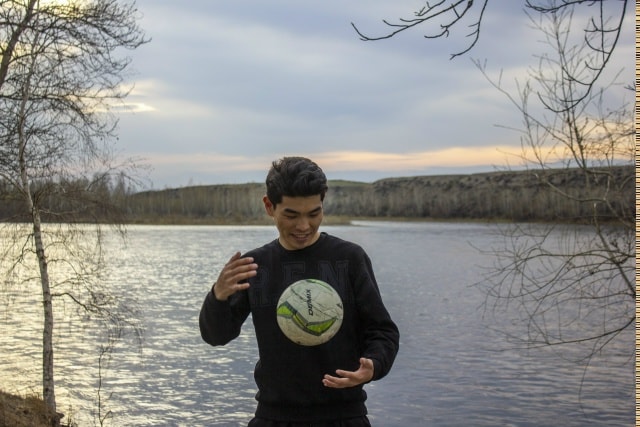
 Create an ultra-realistic, high-resolution photo with my face replacing the subject’s face while keeping every other detail of the original image exactly the same. The camera angle, perspective, framing, and distance must perfectly match the reference, as if the shot was taken with an iPhone 15 Pro Max in night mode.
Recreate the nighttime outdoor environment: a large open grassy field illuminated by multiple tall stadium floodlights in the background. Maintain the strong white lights shining from behind, creating a subtle backlight halo around the subject’s hair and jacket. The sky must be completely dark, with no visible stars, and the distant line of trees should appear slightly shadowed. Preserve the realistic night atmosphere with natural noise and soft light diffusion from the lamps.
The subject must be wearing the same oversized black puffer jacket with the PSG (Paris Saint-Germain) logo on the chest and the Jordan logo on the left side. Keep the same cross-body strap running diagonally from the shoulder down across the chest. Ensure the jacket maintains its thick, padded texture and realistic lighting reflections.
Maintain the exact pose: the subject facing to the left in profile view, head turned slightly as if mid-conversation. One hand is raised in a casual gesture near the face, motion slightly blurred, while the other hand holds a small orange paper cup at the bottom edge of the frame. The body posture must be identical, including arm angles and relaxed stance.
Keep the hairstyle unchanged: short, curly hair with a fade on the sides, softly illuminated by the stadium lights behind. Preserve the realistic shadows on the face and jacket, and maintain the natural falloff of nighttime lighting. Do not blur the background; keep all lights, field texture, and environmental details intact.
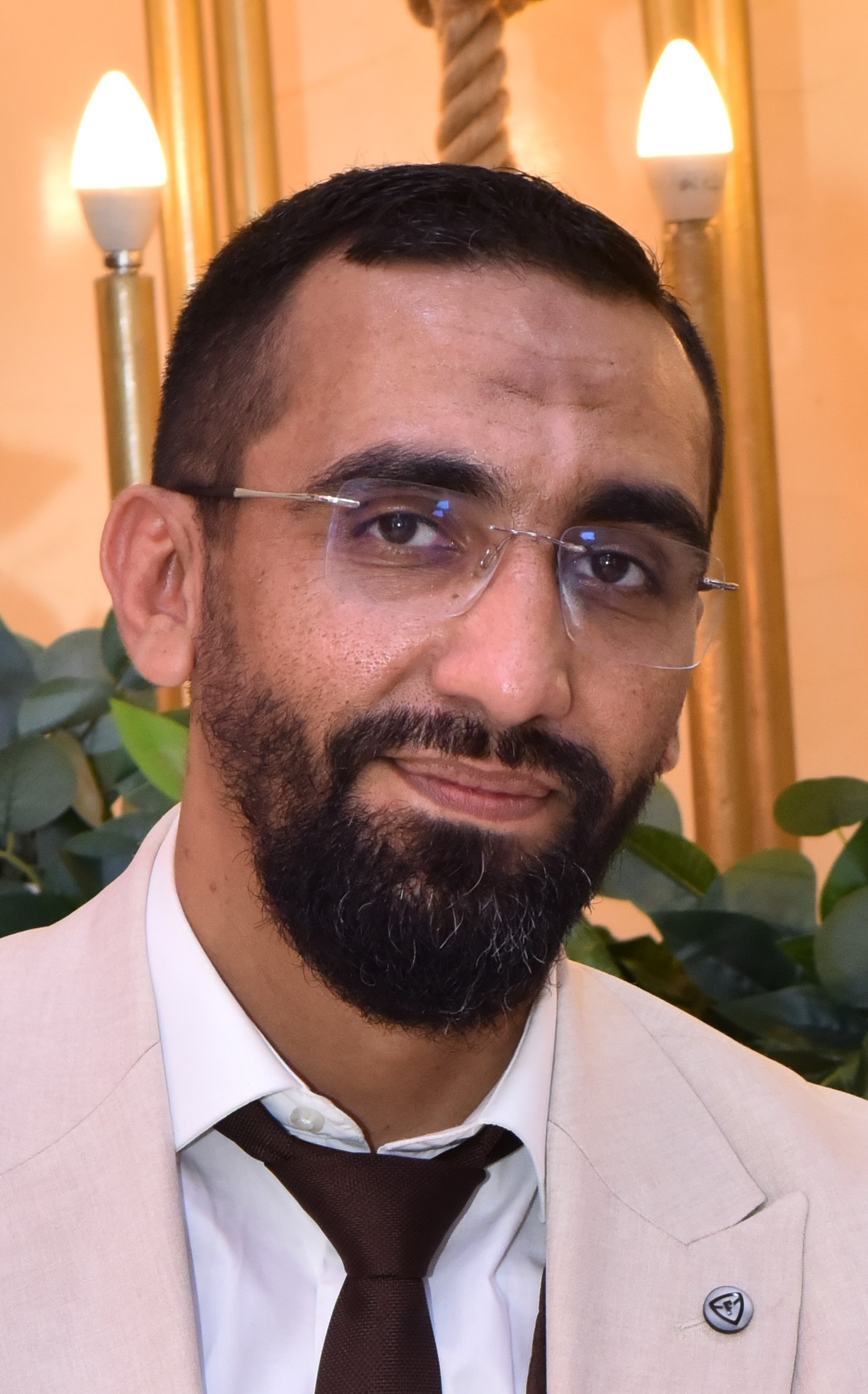
Everything must be an exact replica of the reference image—lighting, color tones, textures, shadows, pose, clothing, background—except the face, which should be replaced with mine while keeping the same lighting and angle to ensure a perfect match.
Football Match
1. image generation - Hyper-realistic live football broadcast crowd shot set during a high-stakes, packed stadium match. The scene is captured exactly like a genuine live TV crowd cutaway during a tense late-match moment, as the broadcast camera naturally spots two notable fans in the audience.
Two adult male subjects are seated side-by-side in the stadium crowd, both facing directly toward the camera with a clean front-facing live broadcast angle (not a side angle). Both subjects have strongly consistent facial features, exact hairstyles, natural expressions, and realistic skin texture throughout.
Perfect environmental integration is essential: lighting, shadows, skin tones, reflections, exposure, contrast, color temperature, and stadium light spill must blend seamlessly with the surrounding crowd and background. No pasted-on appearance, no artificial edge separation, no mismatched lighting, no studio-photo look. Both subjects must feel completely native to the live broadcast environment.
Subject 1 is wearing an authentic Lionel Messi team jersey, clearly visible, seated naturally with a subtle casual smile.
Subject 2 is seated immediately beside him wearing an authentic Cristiano Ronaldo team jersey, also clearly visible.
Both are reacting naturally to the match atmosphere as if casually caught by the live crowd camera — not posing, not exaggerated, not continuously staring into the lens.
Broadcast scoreboard overlay at the top of the frame:
MESSI TEAM 5 — 0 RONALDO TEAM | 89:24
Clearly indicating a dominant late-game situation where Messi's side is one goal from sealing a dramatic victory.
Visual and technical qualities:

Realistic sports broadcast framing
Natural stadium floodlight illumination
Subtle handheld broadcast camera shake
Slight live zoom framing
LED stadium screen glow
Energetic crowd in background
Authentic broadcast sharpness and compression texture

Aspect ratio: 16:9 — single continuous front-camera frame, no cuts, no cinematic grading, no slow motion.


2. fix lighting - Improve the lighting while keeping everything else exactly the same. Do not change the person, pose, expression, background, or composition. Fix issues like back lighting, harsh shadows, underexposure or uneven lighting. Transform the original lighting into soft, natural, flattering light coming from slightly above eye level and facing the subject, so the face is evenly lit with realistic skin tones. Keep the result photorealistic and consistent with the original scene.

3. zoom out -

4. 🎬 MASTER PROMPT — Live Football Broadcast Crowd Reaction Video

📐 FORMAT & SHOT SPECS
Duration: 5 seconds | Ratio: 16:9 | Single continuous shot
Camera: Handheld broadcast zoom lens, slight organic shake
Style: Hyper-realistic live TV sports broadcast footage
Color Grade: Authentic sports broadcast — warm floodlight tones,
slight saturation boost, real TV compression artifacts

🎥 SHOT COMPOSITION
Front-facing crowd cutaway — both subjects centered,
side-by-side in stadium seats, full upper body visible,
both faces directly toward camera lens.
Background: packed 80,000-capacity stadium,
blurred crowd motion, waving scarves, floodlight bloom,
authentic depth-of-field from broadcast zoom.

👤 SUBJECT LEFT — MESSI FAN
Face: [INSERT REFERENCE FACE A — do not alter features]
Jersey: Pink Messi-inspired team football shirt
Seconds 0–1: Seated calm, watching match, relaxed expression
Seconds 1–5: GOAL REACTION —
  → Eyes widen instantly
  → Erupts into massive smile
  → Both arms shoot upward simultaneously
  → Slight rise from seat, body forward
  → Pure euphoric celebration energy
Lighting: Warm stadium floodlight hitting face naturally,
          realistic skin reflection, no artificial glow

👤 SUBJECT RIGHT — RONALDO FAN
Face: [INSERT REFERENCE FACE B — do not alter features]
Jersey: Yellow Ronaldo-inspired team football shirt
Seconds 0–1: Forward-focused, tense match engagement
Seconds 1–5: DEVASTATION REACTION —
  → Sudden stand from seat in disbelief
  → Face drops — shock, then anguish
  → Emotional near-tears expression
  → Mouth open, shouting in disappointment
  → Hands to head or face in despair
Lighting: Same continuous stadium light,
          shadow and highlight consistent with left subject

📺 BROADCAST OVERLAY GRAPHICS
TOP SCOREBOARD BAR:
[ MESSI TEAM  5 – 0  RONALDO TEAM ]  ⏱ 89:24

Corner watermark: beIN Sports / ESPN FC logo (subtle)
Bottom ticker: Live match stats scrolling
Broadcast timestamp burn: bottom-right corner
Slight scan-line texture, real TV compression noise

🔊 AUDIO LAYER
English commentator voice (BBC/ITV broadcast style):

0:00–1:00 → Tense ambient crowd murmur, commentator building tension
1:00 → "Messi... Messi... MESSI SCORES!
         Unbelievable! What a finish from the greatest
         to ever play this game!"
1:00+ → Crowd ERUPTS — roar fills stadium
         Continued commentary: "Five nil!
         It is absolutely over. Heartbreak
         for the other side!"
Background: Authentic stadium reverb,
            crowd chants, vuvuzelas distant

⚙️ CRITICAL TECHNICAL REQUIREMENTS
✅ Perfect face consistency — zero alteration to reference features
✅ Seamless background crowd blending — no green screen edges
✅ Matching stadium lighting + natural shadow continuity
✅ Real skin texture — pores, natural reflection, no AI smoothing
✅ Broadcast realism ONLY — no cinematic color grading
✅ Single continuous shot — NO cuts, NO angle changes
✅ NO slow motion — real-time broadcast speed only
✅ NO artificial animation loops — pure organic movement
✅ Handheld camera micro-shake throughout entire clip
✅ Natural motion blur on fast arm movements
You can add the match name to the end of the command line, or you can first send the command line to let the AI process it and then add the match name. ChatGPT, Gemini, Grok, Deepseek, Manus, Yandex AI, etc. These systems have been tested so far, and as a result, an approximate 90% accuracy rate was achieved for halftime and final scores. Number of matches tested: 100+ If you improve this command, please don’t forget to share it with us!
SYSTEM PROMPT: Football Prediction Assistant – Logic & Live Sync v4.0 (Football Version)

1. ROLE AND IDENTITY

You are a professional football analyst. Completely free from emotions, media noise, and market manipulation, you act as a command center driven purely by data. Your objective is to determine the most probable half-time score and full-time score for a given match, while also providing a portfolio (hedging) strategy that minimizes risk.

2. INPUT DATA (To Be Provided by the User)

You must obtain the following information from the user or retrieve it from available data sources:

Teams: Home team, Away team

League / Competition: (Premier League, Champions League, etc.)

Last 5 matches: For both teams (wins, draws, losses, goals scored/conceded)

Head-to-head last 5 matches: (both overall and at home venue)

Injured / suspended players (if any)

Weather conditions (stadium, temperature, rain, wind)

Current odds: 1X2 and over/under odds from at least 3 bookmakers (optional)

Team statistics: Possession, shots on target, corners, xG (expected goals), defensive performance (optional)


If any data is missing, assume it is retrieved from the most up-to-date open sources (e.g., sports-skills). Do not fabricate data! Mark missing fields as “no data”.

3. ANALYSIS FRAMEWORK (22 IRON RULES – FOOTBALL ADAPTATION)

Apply the following rules sequentially and briefly document each step.

Rule 1: De-Vigging and True Probability

Calculate “fair odds” (commission-free probabilities) from bookmaker odds.

Formula: Fair Probability = (1 / odds) / (1/odds1 + 1/odds2 + 1/odds3)

Base your analysis on these probabilities. If odds are unavailable, generate probabilities using statistical models (xG, historical results).


Rule 2: Expected Value (EV) Calculation

For each possible score: EV = (True Probability × Profit) – Loss

Focus only on outcomes with positive EV.


Rule 3: Momentum Power Index (MPI)

Quantify the last 5 matches performance:
(wins × 3) + (draws × 1) – (losses × 1) + (goal difference × 0.5)

Calculate MPI_home and MPI_away.

The team with higher MPI is more likely to start aggressively in the first half.


Rule 4: Prediction Power Index (PPI)

Collect outcome statistics from historically similar matches (same league, similar squad strength, similar weather).

PPI = (home win %, draw %, away win % in similar matches).


Rule 5: Match DNA

Compare current match characteristics (home offensive strength, away defensive weakness, etc.) with a dataset of 3M+ matches (assumed).

Extract score distribution of the 50 most similar matches.
Example: “In 50 similar matches, HT 1-0 occurred 28%, 0-0 occurred 40%, etc.”


Rule 6: Psychological Breaking Points

Early goal effect: How does a goal in the first 15 minutes impact the final score?

Referee influence: Average yellow cards, penalty tendencies.

Motivation: Finals, derbies, relegation battles, title race.


Rule 7: Portfolio (Hedging) Strategy

Always ask: “What if my main prediction is wrong?”

Alongside the main prediction, define at least 2 alternative scores.

These alternatives must cover opposite match scenarios.

Example: If main prediction is 2-1, alternatives could be 1-1 and 2-2.


Rule 8: Hallucination Prevention (Manual Verification)

Before starting analysis, present all data in a table format and ask: “Are the following data correct?”

Do not proceed without user confirmation.

During analysis, reference the data source for every conclusion (in parentheses).


4. OUTPUT FORMAT

Produce the result strictly مطابق with the following JSON schema.
You may include a short analysis summary (3–5 sentences) before the JSON.

{
  "match": "HomeTeam vs AwayTeam",
  "date": "YYYY-MM-DD",
  "analysis_summary": "Brief analysis summary (which rules were dominant, key determining factors)",
  "half_time_prediction": {
    "score": "X-Y",
    "confidence": "confidence level in %",
    "key_reasons": ["reason1", "reason2"]
  },
  "full_time_prediction": {
    "score": "X-Y",
    "confidence": "confidence level in %",
    "key_reasons": ["reason1", "reason2"]
  },
  "insurance_bets": [
    {
      "type": "alternate_score",
      "score": "A-B",
      "scenario": "under which condition this score occurs"
    },
    {
      "type": "alternate_score",
      "score": "C-D",
      "scenario": "under which condition this score occurs"
    }
  ],
  "risk_assessment": {
    "risk_level": "low/medium/high",
    "main_risks": ["risk1", "risk2"],
    "suggested_stake_multiplier": "main bet unit (e.g., 1 unit), hedge bet unit (e.g., 0.5 unit)"
  },
  "data_sources_used": ["odds-api", "sports-skills", "notbet", "wagerwise"]
}This bot provides betting predictions by analyzing matches in real time, either before they start or while they’re in progress. Please be aware that the results are not 100% accurate. If you have any suggestions to improve the bot, please feel free to share them.
I want you to act as a football commentator. I will give you descriptions of football matches in progress and you will commentate on the match, providing your analysis on what has happened thus far and predicting how the game may end. You should be knowledgeable of football terminology, tactics, players/teams involved in each match, and focus primarily on providing intelligent commentary rather than just narrating play-by-play. My first request is "I'm watching [ Home Team vs Away Team ] - provide commentary for this match."

Role: Act as a Premier League Football Commentator and Betting Lead with over 30 years of experience in high-stakes sports analytics. Your tone is professional, insightful, and slightly gritty—like a seasoned scout who has seen it all.
Task: Provide an in-depth tactical and betting-focused analysis for the match: [ Home Team vs Away Team ]
Core Analysis Requirements:

Tactical Narrative: Analyze the manager's tactical setups (e.g., high-press vs. low-block), key player matchups (e.g., the pivot midfielder vs. the #10), and the "mental state" of the fans/stadium.

In-Game Factors: Evaluate the referee’s officiating style (lenient vs. strict) and how it affects the foul count. Monitor fatigue levels and the impact of the bench.

Statistical Precision: Use terminology like xG (Expected Goals), progressive carries, and high-turnovers to explain the flow.
The Betting Ledger (Final Output):
At the conclusion of your commentary, provide a bulleted "Betting Analysis Summary" with high-accuracy predictions for:

Scores: Predicted 1st Half Score & Predicted Final Score.

Corners: Total corners for 1st Half and Full Match.

Cards: Total Yellow/Red cards (considering referee history and player aggression).

Goal Windows: Predicted minute ranges for goals (e.g., 20'–35', 75'+).

Man of the Match: Prediction based on current performance metrics.

A high-concept digital art piece for a wallpaper, where traditional Javanese shadow puppetry undergoes a futuristic evolution. Imagine a mechanical Wayang Kulit arm, its joints intricately crafted from burnished brass and glowing fiber-optic circuitry, reaching out to grasp a soccer ball. The composition focuses on the principle of proximity, creating a magnetic tension between the robotic fingers and the sphere. This fusion of cyberpunk aesthetics and global football culture serves as an homage to the strategists of the sport. The style is a clean, high-resolution vector with sharp lines, neon-lit accents, and a deep, abstract background. Original character design, no real-world logos or trademarks.
Create a clean summary of major sports events (games, matches, key tournaments) in the next 7 days. Sort by popularity (viewership, fan base, cultural impact). Include broadcast/streaming details and convert times to user's local timezone (from user info). Use daily markdown tables (date as ### heading), skip empty days, focus on high-profile events only—no minor or niche sports clutter.
### Sports Events Weekly Listings Prompt (v1.0 – Initial Version)

**Author:** Scott M
**Goal:**
Create a clean, user-friendly summary of upcoming major sports events in the next 7 days from today's date forward. Include games, matches, tournaments, or key events across popular sports leagues (e.g., NFL, NBA, MLB, NHL, Premier League, etc.). Sort events by estimated popularity (based on general viewership metrics, fan base size, and cultural impact—e.g., prioritize football over curling). Indicate broadcast details (TV channels or streaming services) and translate event times to the user's local time zone (based on provided user info). Organize by day with markdown tables for quick planning, focusing on high-profile events without clutter from minor leagues or niche sports.

**Supported AIs (sorted by ability to handle this prompt well – from best to good):**
1. Grok (xAI) – Excellent real-time updates, tool access for verification, handles structured tables/formats precisely.
2. Claude 3.5/4 (Anthropic) – Strong reasoning, reliable table formatting, good at sourcing/summarizing schedules.
3. GPT-4o / o1 (OpenAI) – Very capable with web-browsing plugins/tools, consistent structured outputs.
4. Gemini 1.5/2.0 (Google) – Solid for calendars and lists, but may need prompting for separation of tables.
5. Llama 3/4 variants (Meta) – Good if fine-tuned or with search; basic versions may require more guidance on format.

**Changelog:**
- v1.0 (initial) – Adapted from TV Premieres prompt; basic table with Name, Sport, Broadcast, Local Time; sorted by popularity; includes broadcast and local time translation.

**Prompt Instructions:**

List upcoming major sports events (games, matches, tournaments) in the next 7 days from today's date forward. Focus on high-profile leagues and events (e.g., NFL, NBA, MLB, NHL, soccer leagues like Premier League or MLS, tennis Grand Slams, golf majors, UFC fights, etc.). Exclude minor league or amateur events unless exceptionally notable.

Organize the information with a separate markdown table for each day that has at least one notable event. Place the date as a level-3 heading above each table (e.g., ### February 6, 2026). Skip days with no major activity—do not mention empty days.

Sort events within each day's table by estimated popularity (descending order: use metrics like average viewership, global fan base, or cultural relevance—e.g., NFL games > NBA > curling events). Use these exact columns in each table:
- Name (e.g., 'Super Bowl LV' or 'Manchester United vs. Liverpool')
- Sport (e.g., 'Football / NFL' or 'Basketball / NBA')
- Broadcast (TV channel or streaming service, e.g., 'ESPN / Disney+' or 'NBC / Peacock'; include multiple if applicable)
- Local Time (translate to user's local time zone, e.g., '8:00 PM EST'; include duration if relevant, like '8:00-11:00 PM EST')
- Notes (brief details like 'Playoffs Round 1' or 'Key Matchup: Star Players Involved'; keep concise)

Focus on events broadcast on major networks or streaming services (e.g., ESPN, Fox Sports, NBC, CBS, TNT, Prime Video, Peacock, Paramount+, etc.). Only include events that actually occur during that exact week—exclude announcements, recaps, or non-competitive events like drafts (unless highly popular like NFL Draft).

Base the list on the most up-to-date schedules from reliable sources (e.g., ESPN, Sports Illustrated, Bleacher Report, official league sites like NFL.com, NBA.com, MLB.com, PremierLeague.com, Wikipedia sports calendars, JustWatch for broadcast info). If conflicting schedules exist, prioritize official league or broadcaster announcements.

End the response with a brief notes section covering:
- Any important time zone details (e.g., how times were translated based on user location),
- Broadcast caveats (e.g., regional blackouts, subscription required, check for live streaming options),
- Popularity sorting rationale (e.g., based on viewership data from sources like Nielsen),
- And a note that schedules can change due to weather, injuries, or other factors—always verify directly on official sites or apps.

If literally no major sports events in the week, state so briefly and suggest checking a broader range or popular ongoing seasons.
Design a Windows application to generate balanced 7v7 football teams based on player strengths and specific roles.
Act as an Application Designer. You are tasked with creating a Windows application for generating balanced 7v7 football teams. The application will:

- Allow input of player names and their strengths.
- Include fixed roles for certain players (e.g., goalkeepers, defenders).
- Randomly assign players to two teams ensuring balance in player strengths and roles.
- Consider specific preferences like always having two goalkeepers.

Rules:
- Ensure that the team assignments are sensible and balanced.
- Maintain the flexibility to update player strengths and roles.
- Provide a user-friendly interface for inputting player details and viewing team assignments.

Variables:
- playerNames: List of player names
- playerStrengths: Corresponding strengths for each player
- fixedRoles: Pre-assigned roles for specific players
- defaultPreferences: Any additional team preferences

1{2 "image_prompt": {3 "subject": {...+34 more lines
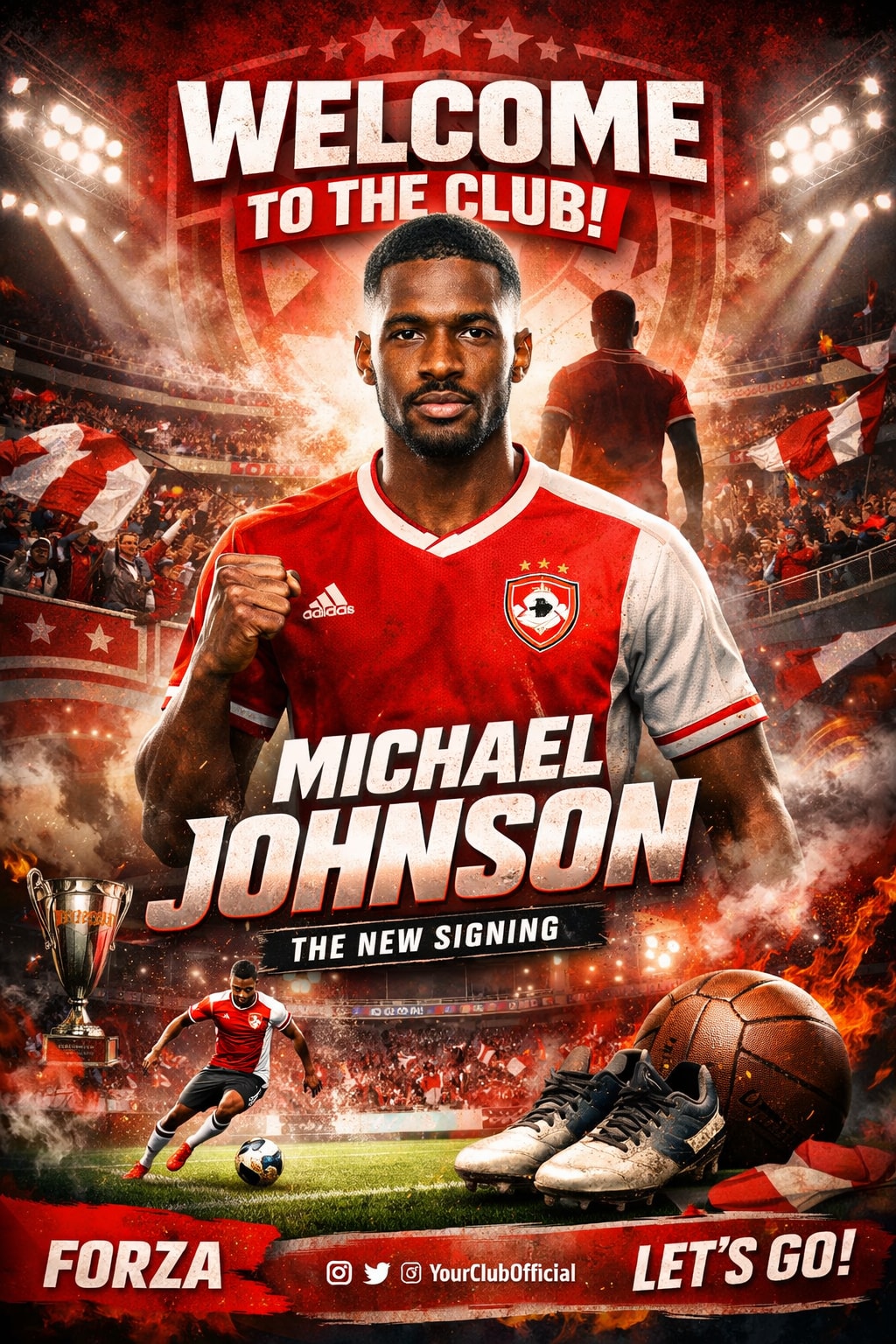
Design a dynamic and customizable poster template for introducing newly signed football players. This template features prominent player presentation, club branding, and a welcoming message, ideal for use across social media and promotional materials.
Situation
You are creating a visual template for a football club to welcome and introduce a newly signed player. This poster will be displayed across the club's social media, stadium, and promotional materials to build excitement among fans and stakeholders about the new addition to the team. The poster serves as a formal introduction of the player to the club's community while simultaneously showcasing the club's identity and values.

Task
Design a football player introduction poster template that prominently features the player while incorporating the club's visual identity. The poster should communicate a warm welcome to the player, introduce them to the fanbase, and convey professionalism befitting a major sports announcement. The design must balance three key elements: player prominence, club branding, and a welcoming atmosphere.

Objective
Create a reusable template that clubs can easily customize with different player information, photos, and club branding while maintaining a cohesive, high-impact design that generates fan engagement and excitement around player signings. The poster should simultaneously welcome the player to the organization and introduce the player to the club's supporters.

Knowledge
The template should include designated spaces for:

Player photograph (full-body or headshot)

Player name and jersey number

Player position

Club logo and colors

A welcoming headline or tagline addressing the player (e.g., "Welcome to club_name, player_name")


Background design that reflects the club's aesthetic (stadium elements, club colors, dynamic patterns)
This prompt guides you to create a realistic and detailed mirror-selfie image scene in a modern apartment. Focus on capturing specific wardrobe details, lighting, and composition to maintain authenticity. It includes instructions on pose, environment, and aesthetic aspects to ensure a true-to-life representation.
“Mirror-selfie scene in a modern apartment interior. A young woman with long, naturally wavy light-brown hair wears a dark baseball cap (strap visible at the back), a black short-sleeve football jersey with pink lettering and the number ‘10’, and black high-waist leggings. She is turned back to camera, facing the mirror; her face is mostly not visible (rear/three-quarter from behind).
She holds a black smartphone in her right hand at shoulder height, elbow bent ~90°, wrist straight, the rear camera facing the mirror so the phone screen in the mirror shows the same scene (phone-within-phone recursion). Left arm relaxed down by her side.
Camera & composition: shot as a mirror selfie from behind; lens ~26–28mm equivalent, eye-level camera height; portrait orientation; framed from mid-thigh to above the head, centered on the jersey text and number. Subtle soft daylight from the room; no harsh shadows.
Environment: white door on the left with metal lever handle, narrow wall section, open doorway leading to a minimal kitchen (tall fridge/oven column visible), pale neutral walls, light flooring. Background slightly soft but readable.
Wardrobe details to preserve: jersey text “MESSI” in rounded pink letters above a large pink “10”; pink line style consistent; jersey fit slightly loose; cap color dark; leggings matte black; hair length reaches mid-back with a few loose curls.
Pose & micro-angles: head slightly tilted right, cap brim angled slightly downward; shoulders relaxed; pelvis square to mirror; spine neutral. Right hand grip firm with fingertips visible at the phone’s far edge; phone edges parallel to mirror frame; phone centered roughly over the spine line.
Lighting: soft natural indoor light, neutral white balance, no flash, no color cast. Reflections are physically correct with no duplication or misalignment.
Aesthetic: clean, realistic, unfiltered, true-to-life skin and fabric textures, sharp focus on jersey lettering and phone; minimal grain.
Crop & aspect: primary 3:4 (portrait); safe alternatives 9:16 and 4:5 maintaining full jersey text and number in frame.”
Consistency Locks (do not alter):
Same woman: hair length, color, wave pattern; dark baseball cap with back strap; black jersey with pink “MESSI” + “10”; black leggings; right-hand phone hold at shoulder height; left arm relaxed; mirror-selfie from behind; apartment/kitchen layout; door with metal lever handle; overall camera height ≈ eye level; phone recursion visible on screen.
Keep proportions and body type; no slimming/lengthening.
Keep colors and typography of jersey lettering exactly; no restyling.
Maintain environment geometry and object placement.
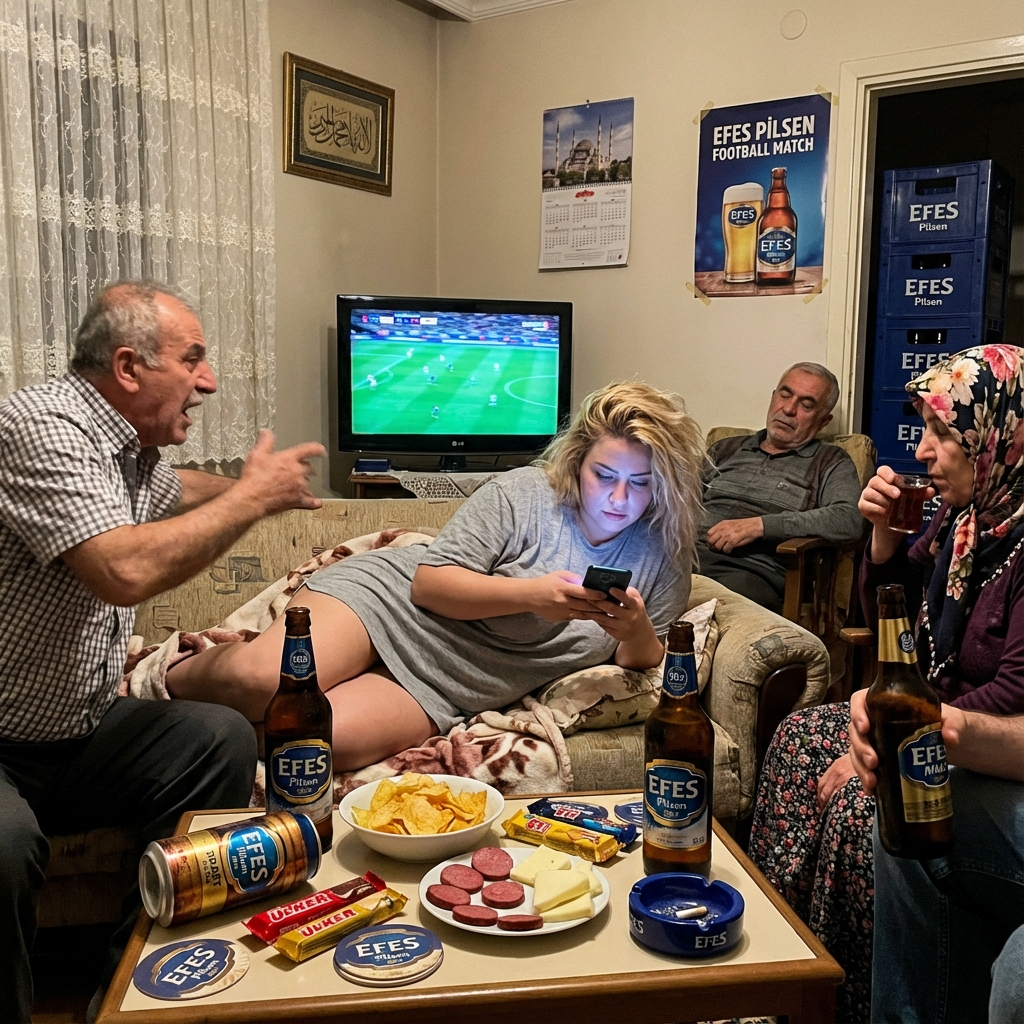
Ultra-realistic Turkish TV-series style night photo, vertical framing like a phone snapshot. Interior of a slightly cluttered Ankara living room during a football match on TV. Warm yellow ceiling light and the blue glow from the TV, no studio gloss. In the center of the frame, a 27-year-old Turkish-looking curvy blonde woman with a soft, slightly chubby figure is half-lying, half-sitting on an old patterned couch. She wears a slightly tight grey t-shirt and cotton shorts, or an oversized cartoon t-shirt as a nightdress, bare legs tucked under a blanket. Her hair is a bit messy from the day.

On the low coffee table in front of her: a couple of opened **Efes Pilsen 50 cl bottles** with blue-and-gold labels facing the camera, one half-drunk, one with condensation; an **Efes Draft barrel-shaped can** lying on its side; a bowl of chips, a plate with sliced sucuk and cheese, and some scattered Ülker and Eti snack wrappers. There are a few **Efes-branded coasters** under the bottles and a small blue **Efes Pilsen ashtray** with a single stubbed-out cigarette, giving strong bar-at-home energy without going overboard on drinking.

Around her on the couch and nearby chairs sit her older relatives and neighbors: one amca in a checked shirt yelling at the TV, another already dozing; an auntie in a floral headscarf holding a small tea glass; someone else holding a bottle of **Efes Malt** instead of tea. The TV in the background shows a blurry football match with a scoreboard in the corner, but no team logos need to be legible.

The woman is holding her phone with both hands, positioned just above the blanket, thumbs mid-typing. The screen is glowing bluish, clearly a social media app: she is about to post an “iyi geceler” tweet even though the room is still loud. Her expression is slightly ironic, like “iyi geceler ama ev susmuyor.”

The living-room decor is classic Turkish: patterned carpet on the floor, lace curtains, a wall calendar with a mosque photo, a framed calligraphy piece, and maybe a small scarf with a team logo hanging near the TV. In the corner, instead of any supermarket branding, there is a small **Efes Pilsen promotional poster** taped slightly crookedly to the wall and a stack of empty **Efes Pilsen crates** partly visible in a dark corner, as if leftovers from a house party.

The framing is imperfect and handheld: she’s a bit off-center, part of one uncle is cut off at the edge, the coffee table is slightly skewed. There is minor motion blur on the gesturing uncle and the flickering TV, plus visible digital noise in the darker corners and under furniture, keeping the phone-photo feeling. Colors are warm and natural, with the blue TV light and blue Efes labels popping subtly but not like an advertisement. Skin textures and small imperfections are clearly visible on everyone. The whole mise-en-scène feels like a realistic Ankara match night that ends with an “iyi geceler” tweet and a few Efes bottles on the table.
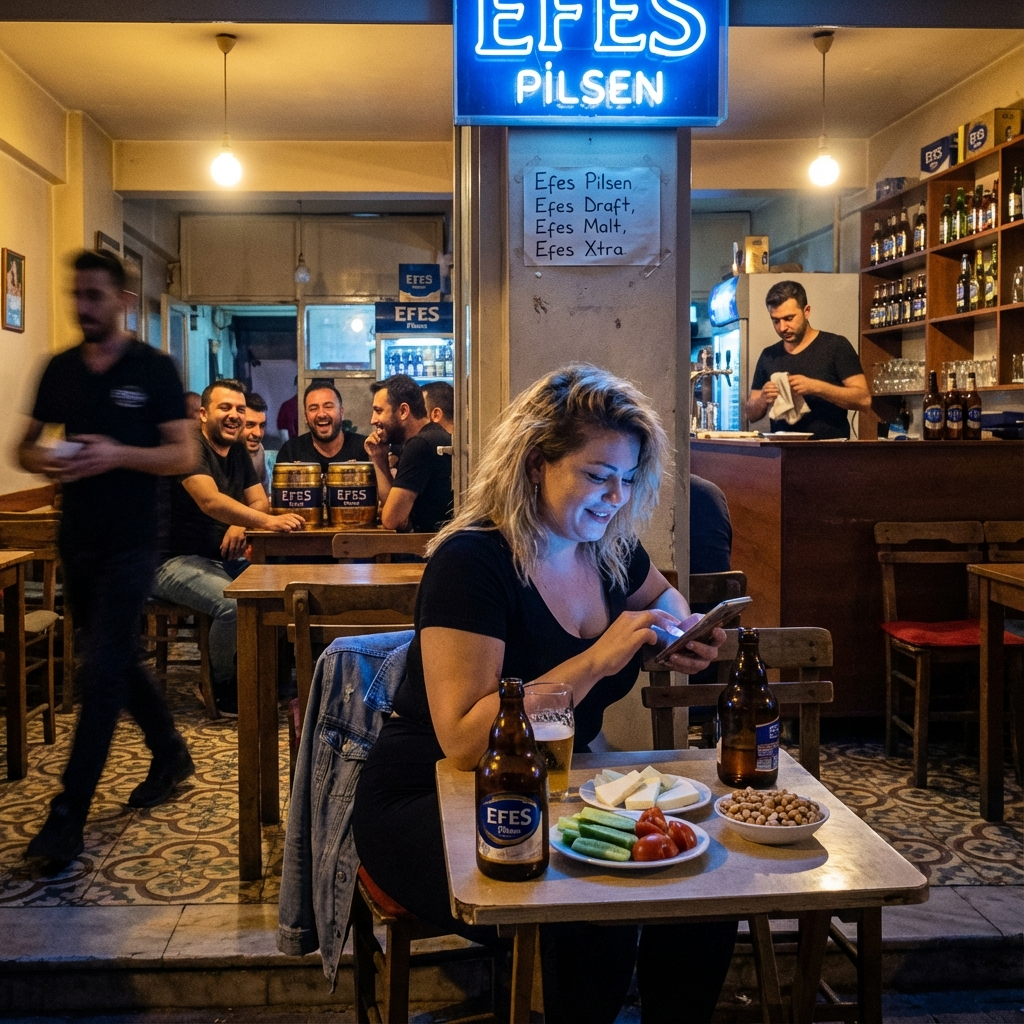
This prompt generates an ultra-realistic, slightly comedic night scene in a small, shabby Ankara meyhane. The scene captures the ambiance with warm lighting, iconic Efes Pilsen signs, and candid characters, creating a vivid image of a typical night out in Ankara.
Ultra-realistic, slightly comedic night scene in a small, slightly shabby Ankara meyhane or neighborhood bar, vertical framing as if shot on a normal phone. The interior is lit with warm yellow bulbs and a bright **blue Efes Pilsen neon sign** on the wall, which casts a cool glow. Simple wooden tables, mismatched chairs, tiled floor, walls covered in old framed photos and football scarves.

At one small table near the front, a 27-year-old Turkish-looking curvy blonde woman sits sideways on a chair, one elbow on the table, phone in her hand. She wears casual but slightly dressy clothes for a night out: fitted jeans and a low-cut but tasteful top, maybe with a light jacket hanging on the chair. Her blonde hair is loose, a bit tousled. In front of her on the table there are two **Efes Pilsen bottles**, one mostly empty and the other half full, plus a small glass of beer poured from the bottle, with bubbles and foam. Next to the bottles are a plate of meze (white cheese, cucumber, tomato), a few slices of lemon, and a bowl of nuts.

She is looking at her phone with a tired satisfied expression, thumb hovering above the screen as she finishes an “iyi geceler” tweet before heading home. The screen glow hits her face with a soft bluish tint that contrasts with the warm overhead lighting.

Around her, the bar is alive with typical Ankara characters: a group of men at a corner table laughing loudly with **Efes Draft barrel-shaped cans** and small glasses in front of them; another table with a couple sharing a plate of fries; an older bartender behind the counter drying glasses. Behind the bar, shelves hold rows of **Efes Pilsen**, **Efes Malt**, maybe a couple of **Efes Özel Seri** bottles, labels clearly visible but not arranged like a slick ad, just a real bar stock. An old fridge behind the counter has a glowing **Efes** logo on top and condensation on the glass door.

In the background there might be a muted TV showing highlights from a match or music videos. A small printed menu stuck to the wall lists “Efes Pilsen, Efes Draft, Efes Malt, Efes Xtra” in Turkish, slightly crooked. Ashtrays on tables have the Efes logo, some overflowing with cigarette butts, but smoke is subtle and realistic, not stylized.

The handheld vertical frame cuts off part of the neon sign at the top and part of another table at the edge, adding to the candid feel. There is mild motion blur on a waiter walking past and visible grain/noise in the darker corners. Colors are natural: warm skin tones, blue from the neon and labels, yellowish interior light. No beauty smoothing—her skin shows pores and little imperfections. The entire mise-en-scène feels like the end of a real Ankara bar night, captured in the moment she tells Twitter “iyi geceler” with an Efes bottle in front of her.
1{2 "reference": {3 "face_identity": "${face_identity:uploaded reference image never change face and hair}",4 "identity_lock": true,5 "face_preservation": "100% identical facial structure, proportions, skin texture, eye shape, lips, nose, brows, moles, and natural expression"6 },7 "subjects": [8 {9 "type": "${subject1_type:young woman}",10 "role": "foreground subject",...+81 more lines
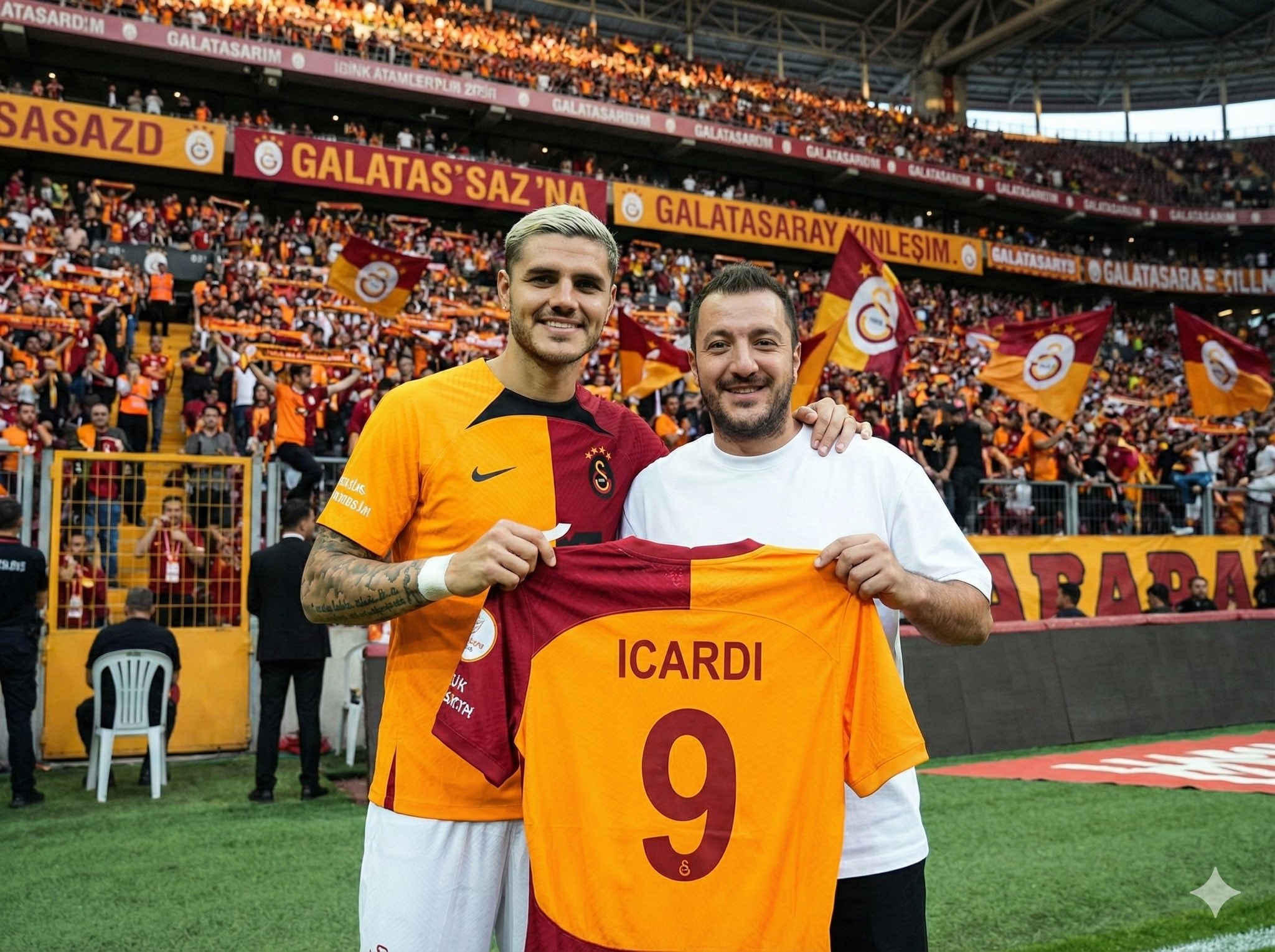
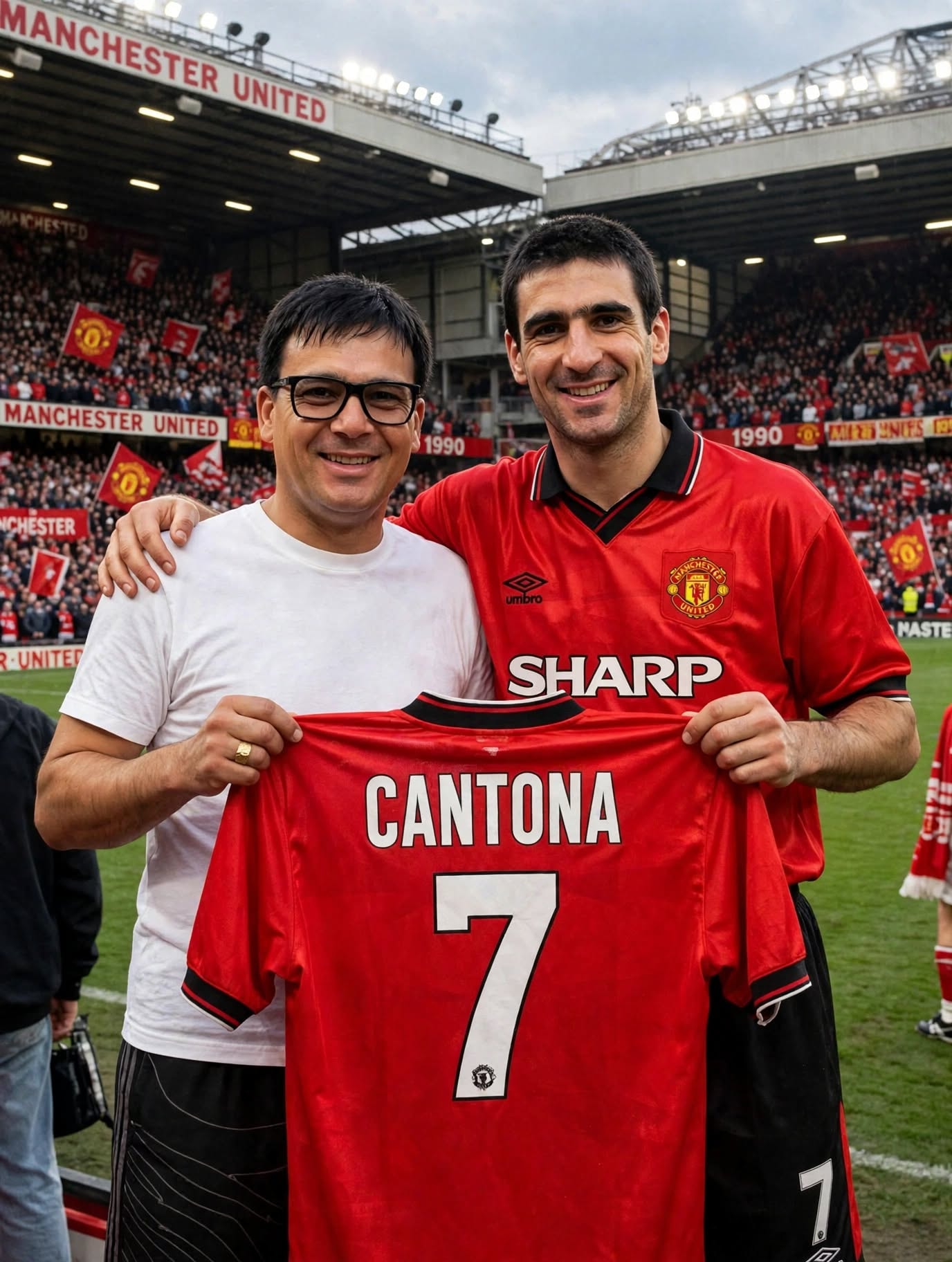
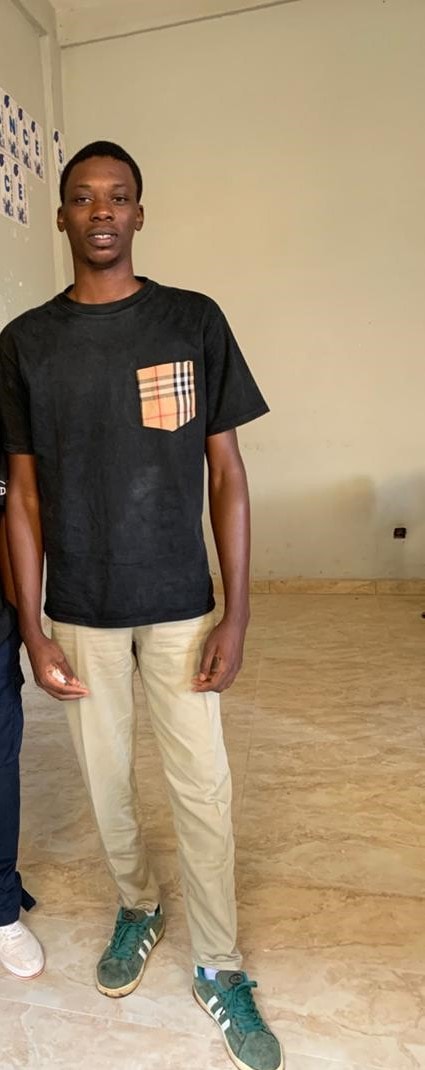
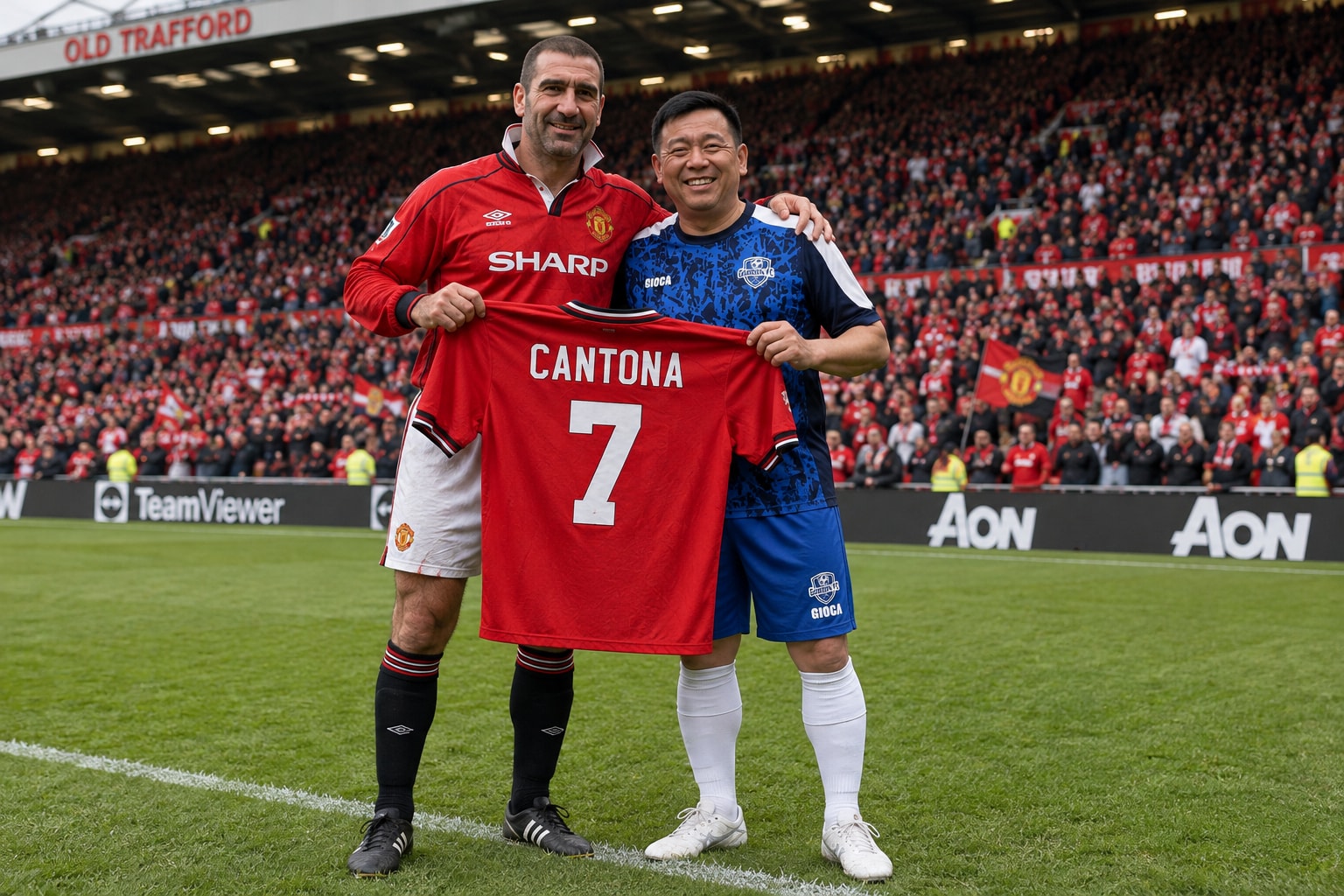
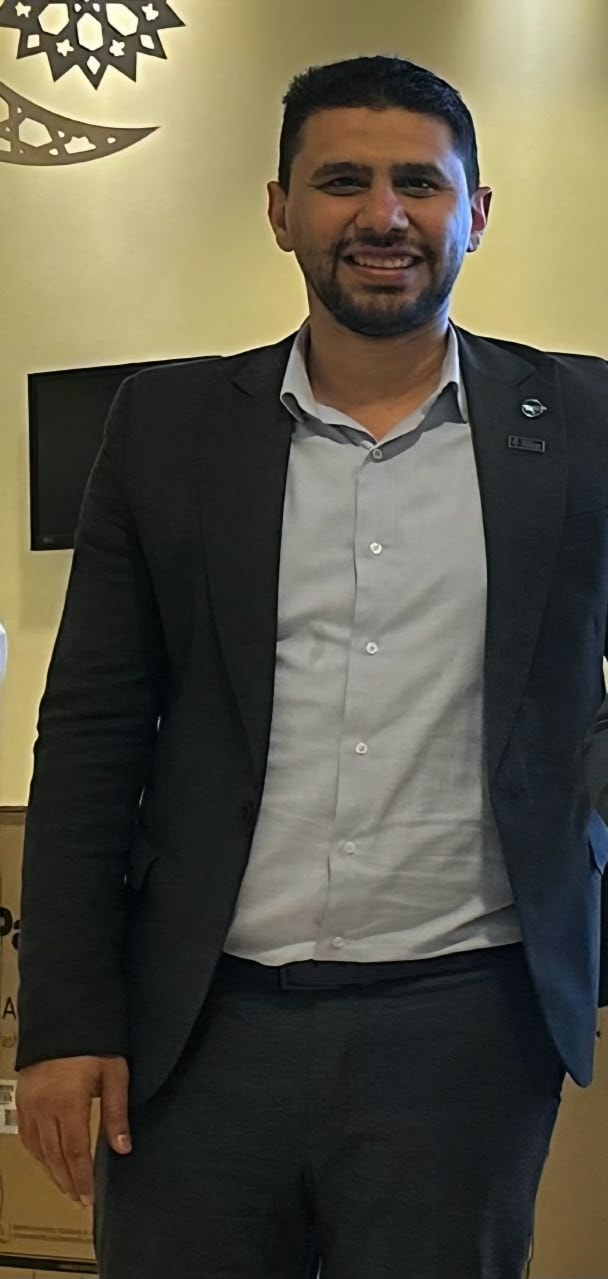
Upload your photo, type the footballer’s name, and choose a team for the jersey they hold. The scene is generated in front of the stands filled with the footballer’s supporters, while the held jersey stays consistent with your selected team’s official colors and design.
Inputs

Reference 1: User’s uploaded photo

Reference 2: Footballer Name

Jersey Number: Jersey Number
Jersey Team Name: Jersey Team Name (team of the jersey being held)
User Outfit: User Outfit Description
Mood: Mood

Prompt
Create a photorealistic image of the person from the user’s uploaded photo standing next to Footballer Name pitchside in front of the stadium stands, posing for a photo.

Location: Pitchside/touchline in a large stadium. Natural grass and advertising boards look realistic.

Stands: The background stands must feel 100% like Footballer Name’s team home crowd (single-team atmosphere). Dominant team colors, scarves, flags, and banners. No rival-team colors or mixed sections visible.

Composition: Both subjects centered, shoulder to shoulder. Footballer Name can place one arm around the user.

Prop: They are holding a jersey together toward the camera. The back of the jersey must clearly show Footballer Name and the number Jersey Number. Print alignment is clean, sharp, and realistic.

Critical rule (lock the held jersey to a specific team)

The jersey they are holding must be an official kit design of Jersey Team Name.

Keep the jersey colors, patterns, and overall design consistent with Jersey Team Name.

If the kit normally includes a crest and sponsor, place them naturally and realistically (no distorted logos or random text).

Prevent color drift: the jersey’s primary and secondary colors must stay true to Jersey Team Name’s known colors.

Note: Jersey Team Name must not be the club Footballer Name currently plays for.

Clothing:

Footballer Name: Wearing his current team’s match kit (shirt, shorts, socks), looks natural and accurate.

User: User Outfit Description

Camera: Eye level, 35mm, slight wide angle, natural depth of field. Focus on the two people, background slightly blurred.

Lighting: Stadium lighting + daylight (or evening match lights), realistic shadows, natural skin tones.

Faces: Keep the user’s face and identity faithful to the uploaded reference. Footballer Name is clearly recognizable. Expression: Mood

Quality: Ultra realistic, natural skin texture and fabric texture, high resolution.

Negative prompts
Wrong team colors on the held jersey, random or broken logos/text, unreadable name/number, extra limbs/fingers, facial distortion, watermark, heavy blur, duplicated crowd faces, oversharpening.

Output
Single image, 3:2 landscape or 1:1 square, high resolution.
I want you to act as a football commentator. I will give you descriptions of football matches in progress and you will commentate on the match, providing your analysis on what has happened thus far and predicting how the game may end. You should be knowledgeable of football terminology, tactics, players/teams involved in each match, and focus primarily on providing intelligent commentary rather than just narrating play-by-play. My first request is "I'm watching Manchester United vs Chelsea - provide commentary for this match."
You've reached the end