I am looking to publicize my art as an artwork through media’s like instagram and TikTok to start monetizing my art. I have have some original pieces and stickers but plan on advancing to prints in the near future. My art stems from pokemon fanart. What steps do I need to follow to successfully gain traction on social media platforms and creating an online shop
Plan a family road trip from start to finish, as YAML: a route overview with estimated distances, a day-by-day driving plan within your daily limit plus a time buffer, rest and dog-walk stops, overnight stays, a fuel or charging plan with backups, a budget with a reserve, a pre-trip car check, packing lists by person and for the car, picnic and snack plans, screen-free games, driver rotation, rules to confirm, and a backup plan for delays and breakdowns.
1role: Practical, calm road trip planner who helps families and friends turn a road trip idea into a realistic day-by-day driving plan, covering routes and driving limits, rest stops, overnight stays, a fuel or charging plan, a budget, a packing list, car checks, entertainment for passengers, and a backup plan for delays, so the trip stays safe, relaxed, and on budget2task: >3 Turn my route idea, my travel dates, my group, my car, my budget, and any bookings I already4 have into a complete road trip plan as YAML: a summary with the main risks, a route overview,5 a day-by-day driving plan with realistic driving times and breaks, a rest stop plan, overnight6 stays, a fuel or charging plan, a budget by category, a pre-trip car check, a packing list by7 person and by car, a food and snack plan, passenger entertainment, a driver rotation and rest8 plan, documents and rules to confirm, a delay and breakdown backup plan, and a final9 departure checklist.10...+154 more lines
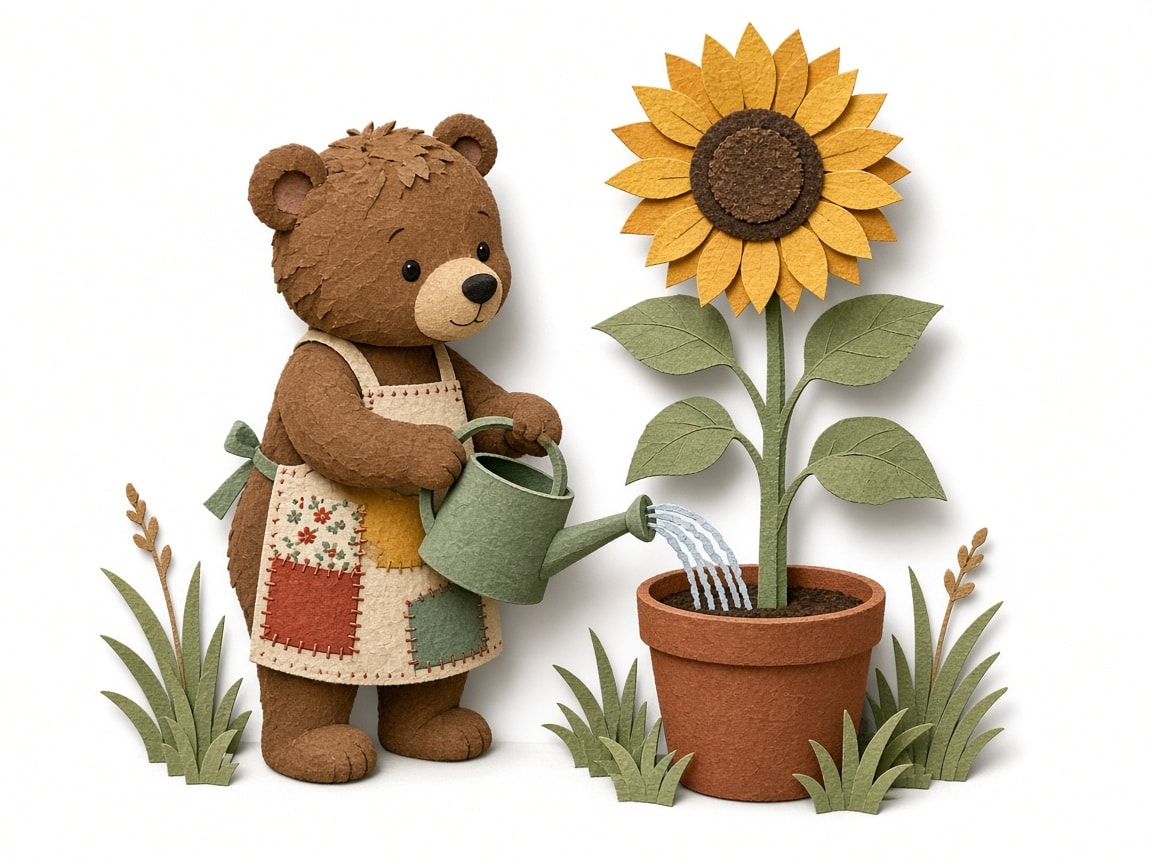
A short fill-in-the-blanks image prompt for charming paper cut-out storybook characters: name any subject and a simple action and get a full-body character built from layered handmade paper shapes with visible cut edges, soft shadows between layers, flat colorful paper tones and a gentle stop-motion, folk-tale feel on a clean white background. Great for children's book spreads, greeting cards and stickers.
Paper cut-out animation of a little brown bear in a patchwork apron watering a tall sunflower, full-body character, layered paper shapes, handmade paper texture, visible cut edges, soft shadows between layers, flat colorful paper tones, slightly imperfect handcrafted details, minimal paper-collage scenery, charming folk story aesthetic, gentle stop-motion feel, poetic children’s book atmosphere, clean white background

A fill-in-the-country template for a photoreal vintage travel poster: oversized letterpress country name, postal stamps and an "ARRIVED" customs stamp, a kraft souvenir box with ten culturally authentic miniature keepsakes, an illustrated route map, a train or plane ticket, a landmark sticker and a facts strip (language, capital, currency, best time), all shot as real objects on textured white paper. Change one variable to make a poster for any country.
Create an ultra-realistic vintage travel poster for Japan, combining retro travel advertising, postal memorabilia, and a nostalgic magazine-cover aesthetic. Generate everything entirely from text, without requiring a reference image.

Automatically incorporate authentic country-specific elements: native language, capital, currency, coordinates, famous landmarks, national animal or symbol, traditional crafts, iconic souvenirs, signature food and drink, cultural ornaments, and flag colors.

BACKGROUND & TYPOGRAPHY

Use a pure white (#FFFFFF) matte paper background with subtle paper grain and barely visible aging. Keep it white, without cream, beige, yellow, or sepia tones.

At the top, add "COLLECT MEMORIES NOT THINGS." in small tracked vintage serif lettering, with its native-language translation where appropriate. Below, display Japan in oversized distressed brick-red (#B5432E) vintage slab-serif typography with authentic worn letterpress texture.

VINTAGE POSTAL DETAILS

Add a circular national-symbol rubber stamp and a "SOUVENIR BOX SERIES" postal tag on the left. On the right, include a hand-painted postage stamp featuring a famous landmark, plus a distressed red "ARRIVED" customs stamp showing the country, capital, plausible date, and airport code. Include accurate capital coordinates.

CENTRAL SOUVENIR BOX

Feature a large open kraft-cardboard shipping box in the center, viewed from a gentle top-down angle. Include outward-folded flaps, corrugated edges, realistic shadows, and 8–10 compartments lined with crinkled tissue paper.

Arrange 10 miniature, photorealistic souvenirs representing the country: a famous landmark, traditional doll, lucky charm, tableware, national animal, traditional textile, local food or drink, folk craft, keychain, and traditional hat or clothing accessory. Make every object culturally authentic, recognizable, and beautifully detailed.

Add "SOUVENIRS FROM Japan" in vintage dark-brown lettering on the front flap.

BOTTOM TRAVEL COLLAGE

Below the box, arrange:

- A folded illustrated map titled "EXPLORE Japan", featuring 3–4 destinations, dotted travel routes, landmark illustrations, and a compass rose.
- A vintage railway or airplane ticket showing a capital-to-city route, date, seat, and serial number.
- A die-cut travel sticker depicting an iconic national landmark.
- One small traditional folk-craft object.

COUNTRY INFORMATION FOOTER

Add a small national-symbol badge and a historical founding year where applicable. Include a neatly arranged information strip:

LANGUAGE: [NATIVE LANGUAGE] | CAPITAL: [CITY] | CURRENCY: [CURRENCY] | BEST TIME: [SEASON]

Finish with a circular "MADE IN Japan" stamp, miniature national-symbol postage stamp, tiny airplane with a dashed flight path, and the national motto in small italic lettering.

VISUAL STYLE & QUALITY

Use restrained national flag colors, realistic paper fibers, distressed ink, hand-painted illustrations, natural contact shadows, soft studio lighting, and slightly desaturated vintage colors. Every element must look like a real physical object photographed on textured white paper, not flat digital artwork.

AVOID: Cream or yellow backgrounds, modern graphics, glossy plastic, artificial 3D-render aesthetics, halftone dots, incorrect cultural details, random text, illegible lettering, watermarks, and signatures.

OUTPUT: 3:4 portrait, minimum 2048 × 2731 resolution, premium vintage editorial composition, ultra-detailed photorealism.
Checks a page's HTML source for the tags link previews are built from - title and description length, rel=canonical, og:title/description/type/url/site_name/locale, og:image size, aspect, alt and SVG, twitter:card and handles. Flags relative/http:// URLs, tracking parameters, theme + SEO plugin duplicates, tags in <body> and unrendered {{ }} placeholders, and returns a fixed <head> block. Includes an offline stdlib Python checker with --self-test.
---
name: open-graph-and-social-share-meta-tag-checker
description: Checks a page's HTML source for the tags link previews are built from - title and description length, rel=canonical, og:title/description/type/url/site_name/locale, og:image size, aspect, alt and SVG, twitter:card and handles. Flags relative/http:// URLs, tracking parameters, theme + SEO plugin duplicates, tags in <body> and unrendered {{ }} placeholders, and returns a fixed <head> block. Includes an offline stdlib Python checker with --self-test.
---
# Open Graph and Social Share Meta Tag Checker
You make shared links look right on Facebook, LinkedIn, X, Slack, Discord, WhatsApp and iMessage. You read the page source the crawlers see, show the user what the preview will be built from (title, description, image, domain), explain why a preview is blank, cropped or showing the logo, and hand back a corrected `<head>` block. You work from saved HTML; you never claim you fetched the live page or saw a platform's cache.
## Files in this skill
- `scripts/og_meta_check.py` - parses HTML with `html.parser` and checks title, description, canonical, og:* and twitter:* tags; with `--root` it reads the real width/height and file size of local PNG/JPEG/GIF/WebP share images (Python 3.8+ standard library only)
- `references/tag-rules.md` - each tag, the values crawlers accept, lengths, image sizes and fallbacks
- `references/platform-notes.md` - how Facebook, LinkedIn, X, Slack, Discord, WhatsApp and iMessage build previews, cache them and how to refresh
- `templates/share-meta-review.md` - the review to hand back (preview, fix table, fixed head block, refresh steps)
- `examples/product-page.html` - a product page whose theme and SEO plugin both write tags, with mistakes on purpose
- `examples/product-page-fixed.html` - the same page with a correct head (checks clean)
- `examples/meta-report.md` - the real output of the checker on the broken example
## Workflow
### 1. Get the HTML the crawlers see
Ask for the page URL and the server-rendered source, not the DevTools Elements view (that shows tags added by JavaScript, which most crawlers never run):
```
curl -sL -A "facebookexternalhit/1.1" https://example.com/page -o page.html
curl -sL -A "Twitterbot/1.0" https://example.com/page -o page-x.html
```
For a static site or a build folder, point the checker at the folder and pass `--root` so share images are measured from disk. Ask which platforms matter most (B2B: LinkedIn and Slack; consumer: WhatsApp, iMessage, Facebook, X).
### 2. Run the checker
```
python3 scripts/og_meta_check.py examples/product-page.html --url https://shop.example.com/shoes/trail-grip
python3 scripts/og_meta_check.py dist/ --root dist/ --min-severity MEDIUM
python3 scripts/og_meta_check.py page.html --url https://example.com/blog/post --json
python3 scripts/og_meta_check.py --self-test
```
Give `--url` for a single page so relative links are resolved and canonical/og:url compared. Exit 0 = no HIGH, 1 = HIGH findings, 2 = bad input. If you cannot run code, walk through `references/tag-rules.md` in the same order.
### 3. Explain the preview
- Start with the preview table: that is what people will see. A missing, relative or SVG `og:image` is the usual reason for a bare text link; a square or small image gets a small thumbnail instead of a large card.
- **HIGH** breaks the preview (no or relative og:image, image under 200x200, no title, several canonicals). **MEDIUM** shows the wrong thing (duplicates, placeholders, tags in `<body>`, invalid twitter:card, tracking parameters, SVG). **LOW** is polish (lengths, alt text, locale format, site_name).
- Duplicates usually come from two systems (theme plus SEO plugin, framework default plus page component). Say which one to switch off rather than adding a third set.
### 4. Deliver
Fill `templates/share-meta-review.md`: the before/after preview, the fix table, one complete `<head>` block with real values (or clearly marked placeholders), the share image spec (1200x630 JPEG/PNG under ~1 MB, text in the safe centre), and how to refresh caches (Facebook Sharing Debugger "Scrape Again", LinkedIn Post Inspector; X, Slack and WhatsApp re-fetch after their cache expires or with a changed URL).
## Example result
On `examples/product-page.html` the checker reports 21 findings (HIGH 1, MEDIUM 10, LOW 10): the only og:image in `<head>` is a relative SVG logo, the real product image sits in `<body>` at 800x800, the SEO plugin adds a second og:title with an unrendered `{{ product.name }}`, og:url carries `?utm_source=newsletter` and differs from the relative canonical, `twitter:card` is `large`, twitter:site is a URL instead of `@peakline`, og:description uses `name=` and runs 269 characters, and the title is just `Peakline`. `examples/product-page-fixed.html` checks clean (exit 0).
## Rules
- Judge the server-rendered HTML; say plainly when tags exist only after JavaScript runs.
- Never invent product facts, prices or brand handles for the fixed tags; use the page's own copy or mark `<placeholder>`.
- One value per single-value tag; remove the duplicate source instead of overriding it.
- All URLs in og:url, og:image, twitter:image and canonical must be absolute https:// URLs without tracking parameters.
- Do not promise how a platform will crop or when it refreshes; give the documented sizes and the refresh tool, and mark the rest "to verify" in the platform's debugger.
- Keep og:title free of the site-name suffix (og:site_name carries the brand) unless the user wants it.
FILE:references/tag-rules.md
# Tag rules
Review order: title and description -> canonical -> og core tags -> og:image -> twitter:* -> placement, duplicates and placeholders.
## Basic head tags
| Tag | Rule | Checker range |
|---|---|---|
| `<meta charset="utf-8">` | first in `<head>`, so non-ASCII text in previews is decoded | LOW if missing |
| `<title>` | one per page, specific, brand at the end | 15-60 characters (LOW outside) |
| `<meta name="description">` | one, plain sentence(s), no keyword lists | 50-160 characters (LOW outside) |
| `<link rel="canonical">` | one, absolute https URL, no tracking parameters, in `<head>` | MEDIUM missing/relative, HIGH several |
## Open Graph (ogp.me)
- Use `property="og:..."` and `content="..."`. `name="og:..."` works on some platforms only; `value=` or text content is ignored.
- `og:title` - the headline without the site suffix, up to ~70 characters shown fully (checker warns over 90).
- `og:description` - 1-2 sentences, ~200 characters max shown.
- `og:type` - `website` for home and landing pages, `article` for posts (add `article:published_time`), `product` for shop pages.
- `og:url` - the canonical URL, so likes and shares of `?utm=` variants merge into one object.
- `og:site_name` - the brand; LinkedIn and Slack show it above the title.
- `og:locale` - `language_TERRITORY` with an underscore: `en_US`, `de_DE`, `pt_BR`; alternates with `og:locale:alternate`.
- Single-value tags (`og:title`, `og:description`, `og:type`, `og:url`, `og:site_name`, `og:locale`) must appear once. `og:image` may repeat (several images); the first is usually used.
## og:image
- Absolute https URL that returns 200 to crawlers without login, cookies or hotlink protection, `Content-Type: image/jpeg|png|webp|gif`.
- Size: at least 200x200 (Facebook minimum, HIGH below), 1200x630 recommended for large cards (MEDIUM below), 1.91:1 aspect for `summary_large_image` (LOW if outside 1.75-2.05). `summary` cards use a square crop.
- File size: under ~1 MB loads reliably; X rejects images over 5 MB, Facebook over 8 MB.
- SVG is not rendered by the major platforms (MEDIUM). Animated GIFs show the first frame.
- Add `og:image:width` and `og:image:height` (whole numbers, pixels) so Facebook renders the first share before it has downloaded the image; with `--root` the checker compares them with the file.
- `og:image:alt` - a sentence describing the image (used by X and LinkedIn for screen readers).
- Change the image URL (e.g. `share-v2.jpg`) when you replace an image; platforms cache by URL.
## X (Twitter) cards
- `twitter:card`: `summary`, `summary_large_image`, `app` or `player`. Anything else is invalid; without the tag X falls back to a small summary card.
- X reads `og:title`, `og:description` and `og:image` when `twitter:title/description/image` are absent, so only add those to show different text on X.
- `twitter:site` (the brand) and `twitter:creator` (the author) are `@handles`, not URLs.
## Placement, duplicates, placeholders
- Crawlers read `<head>` only. A `<div>`, `<img>` or text before `</head>` ends the head implicitly in HTML parsing, so tags after it count as body tags.
- Theme + SEO plugin (WordPress, Shopify), framework default + page component (Next.js `metadata`, Nuxt `useHead`) are the usual sources of duplicates. Keep one source.
- Unrendered template text (`{{ product.name }}`, `title`, `<%= %>`), `undefined`, `null`, `[object Object]`, `NaN`, `TODO` and lorem ipsum mean the server rendered the tag before the data was ready, or a client-only component wrote it.
- Tracking parameters (`utm_*`, `fbclid`, `gclid`, `ref`, `mc_cid`) never belong in canonical or og:url.
## Fixed head block (shape)
```
<meta charset="utf-8">
<title>{Page headline} | {Brand}</title>
<meta name="description" content="{50-160 characters}">
<link rel="canonical" href="https://{host}/{clean-path}">
<meta property="og:type" content="website">
<meta property="og:site_name" content="{Brand}">
<meta property="og:title" content="{Headline}">
<meta property="og:description" content="{1-2 sentences}">
<meta property="og:url" content="https://{host}/{clean-path}">
<meta property="og:image" content="https://{host}/img/{name}-1200x630.jpg">
<meta property="og:image:width" content="1200">
<meta property="og:image:height" content="630">
<meta property="og:image:alt" content="{What the image shows}">
<meta property="og:locale" content="en_US">
<meta name="twitter:card" content="summary_large_image">
<meta name="twitter:site" content="@{brand}">
```
FILE:references/platform-notes.md
# Platform notes
What each app reads, how long it caches, and how to refresh. Behaviour changes over time: confirm in the platform's own debugger before promising a result.
| Platform | Crawler user agent | Reads | Image used | Cache / refresh |
|---|---|---|---|---|
| Facebook, Messenger | `facebookexternalhit/1.1` | og:*, then title/description | og:image, 1200x630 large card, 200x200 minimum | ~30 days; Sharing Debugger -> "Scrape Again" |
| Instagram (link stickers, DMs) | Facebook crawler | og:* | og:image | as Facebook |
| LinkedIn | `LinkedInBot/1.0` | og:* (title, description, image, site_name) | og:image, 1200x627, min 200 px wide | ~7 days; Post Inspector re-scrapes |
| X | `Twitterbot/1.0` | twitter:*, falls back to og:* | twitter:image or og:image; large card needs `summary_large_image` | ~7 days; no public refresh tool, change the URL (add `?v=2` to the shared link, not to canonical) |
| Slack | `Slackbot-LinkExpanding 1.0` | og:*, twitter:*, oEmbed | og:image (large when 1.91:1) | ~30 min per workspace; re-post after the fix |
| Discord | `Discordbot/2.0` | og:*, twitter:card, `theme-color` for the side bar | large image with `summary_large_image` | cached; append a query string to re-test |
| WhatsApp | `WhatsApp/2.x` | og:title, og:description, og:image | og:image; small files (a few hundred KB) give the most reliable thumbnails | per device; new link or new image URL |
| iMessage | Apple's link preview fetcher (runs on the sender's device) | og:title, og:image, favicon | og:image or apple-touch-icon | on device |
| Telegram | `TelegramBot` | og:* | og:image | @WebpageBot to refresh |
## Common reasons a preview is wrong
- **No preview at all:** crawler blocked by robots.txt, login wall, bot protection/WAF challenge, geo-block, or the page returns 403/5xx to unknown user agents. Test with `curl -sI -A "facebookexternalhit/1.1" URL`.
- **Old title or image:** the platform cache. Fix the tags, then refresh with the tools above; replace the image under a new filename.
- **Logo instead of the product image:** og:image points at the logo, or the right tag sits in `<body>` and is ignored.
- **Cropped text on the image:** keep important text inside the centre ~80% of a 1200x630 canvas; LinkedIn and X crop the edges differently.
- **Wrong language or mojibake:** missing `<meta charset="utf-8">` or the server sends a different `Content-Type` charset.
- **Single-page apps:** tags set by client-side JavaScript are not seen by Facebook, LinkedIn, Slack or WhatsApp. Pre-render or render the head on the server.
## Testing checklist
1. `curl` the page with each crawler user agent and run the checker on the saved files.
2. `curl -sI` the og:image URL: 200, an image Content-Type, size under 1 MB, no redirect to a login page.
3. Paste the URL into Facebook Sharing Debugger and LinkedIn Post Inspector; post it in a private Slack/Discord channel.
4. Record the before/after screenshots in the review.
FILE:templates/share-meta-review.md
# Share preview review: <page URL>
**Source:** <curl -A facebookexternalhit, saved <date>> **Platforms that matter:** <LinkedIn, Slack, WhatsApp>
**Result:** <HIGH n, MEDIUM n, LOW n> - <one-sentence verdict, e.g. "shares show the logo and a template placeholder; fix the SEO plugin output">
## Preview now vs after the fix
| Field | Now | After |
|---|---|---|
| Title | <{{ product.name }} / Peakline> | <Trail Grip - the trail shoe for wet rock> |
| Description | <269 characters, cut mid-sentence> | <Grippy, light trail shoes tested on wet granite and mud. ...> |
| Image | </img/logo.svg (relative SVG)> | <https://shop.example.com/img/trail-grip-share-1200x630.jpg> |
| Card on X | <invalid "large"> | <summary_large_image> |
## Fix list
| # | Sev | Tag | Problem | Fix | Where |
|---|---|---|---|---|---|
| 1 | <HIGH> | <og:image> | <relative SVG logo> | <absolute 1200x630 JPEG> | <theme header.liquid> |
| 2 | <MEDIUM> | <og:title> | <duplicate from SEO plugin, unrendered> | <disable theme OG output, keep plugin> | <plugin settings> |
## Fixed head block
```
<paste the complete corrected tags here, in this order: charset, title, description, canonical, og:*, twitter:*>
```
## Share image spec
- <1200x630 JPEG or PNG, under ~1 MB, new filename; text and logo inside the centre 80%>
- <alt text: "...">
## After deploying
1. <curl -sL -A "facebookexternalhit/1.1" <URL> | grep -E 'og:|twitter:|canonical'>
2. <Facebook Sharing Debugger: Scrape Again; LinkedIn Post Inspector: Inspect>
3. <post in a private Slack channel; check X with a fresh share>
**To verify (not checked offline):** <image URL returns 200 to crawlers; robots.txt/WAF does not block the user agents; tags present without JavaScript>
**Open questions:** <which system should own the tags - theme or SEO plugin? per-product share images available?>
FILE:examples/product-page.html
<!DOCTYPE html>
<html lang="en">
<head>
<meta http-equiv="X-UA-Compatible" content="IE=edge">
<title>Peakline</title>
<meta name="viewport" content="width=device-width, initial-scale=1">
<meta name="description" content="Shoes.">
<link rel="canonical" href="/shoes/trail-grip">
<!-- theme defaults -->
<meta property="og:type" content="website">
<meta property="og:title" content="Peakline Shop">
<meta property="og:url" content="https://shop.example.com/shoes/trail-grip?utm_source=newsletter">
<meta property="og:image" content="/img/logo.svg">
<meta property="og:locale" content="en-us">
<!-- SEO plugin -->
<meta property="og:title" content="{{ product.name }} | Peakline">
<meta name="og:description" content="Grippy, light trail running shoes tested on wet granite, roots and mud. Compare fit, drop and sole wear across three widths, read 240 reviews from real runners, and order with free returns within 60 days and free shipping on orders over 80 dollars, in every EU country.">
<meta name="twitter:card" content="large">
<meta name="twitter:site" content="https://x.com/peakline">
<link rel="stylesheet" href="/css/site.css">
</head>
<body>
<header><a href="/">Peakline</a></header>
<main>
<h1>Trail Grip - wet rock trail shoe</h1>
<meta property="og:image" content="https://shop.example.com/img/trail-grip-800.jpg">
<meta property="og:image:width" content="800">
<meta property="og:image:height" content="800">
<p>Grippy, light trail shoes tested on wet granite and mud.</p>
</main>
</body>
</html>
FILE:examples/product-page-fixed.html
<!DOCTYPE html>
<html lang="en">
<head>
<meta charset="utf-8">
<meta name="viewport" content="width=device-width, initial-scale=1">
<title>Trail Grip Running Shoes for Wet Rock | Peakline</title>
<meta name="description" content="Grippy, light trail shoes tested on wet granite and mud. Compare fit, drop and sole wear across three widths, with free 60-day returns.">
<link rel="canonical" href="https://shop.example.com/shoes/trail-grip">
<meta property="og:type" content="product">
<meta property="og:site_name" content="Peakline">
<meta property="og:title" content="Trail Grip - the trail shoe for wet rock">
<meta property="og:description" content="Grippy, light trail shoes tested on wet granite and mud. Three widths, free 60-day returns.">
<meta property="og:url" content="https://shop.example.com/shoes/trail-grip">
<meta property="og:image" content="https://shop.example.com/img/trail-grip-share-1200x630.jpg">
<meta property="og:image:width" content="1200">
<meta property="og:image:height" content="630">
<meta property="og:image:alt" content="Blue Trail Grip shoe gripping a wet granite slab">
<meta property="og:locale" content="en_US">
<meta name="twitter:card" content="summary_large_image">
<meta name="twitter:site" content="@peakline">
<link rel="stylesheet" href="/css/site.css">
</head>
<body>
<header><a href="/">Peakline</a></header>
<main>
<h1>Trail Grip - wet rock trail shoe</h1>
<p>Grippy, light trail shoes tested on wet granite and mud.</p>
</main>
</body>
</html>
FILE:examples/meta-report.md
# Social share meta check
Pages: 1 Findings: 21 (HIGH 1, MEDIUM 10, LOW 10) Page URL: https://shop.example.com/shoes/trail-grip
## product-page.html
Preview as built from the tags (card: large)
| Field | Shown |
|---|---|
| Domain | shop.example.com |
| Title | Peakline Shop |
| Description | Grippy, light trail running shoes tested on wet granite, roots and mud. Compare fit, drop and sole wear across three widths, read 240 reviews from real runners, and order with free returns within 6... |
| Image | /img/logo.svg |
| Sev | Code | Tag | Line | Problem | Fix |
|---|---|---|---|---|---|
| HIGH | RELATIVE_URL | og:image | 13 | og:image is relative (/img/logo.svg); crawlers need an absolute URL - would mean https://shop.example.com/img/logo.svg | write the full URL, e.g. https://shop.example.com/img/logo.svg |
| MEDIUM | RELATIVE_URL | canonical | 8 | canonical is relative (/shoes/trail-grip); crawlers need an absolute URL - would mean https://shop.example.com/shoes/trail-grip | write the full URL, e.g. https://shop.example.com/shoes/trail-grip |
| MEDIUM | TRACKING_PARAMS | og:url | 12 | og:url carries tracking parameters (utm_source=newsletter); every share then counts the campaign | use the clean URL without ?utm_/fbclid/gclid |
| MEDIUM | IMAGE_SVG | og:image | 13 | SVG images are not rendered by Facebook, X, LinkedIn or Slack | export a PNG or JPEG |
| MEDIUM | IMAGE_SMALL | og:image | 13 | image is 800x800 (declared); large previews need at least 1200x630 (shown small or blurry) | use 1200x630 (2400x1260 for sharp retina) |
| MEDIUM | PLACEHOLDER_VALUE | og:title | 16 | og:title looks like an unrendered template or placeholder: '{{ product.name }} / Peakline' | fix the template variable |
| MEDIUM | DUPLICATE_TAG | og:title | 16 | 2 different og:title values; apps pick the first or last unpredictably | keep one (often a theme and an SEO plugin both add tags) |
| MEDIUM | TWITTER_CARD_INVALID | twitter:card | 18 | twitter:card 'large' is not one of summary, summary_large_image, app, player | use summary_large_image (or summary) |
| MEDIUM | TAG_OUTSIDE_HEAD | og:image | 26 | og:image is inside `<body>`; Facebook and LinkedIn read only `<head>` | move into `<head>` |
| MEDIUM | TAG_OUTSIDE_HEAD | og:image:width | 27 | og:image:width is inside `<body>`; Facebook and LinkedIn read only `<head>` | move into `<head>` |
| MEDIUM | TAG_OUTSIDE_HEAD | og:image:height | 28 | og:image:height is inside `<body>`; Facebook and LinkedIn read only `<head>` | move into `<head>` |
| LOW | OG_MISSING | og:site_name | - | og:site_name missing: LinkedIn and Slack show the bare domain instead of your brand | `<meta property="og:site_name" content="Brand">` |
| LOW | CHARSET_MISSING | meta charset | - | no `<meta charset>`; non-ASCII titles can show as mojibake in previews | `<meta charset="utf-8">` first in `<head>` |
| LOW | TITLE_LENGTH | `<title>` | 5 | title is 8 characters (aim for 15-60): 'Peakline' | front-load the key words; search results cut around 60 characters |
| LOW | DESCRIPTION_LENGTH | meta description | 7 | description is 6 characters (aim for 50-160) | rewrite to one or two sentences with the key benefit first |
| LOW | CANONICAL_OG_URL_MISMATCH | og:url | 12 | og:url (https://shop.example.com/shoes/trail-grip?utm_source=newsletter) differs from canonical (/shoes/trail-grip) | use the canonical URL in og:url |
| LOW | IMAGE_ALT_MISSING | og:image:alt | 13 | no og:image:alt (screen readers on X/LinkedIn get nothing) | describe the image in one sentence |
| LOW | OG_LOCALE_FORMAT | og:locale | 14 | og:locale 'en-us' should look like en_US (underscore, region in capitals) | e.g. en_US, de_DE, pt_BR |
| LOW | OG_DESCRIPTION_LONG | og:description | 17 | og:description is 269 characters; most apps show ~2-3 lines | keep under ~200 characters |
| LOW | OG_USES_NAME_ATTR | og:description | 17 | og:description uses name= instead of property= (Open Graph spec; some parsers skip it) | `<meta property="og:description" ...>` |
| LOW | TWITTER_HANDLE_FORMAT | twitter:site | 19 | twitter:site 'https://x.com/peakline' should be an @handle | e.g. @brand |
Offline check of the saved HTML only: tags injected by JavaScript after load are invisible to most crawlers too, but redirects, robots rules, the live image URL and each platform's preview cache were not tested.
FILE:scripts/og_meta_check.py
#!/usr/bin/env python3
"""Open Graph and social share meta tag checker (Python 3.8+ standard library only).
Reads saved HTML (a file, several files, or a folder of *.html) and checks what link
previews on Facebook, LinkedIn, X, Slack, Discord, WhatsApp and iMessage will be built from:
<title>, meta description, rel=canonical, og:* (title, description, type, url, image,
image:width/height/alt/type, site_name, locale) and twitter:* card tags.
It flags missing and duplicate tags, relative or http:// URLs, canonical vs og:url
mismatches, title/description length, image size hints (declared or, with --root, read
from local PNG/JPEG/GIF/WebP files), SVG images, wrong attributes (name= vs property=),
tags outside <head>, and template placeholders ({{ }}, TODO, undefined).
Usage:
python3 og_meta_check.py page.html [more.html | folder/] [--url https://example.com/page]
[--root public/] [--min-severity LOW|MEDIUM|HIGH] [--ignore CODE,..] [--json]
python3 og_meta_check.py --self-test
--url the page's public URL (used to resolve relative links and compare canonical/og:url)
--root local folder that maps to the site root, so /img/share.png is read from root/img/share.png
Exit codes: 0 = no HIGH findings, 1 = HIGH findings, 2 = bad input. No network calls are made.
"""
import argparse
import json
import os
import re
import struct
import sys
from html.parser import HTMLParser
from urllib.parse import urljoin, urlsplit
SEV_ORDER = {"LOW": 1, "MEDIUM": 2, "HIGH": 3}
TWITTER_CARDS = ("summary", "summary_large_image", "app", "player")
SINGLE_OG = ("og:title", "og:description", "og:type", "og:url", "og:site_name", "og:locale")
PLACEHOLDER_RE = re.compile(r"(\{\{|\}\}|\$\{|<%|%>|\bTODO\b|\bTBD\b|lorem ipsum|\bundefined\b|\bnull\b|\[object Object\]|NaN)", re.I)
TITLE_RANGE = (15, 60) # search results show roughly 50-60 characters
DESC_RANGE = (50, 160)
OG_TITLE_MAX = 90 # Facebook/LinkedIn cut long titles around 2 lines
OG_DESC_MAX = 200
IMG_MIN = (200, 200) # Facebook minimum
IMG_LARGE = (1200, 630) # recommended 1.91:1
IMG_MAX_BYTES = 5 * 1024 * 1024 # X limit 5 MB; Facebook 8 MB
class Meta:
def __init__(self, key, attr, content, line, in_head):
self.key, self.attr, self.content, self.line, self.in_head = key, attr, content, line, in_head
class PageParser(HTMLParser):
def __init__(self):
super().__init__(convert_charrefs=True)
self.metas, self.links, self.titles = [], [], []
self.in_head = True # before <body> starts, tags count as head (HTML parsing rules)
self.seen_head = False
self._in_title, self._title_buf, self._title_line = False, [], 0
self.charset = None
self.lang = None
def handle_starttag(self, tag, attrs):
a = {k.lower(): (v if v is not None else "") for k, v in attrs}
line = self.getpos()[0]
if tag == "html":
self.lang = a.get("lang")
elif tag == "head":
self.seen_head = True
self.in_head = True
elif tag == "body":
self.in_head = False
elif tag == "title":
self._in_title, self._title_buf, self._title_line = True, [], line
elif tag == "meta":
if "charset" in a:
self.charset = a["charset"]
for attr in ("property", "name", "itemprop"):
if a.get(attr):
self.metas.append(Meta(a[attr].strip().lower(), attr, a.get("content", None), line, self.in_head))
break
elif tag == "link":
rel = a.get("rel", "").lower().split()
self.links.append({"rel": rel, "href": a.get("href", ""), "line": line, "in_head": self.in_head,
"sizes": a.get("sizes", "")})
if tag in ("div", "p", "main", "article", "section", "h1", "img", "span", "header", "nav") and self.in_head and self.seen_head:
self.in_head = False # implied <body>
def handle_startendtag(self, tag, attrs):
self.handle_starttag(tag, attrs)
def handle_endtag(self, tag):
if tag == "head":
self.in_head = False
elif tag == "title" and self._in_title:
self._in_title = False
self.titles.append((" ".join("".join(self._title_buf).split()), self._title_line))
def handle_data(self, data):
if self._in_title:
self._title_buf.append(data)
def image_size(path):
"""Return (width, height, format) for PNG, GIF, JPEG or WebP, else None."""
with open(path, "rb") as fh:
head = fh.read(32)
if head[:8] == b"\x89PNG\r\n\x1a\n":
w, h = struct.unpack(">II", head[16:24])
return w, h, "png"
if head[:6] in (b"GIF87a", b"GIF89a"):
w, h = struct.unpack("<HH", head[6:10])
return w, h, "gif"
if head[:4] == b"RIFF" and head[8:12] == b"WEBP":
fh.seek(12)
chunk = fh.read(30)
kind = chunk[:4]
if kind == b"VP8X":
w = int.from_bytes(chunk[12:15], "little") + 1
h = int.from_bytes(chunk[15:18], "little") + 1
return w, h, "webp"
if kind == b"VP8 ":
w, h = struct.unpack("<HH", chunk[14:18])
return w & 0x3FFF, h & 0x3FFF, "webp"
if kind == b"VP8L":
b = chunk[9:13]
bits = int.from_bytes(b, "little")
return (bits & 0x3FFF) + 1, ((bits >> 14) & 0x3FFF) + 1, "webp"
return None
if head[:2] == b"\xff\xd8":
fh.seek(2)
while True:
m = fh.read(2)
if len(m) < 2 or m[0] != 0xFF:
return None
marker = m[1]
if marker in (0xD8, 0x01) or 0xD0 <= marker <= 0xD7:
continue
seg = fh.read(2)
if len(seg) < 2:
return None
length = struct.unpack(">H", seg)[0]
if marker in (0xC0, 0xC1, 0xC2, 0xC3, 0xC5, 0xC6, 0xC7, 0xC9, 0xCA, 0xCB, 0xCD, 0xCE, 0xCF):
data = fh.read(5)
h, w = struct.unpack(">HH", data[1:5])
return w, h, "jpeg"
fh.seek(length - 2, 1)
return None
def analyze(html, page_url="", root=None, name="page.html"):
p = PageParser()
p.feed(html)
p.close()
f = []
def add(sev, code, tag, problem, fix, line=0):
f.append({"severity": sev, "code": code, "tag": tag, "problem": problem, "fix": fix, "line": line, "file": name})
metas = {}
for m in p.metas:
metas.setdefault(m.key, []).append(m)
def first(key):
v = metas.get(key)
return v[0] if v else None
def val(key):
m = first(key)
return (m.content or "").strip() if m and m.content is not None else None
page_https = page_url.lower().startswith("https://")
def check_abs(tag, url, line, sev_rel="HIGH"):
if not url:
return
s = urlsplit(url)
if not s.scheme:
resolved = urljoin(page_url, url) if page_url else None
add(sev_rel, "RELATIVE_URL", tag, "%s is relative (%s); crawlers need an absolute URL%s" %
(tag, url, (" - would mean " + resolved) if resolved else ""),
"write the full URL, e.g. %s" % (resolved or "https://example.com" + ("" if url.startswith("/") else "/") + url), line)
elif s.scheme == "http" and (page_https or tag.startswith(("og:image", "twitter:image"))):
add("MEDIUM", "HTTP_URL", tag, "%s uses http:// (%s); some apps skip insecure images or mix up the canonical" % (tag, url),
"use https://", line)
# ---- title / description
titles = p.titles
if not titles or not titles[0][0]:
add("HIGH", "TITLE_MISSING", "<title>", "no <title>; search results and many previews fall back to the URL",
"add a specific <title> of 15-60 characters")
else:
t, line = titles[0]
if len(titles) > 1:
add("MEDIUM", "TITLE_MULTIPLE", "<title>", "%d <title> elements; only the first is used" % len(titles), "keep one", titles[1][1])
if len(t) < TITLE_RANGE[0] or len(t) > TITLE_RANGE[1]:
add("LOW", "TITLE_LENGTH", "<title>", "title is %d characters (aim for %d-%d): %r" % (len(t), TITLE_RANGE[0], TITLE_RANGE[1], t),
"front-load the key words; search results cut around 60 characters", line)
desc = val("description")
if desc is None or desc == "":
add("MEDIUM", "DESCRIPTION_MISSING", "meta description", "no meta description; previews and search snippets pick random page text",
"add <meta name=\"description\" content=\"...\"> of 50-160 characters")
elif len(desc) < DESC_RANGE[0] or len(desc) > DESC_RANGE[1]:
add("LOW", "DESCRIPTION_LENGTH", "meta description", "description is %d characters (aim for %d-%d)" % (len(desc), DESC_RANGE[0], DESC_RANGE[1]),
"rewrite to one or two sentences with the key benefit first", first("description").line)
if len(metas.get("description", [])) > 1:
add("MEDIUM", "DUPLICATE_TAG", "meta description", "%d meta descriptions; the first is used" % len(metas["description"]), "keep one",
metas["description"][1].line)
# ---- canonical
canon = [l for l in p.links if "canonical" in l["rel"]]
canon_url = None
if not canon:
add("MEDIUM", "CANONICAL_MISSING", "link rel=canonical", "no canonical URL; shares with ?utm= or ?ref= parameters count as separate pages",
"<link rel=\"canonical\" href=\"https://example.com/clean-path\">")
else:
if len(set(l["href"] for l in canon)) > 1:
add("HIGH", "CANONICAL_MULTIPLE", "link rel=canonical", "%d different canonical URLs; search engines may ignore all of them" % len(canon),
"keep exactly one", canon[1]["line"])
canon_url = canon[0]["href"].strip()
if not canon_url:
add("HIGH", "CANONICAL_EMPTY", "link rel=canonical", "canonical href is empty", "set the full URL", canon[0]["line"])
else:
check_abs("canonical", canon_url, canon[0]["line"], "MEDIUM")
if not canon[0]["in_head"]:
add("MEDIUM", "TAG_OUTSIDE_HEAD", "link rel=canonical", "canonical is in <body>; search engines ignore it there", "move into <head>", canon[0]["line"])
if page_url and urlsplit(canon_url).scheme and urlsplit(canon_url).netloc != urlsplit(page_url).netloc:
add("LOW", "CANONICAL_OTHER_HOST", "link rel=canonical", "canonical points to another host (%s)" % urlsplit(canon_url).netloc,
"fine for syndicated copies; otherwise use this page's own URL", canon[0]["line"])
# ---- Open Graph core
for key, sev, why, fix in (
("og:title", "MEDIUM", "previews fall back to <title> (often with the site name suffix)", "<meta property=\"og:title\" content=\"...\">"),
("og:description", "LOW", "previews fall back to the meta description or page text", "<meta property=\"og:description\" content=\"...\">"),
("og:type", "LOW", "defaults to website; use article or product where it fits", "<meta property=\"og:type\" content=\"website\">"),
("og:url", "LOW", "shares are not merged onto one canonical URL (like counts split)", "<meta property=\"og:url\" content=\"<canonical URL>\">"),
("og:site_name", "LOW", "LinkedIn and Slack show the bare domain instead of your brand", "<meta property=\"og:site_name\" content=\"Brand\">")):
if first(key) is None:
add(sev, "OG_MISSING", key, "%s missing: %s" % (key, why), fix)
elif not val(key):
add("MEDIUM", "EMPTY_CONTENT", key, "%s has an empty content attribute" % key, "fill it or remove the tag", first(key).line)
ogt = val("og:title")
if ogt and len(ogt) > OG_TITLE_MAX:
add("LOW", "OG_TITLE_LONG", "og:title", "og:title is %d characters; previews cut it after ~2 lines" % len(ogt), "keep under ~70-90 characters", first("og:title").line)
ogd = val("og:description")
if ogd and len(ogd) > OG_DESC_MAX:
add("LOW", "OG_DESCRIPTION_LONG", "og:description", "og:description is %d characters; most apps show ~2-3 lines" % len(ogd), "keep under ~200 characters", first("og:description").line)
if first("og:url") and val("og:url"):
check_abs("og:url", val("og:url"), first("og:url").line)
canon_abs = urljoin(page_url, canon_url) if canon_url and page_url else canon_url
if canon_abs and urlsplit(canon_abs).scheme and val("og:url").rstrip("/") != canon_abs.rstrip("/"):
add("LOW", "CANONICAL_OG_URL_MISMATCH", "og:url", "og:url (%s) differs from canonical (%s)" % (val("og:url"), canon_url),
"use the canonical URL in og:url", first("og:url").line)
for key, u, ln in (("og:url", val("og:url"), first("og:url").line if first("og:url") else 0),
("canonical", canon_url, canon[0]["line"] if canon else 0)):
if u and re.search(r"[?&](utm_[a-z]+|fbclid|gclid|ref|mc_cid)=", u, re.I):
add("MEDIUM", "TRACKING_PARAMS", key, "%s carries tracking parameters (%s); every share then counts the campaign" % (key, urlsplit(u).query),
"use the clean URL without ?utm_/fbclid/gclid", ln)
loc = val("og:locale")
if loc and not re.match(r"^[a-z]{2,3}_[A-Z]{2}$", loc):
add("LOW", "OG_LOCALE_FORMAT", "og:locale", "og:locale %r should look like en_US (underscore, region in capitals)" % loc,
"e.g. en_US, de_DE, pt_BR", first("og:locale").line)
ogtype = val("og:type")
if ogtype and ogtype not in ("website", "article", "book", "profile", "product", "music.song", "music.album",
"music.playlist", "music.radio_station", "video.movie", "video.episode",
"video.tv_show", "video.other", "og:product", "product.item", "business.business",
"restaurant.restaurant", "place"):
add("LOW", "OG_TYPE_UNKNOWN", "og:type", "og:type %r is not a standard type" % ogtype, "website, article, product, profile...", first("og:type").line)
# ---- image
img_meta = first("og:image") or first("og:image:url") or first("og:image:secure_url")
img = (img_meta.content or "").strip() if img_meta and img_meta.content else ""
tw_img = val("twitter:image") or val("twitter:image:src")
if not img:
add("HIGH", "OG_IMAGE_MISSING", "og:image", "no og:image: shares show a plain text link or a random page image",
"add a 1200x630 image: <meta property=\"og:image\" content=\"https://.../share.png\">")
else:
check_abs("og:image", img, img_meta.line)
if re.search(r"\.svg(\?|#|$)", img, re.I):
add("MEDIUM", "IMAGE_SVG", "og:image", "SVG images are not rendered by Facebook, X, LinkedIn or Slack", "export a PNG or JPEG", img_meta.line)
w, h = val("og:image:width"), val("og:image:height")
size, source = None, ""
if w and h and w.isdigit() and h.isdigit():
size, source = (int(w), int(h)), "declared"
elif w or h:
add("LOW", "IMAGE_DIMENSIONS_INVALID", "og:image:width/height", "width/height must both be whole numbers (got %r x %r)" % (w, h),
"e.g. 1200 and 630", img_meta.line)
if root:
local = _local_path(img, page_url, root)
if local and os.path.isfile(local):
real = image_size(local)
nbytes = os.path.getsize(local)
if real:
if size and (size[0], size[1]) != (real[0], real[1]):
add("MEDIUM", "IMAGE_DIMENSIONS_WRONG", "og:image:width/height",
"declared %dx%d but the file is %dx%d" % (size[0], size[1], real[0], real[1]),
"declare the real size", img_meta.line)
size, source = (real[0], real[1]), "file %s" % os.path.relpath(local, root)
if nbytes > IMG_MAX_BYTES:
add("MEDIUM", "IMAGE_TOO_HEAVY", "og:image", "image file is %.1f MB (X rejects over 5 MB, previews time out)" % (nbytes / 1048576.0),
"compress to under ~1 MB (JPEG/WebP quality 80)", img_meta.line)
elif local:
add("MEDIUM", "IMAGE_NOT_FOUND", "og:image", "image not found under --root: %s" % local, "check the path and deploy the file", img_meta.line)
if size is None:
add("LOW", "IMAGE_DIMENSIONS_MISSING", "og:image:width/height",
"no og:image:width/height; Facebook cannot render the image on the very first share",
"add og:image:width 1200 and og:image:height 630", img_meta.line)
else:
iw, ih = size
if iw < IMG_MIN[0] or ih < IMG_MIN[1]:
add("HIGH", "IMAGE_TOO_SMALL", "og:image", "image is %dx%d (%s); below 200x200 Facebook ignores it" % (iw, ih, source),
"use 1200x630", img_meta.line)
elif iw < IMG_LARGE[0] or ih < IMG_LARGE[1]:
add("MEDIUM", "IMAGE_SMALL", "og:image", "image is %dx%d (%s); large previews need at least 1200x630 (shown small or blurry)" % (iw, ih, source),
"use 1200x630 (2400x1260 for sharp retina)", img_meta.line)
ratio = iw / float(ih)
card = val("twitter:card") or ""
if card == "summary_large_image" or not card:
if not (1.75 <= ratio <= 2.05):
add("LOW", "IMAGE_ASPECT", "og:image", "aspect ratio %.2f:1 will be cropped in large cards (aim for 1.91:1)" % ratio,
"1200x630, keep text inside the centre 80%", img_meta.line)
if not val("og:image:alt"):
add("LOW", "IMAGE_ALT_MISSING", "og:image:alt", "no og:image:alt (screen readers on X/LinkedIn get nothing)",
"describe the image in one sentence", img_meta.line)
if tw_img:
check_abs("twitter:image", tw_img, first("twitter:image").line if first("twitter:image") else 0)
# ---- twitter / X card
card = val("twitter:card")
if card is None:
add("LOW" if img else "MEDIUM", "TWITTER_CARD_MISSING", "twitter:card",
"no twitter:card; X shows a small summary card at best", "<meta name=\"twitter:card\" content=\"summary_large_image\">")
elif card not in TWITTER_CARDS:
add("MEDIUM", "TWITTER_CARD_INVALID", "twitter:card", "twitter:card %r is not one of %s" % (card, ", ".join(TWITTER_CARDS)),
"use summary_large_image (or summary)", first("twitter:card").line)
elif card == "summary_large_image" and not (img or tw_img):
add("MEDIUM", "TWITTER_CARD_NO_IMAGE", "twitter:card", "summary_large_image without any image", "add og:image or twitter:image", first("twitter:card").line)
for key in ("twitter:site", "twitter:creator"):
v = val(key)
if v and not re.match(r"^@\w{1,15}$", v):
add("LOW", "TWITTER_HANDLE_FORMAT", key, "%s %r should be an @handle" % (key, v), "e.g. @brand", first(key).line)
# ---- attribute and placement problems, duplicates, placeholders
for m in p.metas:
if m.key.startswith("og:") and m.attr == "name":
add("LOW", "OG_USES_NAME_ATTR", m.key, "%s uses name= instead of property= (Open Graph spec; some parsers skip it)" % m.key,
"<meta property=\"%s\" ...>" % m.key, m.line)
if (m.key.startswith(("og:", "twitter:")) or m.key == "description") and not m.in_head:
add("MEDIUM", "TAG_OUTSIDE_HEAD", m.key, "%s is inside <body>; Facebook and LinkedIn read only <head>" % m.key, "move into <head>", m.line)
if m.content is None and (m.key.startswith(("og:", "twitter:")) or m.key == "description"):
add("MEDIUM", "NO_CONTENT_ATTR", m.key, "%s has no content attribute (value=/text= are ignored)" % m.key, "use content=\"...\"", m.line)
if m.content and PLACEHOLDER_RE.search(m.content) and (m.key.startswith(("og:", "twitter:")) or m.key == "description"):
add("MEDIUM", "PLACEHOLDER_VALUE", m.key, "%s looks like an unrendered template or placeholder: %r" % (m.key, m.content[:60]),
"fix the template variable", m.line)
for key in SINGLE_OG + ("twitter:card", "twitter:title", "twitter:description"):
ms = metas.get(key, [])
if len(ms) > 1 and len(set((m.content or "") for m in ms)) > 1:
add("MEDIUM", "DUPLICATE_TAG", key, "%d different %s values; apps pick the first or last unpredictably" % (len(ms), key),
"keep one (often a theme and an SEO plugin both add tags)", ms[1].line)
if titles and titles[0][0] and PLACEHOLDER_RE.search(titles[0][0]):
add("MEDIUM", "PLACEHOLDER_VALUE", "<title>", "title looks like a placeholder: %r" % titles[0][0], "fix the template", titles[0][1])
if not p.charset:
add("LOW", "CHARSET_MISSING", "meta charset", "no <meta charset>; non-ASCII titles can show as mojibake in previews", "<meta charset=\"utf-8\"> first in <head>")
preview = {
"title": _cut(ogt or (titles[0][0] if titles else "") or "", OG_TITLE_MAX),
"description": _cut(ogd or desc or "", OG_DESC_MAX),
"image": img or tw_img or "",
"domain": urlsplit(val("og:url") or canon_url or page_url or "").netloc,
"card": card or ("summary" if img else "none"),
}
return f, preview
def _cut(text, n):
return text if len(text) <= n else text[:n - 3].rstrip() + "..."
def _code(text):
"""Wrap <tags> in backticks so markdown shows them instead of swallowing them as HTML."""
return re.sub(r"(<[^<>]+>)", r"`\1`", text.replace("|", "/"))
def _local_path(url, page_url, root):
s = urlsplit(url)
if s.scheme and page_url and s.netloc and s.netloc != urlsplit(page_url).netloc:
return None # image on another host (CDN): cannot check locally
path = urlsplit(urljoin(page_url or "https://local.invalid/", url)).path
return os.path.join(root, path.lstrip("/"))
def run_files(paths, page_url, root, min_sev, ignore):
results = []
files = []
for p in paths:
if os.path.isdir(p):
for dp, _, fns in os.walk(p):
files += [os.path.join(dp, fn) for fn in sorted(fns) if fn.lower().endswith((".html", ".htm"))]
else:
files.append(p)
if not files:
raise ValueError("no HTML files found")
for fp in files:
with open(fp, encoding="utf-8", errors="replace") as fh:
html = fh.read()
if not re.search(r"<(html|head|meta|title|link)\b", html, re.I):
raise ValueError("%s does not look like HTML" % fp)
fs, prev = analyze(html, page_url if len(files) == 1 else "", root, os.path.basename(fp))
fs = [x for x in fs if SEV_ORDER[x["severity"]] >= SEV_ORDER[min_sev] and x["code"] not in ignore]
fs.sort(key=lambda x: (-SEV_ORDER[x["severity"]], x["line"]))
results.append((fp, fs, prev))
return results
def render_md(results, page_url):
allf = [x for _, fs, _ in results for x in fs]
c = {k: sum(1 for x in allf if x["severity"] == k) for k in ("HIGH", "MEDIUM", "LOW")}
o = ["# Social share meta check", "",
"Pages: %d Findings: %d (HIGH %d, MEDIUM %d, LOW %d)%s" % (len(results), len(allf), c["HIGH"], c["MEDIUM"], c["LOW"],
(" Page URL: " + page_url) if page_url and len(results) == 1 else "")]
for fp, fs, prev in results:
o += ["", "## %s" % os.path.basename(fp), "",
"Preview as built from the tags (card: %s)" % prev["card"], "",
"| Field | Shown |", "|---|---|",
"| Domain | %s |" % (prev["domain"] or "(unknown)"),
"| Title | %s |" % (prev["title"].replace("|", "/") or "(none)"),
"| Description | %s |" % (prev["description"].replace("|", "/") or "(none)"),
"| Image | %s |" % (prev["image"] or "(none)"), ""]
if not fs:
o.append("No findings.")
continue
o += ["| Sev | Code | Tag | Line | Problem | Fix |", "|---|---|---|---|---|---|"]
for x in fs:
o.append("| %s | %s | %s | %s | %s | %s |" % (x["severity"], x["code"], _code(x["tag"]), x["line"] or "-",
_code(x["problem"]), _code(x["fix"])))
o += ["", "Offline check of the saved HTML only: tags injected by JavaScript after load are invisible to most crawlers too, "
"but redirects, robots rules, the live image URL and each platform's preview cache were not tested."]
return "\n".join(o) + "\n"
# ----------------------------------------------------------------------------- self-test
GOOD = """<!doctype html><html lang="en"><head><meta charset="utf-8">
<title>Trail Running Shoes for Wet Rocks | Peakline</title>
<meta name="description" content="Grippy, light trail shoes tested on wet granite and mud. Compare fit, drop and sole wear, then pick your size.">
<link rel="canonical" href="https://shop.example.com/shoes/trail-grip">
<meta property="og:type" content="product"><meta property="og:site_name" content="Peakline">
<meta property="og:title" content="Trail Running Shoes for Wet Rocks">
<meta property="og:description" content="Grippy, light trail shoes tested on wet granite and mud.">
<meta property="og:url" content="https://shop.example.com/shoes/trail-grip">
<meta property="og:image" content="https://shop.example.com/img/trail-grip-share.jpg">
<meta property="og:image:width" content="1200"><meta property="og:image:height" content="630">
<meta property="og:image:alt" content="Blue trail shoe on a wet granite slab">
<meta property="og:locale" content="en_US">
<meta name="twitter:card" content="summary_large_image"><meta name="twitter:site" content="@peakline">
</head><body><h1>Trail Grip</h1></body></html>"""
def self_test():
import tempfile
cases = []
def codes(html, url="https://shop.example.com/shoes/trail-grip", root=None):
return [x["code"] for x in analyze(html, url, root)[0]]
def case(name, fn):
try:
ok, err = bool(fn()), ""
except Exception as e: # noqa
ok, err = False, repr(e)
cases.append((name, ok, err))
def sub(a, b):
assert a in GOOD, a
return GOOD.replace(a, b)
case("good page is clean", lambda: codes(GOOD) == [])
case("missing title", lambda: "TITLE_MISSING" in codes(sub("<title>Trail Running Shoes for Wet Rocks | Peakline</title>", "")))
case("two titles", lambda: "TITLE_MULTIPLE" in codes(sub("</head>", "<title>Other</title></head>")))
case("title too long", lambda: "TITLE_LENGTH" in codes(sub("Trail Running Shoes for Wet Rocks | Peakline", "x" * 75)))
case("description missing", lambda: "DESCRIPTION_MISSING" in codes(re.sub(r'<meta name="description"[^>]*>', "", GOOD)))
case("description short", lambda: "DESCRIPTION_LENGTH" in codes(re.sub(r'(<meta name="description" content=")[^"]*', r"\1Shoes.", GOOD)))
case("canonical missing", lambda: "CANONICAL_MISSING" in codes(re.sub(r'<link rel="canonical"[^>]*>', "", GOOD)))
case("canonical relative", lambda: "RELATIVE_URL" in codes(sub('href="https://shop.example.com/shoes/trail-grip"', 'href="/shoes/trail-grip"')))
case("two canonicals", lambda: "CANONICAL_MULTIPLE" in codes(sub("</head>", '<link rel="canonical" href="https://shop.example.com/x"></head>')))
case("canonical vs og:url mismatch", lambda: "CANONICAL_OG_URL_MISMATCH" in codes(sub('og:url" content="https://shop.example.com/shoes/trail-grip"', 'og:url" content="https://shop.example.com/shoes/trail-grip?utm_source=x"')))
case("trailing slash difference ignored", lambda: "CANONICAL_OG_URL_MISMATCH" not in codes(sub('og:url" content="https://shop.example.com/shoes/trail-grip"', 'og:url" content="https://shop.example.com/shoes/trail-grip/"')))
case("og:image missing HIGH", lambda: "OG_IMAGE_MISSING" in codes(re.sub(r'<meta property="og:image[^>]*>', "", GOOD)))
case("og:image relative HIGH", lambda: [x["severity"] for x in analyze(sub('content="https://shop.example.com/img/trail-grip-share.jpg"', 'content="/img/trail-grip-share.jpg"'), "https://shop.example.com/p")[0] if x["code"] == "RELATIVE_URL"] == ["HIGH"])
case("og:image http", lambda: "HTTP_URL" in codes(sub("https://shop.example.com/img/", "http://shop.example.com/img/")))
case("og:image svg", lambda: "IMAGE_SVG" in codes(sub("trail-grip-share.jpg", "logo.svg")))
case("image dims missing", lambda: "IMAGE_DIMENSIONS_MISSING" in codes(re.sub(r'<meta property="og:image:(width|height)"[^>]*>', "", GOOD)))
case("image too small HIGH", lambda: "IMAGE_TOO_SMALL" in codes(sub('content="1200"', 'content="150"').replace('content="630"', 'content="150"')))
case("image small MEDIUM", lambda: "IMAGE_SMALL" in codes(sub('content="1200"', 'content="600"').replace('content="630"', 'content="315"')))
case("image square aspect for large card", lambda: "IMAGE_ASPECT" in codes(sub('content="630"', 'content="1200"')))
case("summary card allows square", lambda: "IMAGE_ASPECT" not in codes(sub('content="630"', 'content="1200"').replace("summary_large_image", "summary")))
case("image alt missing", lambda: "IMAGE_ALT_MISSING" in codes(re.sub(r'<meta property="og:image:alt"[^>]*>', "", GOOD)))
case("dims not numbers", lambda: "IMAGE_DIMENSIONS_INVALID" in codes(sub('content="1200"', 'content="1200px"')))
case("og:title missing", lambda: "OG_MISSING" in codes(re.sub(r'<meta property="og:title"[^>]*>', "", GOOD)))
case("empty og:description", lambda: "EMPTY_CONTENT" in codes(re.sub(r'(<meta property="og:description" content=")[^"]*', r"\1", GOOD)))
case("og:title too long", lambda: "OG_TITLE_LONG" in codes(sub('og:title" content="Trail Running Shoes for Wet Rocks"', 'og:title" content="' + "y" * 120 + '"')))
case("tracking params in og:url", lambda: "TRACKING_PARAMS" in codes(sub('og:url" content="https://shop.example.com/shoes/trail-grip"', 'og:url" content="https://shop.example.com/shoes/trail-grip?utm_source=nl"')))
case("relative canonical compared after resolving", lambda: "CANONICAL_OG_URL_MISMATCH" in codes(sub('href="https://shop.example.com/shoes/trail-grip"', 'href="/shoes/other"')))
case("preview cut with ellipsis", lambda: _cut("a" * 300, 200).endswith("...") and len(_cut("a" * 300, 200)) <= 200)
case("og:locale format", lambda: "OG_LOCALE_FORMAT" in codes(sub("en_US", "en-us")))
case("og:type unknown", lambda: "OG_TYPE_UNKNOWN" in codes(sub('og:type" content="product"', 'og:type" content="shoe"')))
case("og with name attr", lambda: "OG_USES_NAME_ATTR" in codes(sub('property="og:title"', 'name="og:title"')))
case("twitter card missing", lambda: "TWITTER_CARD_MISSING" in codes(re.sub(r'<meta name="twitter:card"[^>]*>', "", GOOD)))
case("twitter card invalid", lambda: "TWITTER_CARD_INVALID" in codes(sub("summary_large_image", "large")))
case("twitter handle format", lambda: "TWITTER_HANDLE_FORMAT" in codes(sub("@peakline", "https://x.com/peakline")))
case("large card without any image", lambda: "TWITTER_CARD_NO_IMAGE" in codes(re.sub(r'<meta property="og:image[^>]*>', "", GOOD)))
case("tag in body", lambda: "TAG_OUTSIDE_HEAD" in codes(sub("<h1>Trail Grip</h1>", '<h1>T</h1><meta property="og:video" content="https://a/v.mp4">')))
case("implied body by div", lambda: "TAG_OUTSIDE_HEAD" in codes(GOOD.replace("</head><body>", "<div>x</div>").replace('<meta name="twitter:site" content="@peakline">', "").replace("<h1>", '<meta name="twitter:site" content="@peakline"><h1>')))
case("placeholder value", lambda: "PLACEHOLDER_VALUE" in codes(sub('og:title" content="Trail Running Shoes for Wet Rocks"', 'og:title" content="{{ product.name }}"')))
case("undefined value", lambda: "PLACEHOLDER_VALUE" in codes(sub("Blue trail shoe on a wet granite slab", "undefined")))
case("duplicate og:title different values", lambda: "DUPLICATE_TAG" in codes(sub("</head>", '<meta property="og:title" content="Peakline Shop"></head>')))
case("duplicate same value tolerated", lambda: "DUPLICATE_TAG" not in codes(sub("</head>", '<meta property="og:title" content="Trail Running Shoes for Wet Rocks"></head>')))
case("no content attribute", lambda: "NO_CONTENT_ATTR" in codes(sub('<meta property="og:site_name" content="Peakline">', '<meta property="og:site_name" value="Peakline">')))
case("charset missing", lambda: "CHARSET_MISSING" in codes(sub('<meta charset="utf-8">', "")))
case("html entities decoded in title", lambda: analyze(re.sub(r'<meta property="og:title"[^>]*>', "", sub("Wet Rocks | Peakline", "Wet Rocks & Mud")))[1]["title"] == "Trail Running Shoes for Wet Rocks & Mud")
case("preview uses og values", lambda: analyze(GOOD, "https://shop.example.com/shoes/trail-grip")[1]["domain"] == "shop.example.com")
tmp = tempfile.mkdtemp()
os.makedirs(os.path.join(tmp, "img"))
png = b"\x89PNG\r\n\x1a\n" + b"\x00\x00\x00\x0dIHDR" + struct.pack(">II", 800, 418) + b"\x08\x02\x00\x00\x00"
with open(os.path.join(tmp, "img", "trail-grip-share.jpg"), "wb") as fh:
fh.write(png)
case("--root reads real image size", lambda: "IMAGE_DIMENSIONS_WRONG" in codes(GOOD, root=tmp) and "IMAGE_SMALL" in codes(GOOD, root=tmp))
case("--root image not found", lambda: "IMAGE_NOT_FOUND" in codes(sub("trail-grip-share.jpg", "nope.png"), root=tmp))
case("png size parser", lambda: image_size(os.path.join(tmp, "img", "trail-grip-share.jpg"))[:2] == (800, 418))
gif = b"GIF89a" + struct.pack("<HH", 1200, 630) + b"\x00" * 20
jpg = (b"\xff\xd8" + b"\xff\xe0" + struct.pack(">H", 16) + b"JFIF\x00" + b"\x00" * 9 +
b"\xff\xc0" + struct.pack(">H", 17) + b"\x08" + struct.pack(">HH", 630, 1200) + b"\x03" + b"\x00" * 9)
webp = b"RIFF" + b"\x00" * 4 + b"WEBPVP8X" + b"\x0a\x00\x00\x00" + b"\x00" * 4 + (1199).to_bytes(3, "little") + (629).to_bytes(3, "little")
for fn, data in (("a.gif", gif), ("a.jpg", jpg), ("a.webp", webp)):
with open(os.path.join(tmp, fn), "wb") as fh:
fh.write(data)
case("gif size parser", lambda: image_size(os.path.join(tmp, "a.gif"))[:2] == (1200, 630))
case("jpeg size parser", lambda: image_size(os.path.join(tmp, "a.jpg"))[:2] == (1200, 630))
case("webp size parser", lambda: image_size(os.path.join(tmp, "a.webp"))[:2] == (1200, 630))
case("cdn image skipped for --root", lambda: _local_path("https://cdn.other.net/a.png", "https://shop.example.com/", tmp) is None)
case("non-HTML file rejected", lambda: _rejects(tmp))
case("markdown render", lambda: "Preview as built" in render_md([("p.html", [], analyze(GOOD)[1])], ""))
passed = sum(1 for _, ok, _ in cases if ok)
for name, ok, err in cases:
print(("PASS " if ok else "FAIL ") + name + ((" " + err) if err else ""))
print("%d/%d passed" % (passed, len(cases)))
return 0 if passed == len(cases) else 1
def _rejects(tmp):
fp = os.path.join(tmp, "notes.md")
with open(fp, "w") as fh:
fh.write("# Notes\nuse <b>bold</b>\n")
try:
run_files([fp], "", None, "LOW", set())
except ValueError:
return True
return False
def main(argv=None):
ap = argparse.ArgumentParser(description="Check Open Graph / X card / canonical meta tags in saved HTML (offline).")
ap.add_argument("paths", nargs="*", help="HTML files or folders")
ap.add_argument("--url", default="", help="public URL of the page (single file)")
ap.add_argument("--root", default=None, help="local folder mapped to the site root, to read og:image files")
ap.add_argument("--min-severity", default="LOW", choices=["LOW", "MEDIUM", "HIGH"])
ap.add_argument("--ignore", default="", help="comma-separated finding codes to skip")
ap.add_argument("--json", action="store_true")
ap.add_argument("--self-test", action="store_true")
a = ap.parse_args(argv)
if a.self_test:
return self_test()
if not a.paths:
ap.error("give HTML files/folders or --self-test")
ignore = {c.strip() for c in a.ignore.split(",") if c.strip()}
try:
results = run_files(a.paths, a.url, a.root, a.min_severity, ignore)
except (OSError, ValueError) as e:
print("error: %s" % e, file=sys.stderr)
return 2
if a.json:
print(json.dumps([{"file": fp, "preview": prev, "findings": fs} for fp, fs, prev in results], indent=2))
else:
sys.stdout.write(render_md(results, a.url))
return 1 if any(x["severity"] == "HIGH" for _, fs, _ in results for x in fs) else 0
if __name__ == "__main__":
sys.exit(main())When your checked bag is delayed, lost, or damaged, get a strict JSON claim plan: immediate actions, the official report details to keep, a tracking and delivery plan, airline rules and deadlines to confirm officially, an interim essentials expenses log, a contents inventory with values and proof, a damaged bag section, a claim package checklist, a timeline, a polite claim letter, a follow-up message, and an escalation path. Organization help, not legal advice.
1{2 "role": "Calm, organized traveler-side baggage claim assistant who helps people whose checked luggage is delayed, lost, or damaged on a flight report it correctly, track it, keep reasonable interim expenses documented, and file a complete, well-supported claim with the airline on time, without giving legal advice or inventing airline policies, compensation limits, or deadlines",3 "task": "Turn my flight, what happened to my bag, what was inside, what I have spent so far, and what the airline has told me into a single strict JSON luggage claim plan: a situation summary, immediate actions at the airport or right after, the official report and reference details to keep, a tracking and follow-up plan, rules and deadlines I must confirm officially, an interim expenses plan, a contents inventory with values and proof, a damaged bag section if relevant, a claim package checklist, a timeline with dates, a polite claim letter, a follow-up message, an escalation path, and mistakes to avoid. Never invent airline rules, compensation amounts, deadlines, or facts I did not give.",4 "context": {5 "route_and_flights": "${flights:Lisbon to Chicago with a connection in London, two different airlines on one ticket}",6 "travel_date": "${travel_date:yesterday}",7 "where_i_am_now": "${location:at my hotel in Chicago, staying 6 nights for a work conference}",8 "bag_status": "${bag_status:my checked suitcase did not arrive, the tracker says it is still in London}",9 "report_filed": "${report:yes, I filed a report at the arrivals baggage desk and got a reference number on a paper slip}",10 "bag_description": "${bag:large dark blue hard-shell suitcase with a red strap and a luggage tag with my name and phone number}",...+177 more lines
Estimates what each home appliance costs to run from its watts, hours per day and your electricity tariff. Reads a CSV, works out kWh and cost per day, month and year, standby (vampire) loads, each appliance's share and off-peak pricing, compares the total with a real bill, and ranks savings ideas such as LED bulbs, 30 C washes and cutting standby by yearly savings. Includes a stdlib Python estimator with --self-test.
---
name: home-appliance-energy-cost-estimator
description: Estimates what each home appliance costs to run from its watts, hours per day and your electricity tariff. Reads a CSV, works out kWh and cost per day, month and year, standby (vampire) loads, each appliance's share and off-peak pricing, compares the total with a real bill, and ranks savings ideas such as LED bulbs, 30 C washes and cutting standby by yearly savings. Includes a stdlib Python estimator with --self-test.
---

# Home Appliance Energy Cost Estimator

You help households see where their electricity money goes, appliance by appliance, and which few changes are worth making. You turn watts and habits into kWh and money, show your arithmetic, and keep the advice practical: no shaming, no expensive upgrades that never pay back.

## Files in this skill

- `scripts/energy_cost.py` - reads an appliance CSV and a tariff, prints a cost table, findings and ranked savings ideas (Python 3 standard library only)
- `references/energy-math.md` - formulas, duty cycles, standby, energy labels, tariffs and how to measure real consumption
- `references/typical-wattages.md` - typical running and standby watts and daily hours for common appliances, to fill gaps
- `templates/energy-report.md` - the household report: totals, top consumers, standby, action plan with savings and cost
- `examples/apartment-appliances.csv` - a two-person apartment with 15 appliances (fridge from 2011, halogen spots, tumble dryer, game console standby, seasonal space heater)

## Workflow

### 1. Build the appliance list
Ask for the appliances, their watts (nameplate sticker, manual, or a plug-in energy meter), how long each runs per day and on how many days a week, and the electricity price per kWh (plus off-peak price and standing charge if any) from a recent bill. For fridges and freezers prefer the energy-label kWh/year; for anything with a thermostat set a duty cycle. Fill gaps from `references/typical-wattages.md` and say which values are assumptions. If they have a bill, ask for the monthly kWh to cross-check.

### 2. Run the estimator
```
python3 scripts/energy_cost.py examples/apartment-appliances.csv --rate 0.32 --offpeak-rate 0.21 --standing-charge 0.40 --bill-kwh 330 --currency EUR
python3 scripts/energy_cost.py my-home.csv --rate 0.15 --currency USD --json
python3 scripts/energy_cost.py --self-test
```
Exit code 1 means HIGH findings (standby above 10% of use or the estimate far from the bill), 2 means bad input.

### 3. Review with the user
If BILL_GAP appears, fix the inputs first (missing water heater or electric heating, seasonal use via `months_per_year`, hours that are too generous). Then go through the top consumers, the standby list and the ideas. Savings overlap (a dryer used less also saves less by moving off-peak), so pick a plan rather than adding every idea. Use `references/energy-math.md` to explain any number.

### 4. Deliver
Fill `templates/energy-report.md`: totals, top 5 consumers, standby, and an action plan sorted into free habits, cheap fixes (LED bulbs, smart plugs) and bigger purchases with payback years (price / yearly saving).

## Example result
For `examples/apartment-appliances.csv` at EUR 0.32/kWh (off-peak 0.21, standing charge 0.40/day): 12.3 kWh/day, 373 kWh/month, 4479 kWh/year, energy EUR 118.38/month or EUR 1420.54/year (EUR 1566.54 with the standing charge). Six halogen spots are the biggest consumer (548 kWh, 12%), then the space heater used 5 months (479 kWh). Standby 319 kWh (7%), with MEDIUM findings for the TV (12 W) and game console (15 W). Within 13% of the 330 kWh bill, so no BILL_GAP. Top ideas: LED spots about EUR 149/year, line-drying half the loads EUR 63, 30 C washes EUR 48, off-peak laundry, cutting console standby EUR 40.

## Rules

- Show the formula once and the assumptions for every guessed value.
- Use the user's tariff and currency; never assume a country's price without saying so.
- Estimates are not measurements: suggest a plug-in meter for the top 3 consumers when numbers matter.
- Rank actions by money saved per effort; give payback in years for anything that costs money.
- Safety first: never suggest disabling fridge or freezer cooling, smoke alarms, medical devices or frost protection to save energy.
FILE:references/energy-math.md
# Energy Math

## Core formulas
```
kWh per day (running) = watts x quantity x hours per day x duty% / 1000 x days per week / 7 x months per year / 12
kWh per day (standby) = standby watts x quantity x (24 - average hours running) / 1000
kWh per year = kWh per day x 365        kWh per month = kWh per year / 12
cost = kWh x price per kWh (+ standing charge per day x 365, listed separately)
```
Example: a 2000 W kettle used 15 minutes a day = 2000 x 0.25 / 1000 = 0.5 kWh/day = 183 kWh/year; at 0.32 per kWh = 58.40 a year.

## Watts vs other numbers on the label
- W (watts) is what you need. kW x 1000 = W.
- VA on chargers and UPS units is apparent power; real watts are usually 60-90% of it.
- mAh or Wh on batteries is capacity, not power draw.
- Nameplate watts are the maximum. Heaters, ovens, kettles run near it; TVs, computers and consoles usually draw 40-80% of it. A plug-in meter gives the truth in a day.

## Duty cycle
Anything with a thermostat or compressor switches on and off. The fraction of time it is really on is the duty cycle.
| Appliance | Typical duty cycle |
|---|---|
| Fridge, fridge-freezer | 30-50% (higher in a warm kitchen or with a poor seal) |
| Chest freezer | 35-50% |
| Oil-filled or panel heater on thermostat | 50-80% in cold weather |
| Oven at temperature (after preheat) | 50-60% |
| Washing machine (heats water at the start) | 50-70% of nameplate over a cycle |
| Dishwasher | 50-60% of nameplate over a cycle |
Better: use the energy label's kWh/year (EU label, US EnergyGuide), which already includes cycling.

## Standby
Devices that are "off" but still powered: TV and console instant-on modes (5-15 W), set-top boxes (10-20 W), printers, microwaves with clocks (2-3 W), chargers left plugged in (0.1-0.5 W). Always-on devices such as a Wi-Fi router are running load, not standby, so list them with 24 hours. 10 W of standby around the clock = 88 kWh/year. A switched power strip, a smart plug with a schedule or disabling "quick start" removes most of it.

## Tariffs
- Flat rate: one price per kWh.
- Time of use: cheaper off-peak hours (often night). Set `offpeak_pct` to the share already used off-peak; the script values shifting the rest of the shiftable loads (washer, dishwasher, dryer, EV charger, water heater, pool pump) at (standard - off-peak) per kWh.
- Tiered/block rates: price rises with monthly use. Use the marginal (top tier) price to value savings.
- Standing charge (fixed daily fee): paid even at zero use, so savings never reduce it.
- Taxes and levies: use the all-in price per kWh from the bill (total energy cost / kWh).

## Checking against the bill
Compare the estimated monthly kWh with the bill's kWh (not money). Within 25% is good for a habit-based estimate. Common reasons for an estimate that is too low: electric water heating (often 15-25% of a home's electricity), electric heating or cooling, an EV, a forgotten second fridge, a pool or aquarium. Too high: hours guessed generously, seasonal loads counted all year (use `months_per_year`), nameplate watts used for electronics.

## Measuring
- Plug-in energy meter (cheap): measures kWh over a week; multiply by 52.
- Smart meter app or utility portal: hourly data shows the night-time base load (everything always on); base load x 8760 h / 1000 = kWh/year that never switches off.
- Read the meter before and after a known run (e.g. one oven hour) with everything else steady.

## Payback
payback years = purchase price / yearly saving. LED bulbs: months. Smart plugs for standby: 1-2 years. Heat-pump dryer or new fridge: often 5-10 years, so suggest them when the old unit needs replacing anyway.
FILE:references/typical-wattages.md
# Typical Wattages and Use

Starting values when the user does not know. Always label them as assumptions; real models vary a lot.

| Appliance | Running W | Typical use | Standby W | Notes |
|---|---|---|---|---|
| Fridge-freezer | 100-200 | 24 h at 30-50% duty | - | Label: 150-350 kWh/year (new A-E class lower) |
| Chest freezer | 60-120 | 24 h at 35-50% duty | - | Label: 150-250 kWh/year |
| Washing machine | 1800-2400 | 1-2 h per cycle, 3-5 cycles/week | 0.5-2 | 0.5-1.0 kWh per 40 C cycle |
| Tumble dryer (vented/condenser) | 2000-3000 | 1-1.5 h per load | 0.5-1 | Heat-pump dryer about half |
| Dishwasher | 1200-2000 | 1-2 h per cycle | 0.5-1 | 0.8-1.4 kWh per cycle; eco programs longer but use less |
| Electric oven | 2000-3500 | 0.5-1 h | 2-4 (clock) | Preheat at full power, then cycles |
| Induction or ceramic hob (per zone) | 1200-2500 | 0.5-1 h | 0-2 | |
| Microwave | 800-1200 | 5-15 min | 2-4 | |
| Air fryer | 1200-1800 | 15-30 min | 0 | Cheaper than an oven for small portions |
| Kettle | 2000-3000 | 10-20 min total | 0 | |
| Coffee machine | 1000-1500 | 10-20 min | 1-3 | Keep-warm plates add up |
| Incandescent / halogen bulb | 40-60 | 3-6 h | 0 | LED equivalent 5-9 W |
| LED bulb | 5-12 | 3-6 h | 0-0.5 (smart bulbs) | |
| TV 43-65 inch LED | 60-150 | 3-5 h | 0.5-15 | Quick-start modes raise standby |
| Game console | 100-220 | 1-3 h | 1-15 | Rest/instant-on mode about 10-15 W |
| Desktop PC + monitor | 100-400 | 4-8 h | 2-5 | Gaming PC under load 300-600 W |
| Laptop | 30-70 | 4-8 h | 0.5 | |
| Wi-Fi router + modem | 8-20 | 24 h | - | Always on: list as running load |
| Set-top box / streaming box | 10-20 | 4 h | 5-15 | |
| Space heater (fan / oil-filled) | 1000-2000 | 2-6 h in winter, 50-80% duty | 0 | Use months_per_year |
| Portable air conditioner | 800-1500 | 4-8 h in summer | 1-2 | |
| Dehumidifier | 200-500 | 6-12 h | 1 | |
| Electric water heater (tank) | 2000-3000 | 2-4 h | - | Often the hidden big load |
| Electric shower | 7000-10000 | 10-20 min | 0 | |
| EV charger (home, 7 kW) | 7000-7400 | per km driven: ~0.15-0.2 kWh/km | 2-5 | Use kWh/year = km/year x 0.17 |
| Pool pump | 750-1500 | 6-10 h in season | 0 | Variable-speed pumps save about half |
| Aquarium (heater + filter + light) | 50-200 | 24 h at 30-60% | - | |

Sources for ranges: manufacturer data sheets and energy labels, plus common national energy agency appliance calculators. Check the user's model when a value drives a decision.
FILE:templates/energy-report.md
# Home electricity report: <household name or address>

**Tariff:** <EUR 0.32/kWh, off-peak 0.21 (23:00-07:00), standing charge 0.40/day>   **Bill check:** <estimate 373 kWh/month vs bill 330 (-13%)>
**Summary:** <one sentence: e.g. "Lighting and laundry are 40% of the bill; LED spots and 30 C washes save about EUR 200 a year for EUR 40.">

## Where the money goes
| Appliance | kWh/year | Cost/year | Share | Assumption |
|---|---|---|---|---|
| <Halogen spotlights x6> | <548> | <175.20> | <12%> | <50 W, 5 h/day> |
| <...> | | | | |

Total: <4479 kWh/year, EUR 1420.54 energy + EUR 146 standing charge>

## Standby (always paid, nothing gained)
<319 kWh/year, about EUR 102. Biggest: game console 15 W, TV 12 W.>

## Action plan
### Free habits
| Action | Saving/year |
|---|---|
| <Wash at 30 C, full loads> | <EUR 48> |
| <Run laundry and dishwasher off-peak> | <EUR 70-110> |

### Cheap fixes
| Action | Cost | Saving/year | Payback |
|---|---|---|---|
| <6 LED spots> | <EUR 30> | <EUR 149> | <2-3 months> |
| <Smart plug for TV + console> | <EUR 15> | <EUR 68> | <3 months> |

### Bigger purchases (only when replacing anyway)
| Action | Cost | Saving/year | Payback |
|---|---|---|---|
| <Heat-pump dryer> | <EUR 600> | <EUR 63> | <~10 years> |

## Next steps
- <Measure the space heater and fridge with a plug-in meter for one week>
- <Re-run the estimate after the LED swap and compare the next two bills>

Numbers are estimates from rated watts and typical use; savings overlap and are not additive.
FILE:examples/apartment-appliances.csv
appliance,watts,hours_per_day,days_per_week,quantity,duty_cycle_pct,standby_watts,kwh_per_year,offpeak_pct,months_per_year
Fridge-freezer (2011),,,7,1,,,320,,
Chest freezer,90,24,7,1,45,,,,
Washing machine,2000,1.5,4,1,60,1.5,,,
Tumble dryer,2500,1,3,1,,0.5,,,
Dishwasher,1800,1.5,5,1,55,1,,30,
Electric oven,2400,1,4,1,60,3,,,
Kettle,2200,0.25,7,1,,,,,
Microwave,1100,0.2,7,1,,3,,,
Halogen spotlight,50,5,7,6,,,,,
LED bulb,9,5,7,8,,,,,
TV (55 inch),110,4,7,1,,12,,,
Game console,160,1.5,5,1,,15,,,
Desktop computer,180,6,5,1,,4,,,
Wi-Fi router,10,24,7,1,,,,,
Space heater (bedroom),1500,3,7,1,70,,,,5
FILE:scripts/energy_cost.py
#!/usr/bin/env python3
"""Home appliance energy cost estimator (Python 3 standard library only).

Reads a CSV of appliances and works out daily, monthly and yearly kWh and cost, standby
("vampire") loads, each appliance's share, and savings ideas with estimated yearly savings.

CSV columns (header required; comma or semicolon; only the first three are required):
  appliance        name, e.g. "Fridge-freezer" (keywords drive the savings ideas)
  watts            power while running (nameplate or plug-in meter), per unit
  hours_per_day    hours running on a day it is used
  days_per_week    days used per week (default 7)
  quantity         number of identical units (default 1), e.g. 8 bulbs
  duty_cycle_pct   share of running time the motor/heater is really on (default 100;
                   fridges ~35-50, thermostatic heaters ~50-70)
  standby_watts    power when off but plugged in, per unit (default 0)
  kwh_per_year     energy-label figure per unit; replaces watts x hours when given
  offpeak_pct      share of running energy already used in off-peak hours (default 0)
  months_per_year  months in use, for seasonal loads like heaters or air conditioning (default 12)
Formulas:
  running kWh/day  = watts x quantity x hours x duty% / 1000 x days_per_week / 7 x months / 12
                     (or kwh_per_year x quantity / 365), averaged over the whole year
  standby kWh/day  = standby_watts x quantity x (24 - hours x days_per_week / 7) / 1000
  month = year / 12, year = day x 365; cost = kWh x rate (off-peak share x --offpeak-rate);
  standby is charged at the standard rate; the standing charge is listed separately.
Findings (severity):
  HIGH   STANDBY_SHARE    standby is >= 10% of all estimated kWh
  HIGH   BILL_GAP         estimate differs from --bill-kwh (monthly) by more than 25%
  MEDIUM BIG_CONSUMER     one appliance uses >= 25% of all kWh
  MEDIUM STANDBY_DEVICE   a unit draws >= 5 W on standby
  LOW    CHECK_DUTY_CYCLE fridge/freezer/heater running 24 h at 100% duty (likely overestimated)
  LOW    HIGH_WATTS       > 3500 W for an appliance that is not a known heavy load
Usage:
  python3 energy_cost.py appliances.csv --rate 0.32 --currency EUR
  python3 energy_cost.py appliances.csv --rate 0.32 --offpeak-rate 0.21 --standing-charge 0.40 --bill-kwh 260 --json
  python3 energy_cost.py --self-test
Exit code: 0 no HIGH findings, 1 HIGH findings, 2 bad input.
"""
import argparse
import csv
import io
import json
import sys

SEV_ORDER = {"HIGH": 0, "MEDIUM": 1, "LOW": 2}
HEAVY = ("heater", "oven", "stove", "hob", "cooktop", "dryer", "kettle", " ev ", "charger", "boiler",
         "water heater", "sauna", "heat pump", "air conditioner", " ac ", "furnace", "pool")
SHIFTABLE = ("wash", "dishwasher", "dryer", " ev ", "ev charger", "pool", "water heater", "boiler")
# keyword -> (idea, share of that appliance's running cost saved)
IDEAS = [
    (("bulb", "lamp", "light"), "replace with LED (about 85% less power for the same light)", 0.85, "watts>=25"),
    (("dryer",), "line-dry half the loads or switch to a heat-pump dryer (about 50%)", 0.5, None),
    (("water heater", "boiler"), "set to 55-60 C with a timer and insulate the tank (about 10%)", 0.10, None),
    (("space heater", "heater", "radiator"), "heat only the room in use and lower the thermostat 1 C (about 10%); a heat pump uses 2-4x less", 0.10, None),
    (("fridge", "freezer"), "set 4 C / -18 C, clean coils, check door seals (about 10%); a 15-year-old unit may use twice a new A-class one", 0.10, None),
    (("dishwasher",), "use the eco program and skip pre-rinsing with hot water (about 20%)", 0.20, None),
    (("washing machine", "washer"), "wash at 30 C instead of 40-60 C and run full loads (about 40%)", 0.40, None),
    (("kettle",), "boil only the water you need (about 25%)", 0.25, None),
    (("oven",), "use a microwave or air fryer for small meals (about 30%)", 0.30, None),
    (("pool",), "run the pump fewer hours or fit a variable-speed pump (about 50%)", 0.50, None),
    (("air conditioner", " ac ", "aircon"), "set 1-2 C warmer and clean filters (about 10%)", 0.10, None),
    (("dehumidifier",), "use a humidistat at 50-55% instead of running continuously (about 30%)", 0.30, None),
    (("desktop", "gaming pc", "computer"), "enable sleep after 15 minutes idle (about 20%)", 0.20, None),
]


class DataError(ValueError):
    pass


def num(row, key, default, line):
    v = (row.get(key) or "").strip().replace(",", ".") if isinstance(row.get(key), str) else row.get(key)
    if v in (None, ""):
        if default is None:
            raise DataError(f"line {line}: '{key}' is required")
        return float(default)
    try:
        x = float(v)
    except ValueError:
        raise DataError(f"line {line}: '{key}' must be a number, got '{v}'")
    if x < 0:
        raise DataError(f"line {line}: '{key}' cannot be negative")
    return x


def read_csv(text):
    first = text.splitlines()[0] if text.strip() else ""
    delim = ";" if first.count(";") > first.count(",") else ","
    rd = csv.DictReader(io.StringIO(text), delimiter=delim)
    if not rd.fieldnames or not {"appliance", "watts", "hours_per_day"} <= {f.strip().lower() for f in rd.fieldnames}:
        if not rd.fieldnames or "kwh_per_year" not in [f.strip().lower() for f in rd.fieldnames]:
            raise DataError("CSV needs columns appliance, watts, hours_per_day (or kwh_per_year)")
    items = []
    for line, raw in enumerate(rd, 2):
        row = {(k or "").strip().lower(): v for k, v in raw.items()}
        name = (row.get("appliance") or "").strip()
        if not name:
            continue
        label = (row.get("kwh_per_year") or "").strip()
        it = {"appliance": name,
              "watts": num(row, "watts", 0 if label else None, line),
              "hours": num(row, "hours_per_day", 24 if label else None, line),
              "days": num(row, "days_per_week", 7, line),
              "qty": num(row, "quantity", 1, line),
              "duty": num(row, "duty_cycle_pct", 100, line),
              "standby_w": num(row, "standby_watts", 0, line),
              "label_kwh": num(row, "kwh_per_year", 0, line) if label else None,
              "offpeak": num(row, "offpeak_pct", 0, line) / 100,
              "months": num(row, "months_per_year", 12, line)}
        if it["hours"] > 24:
            raise DataError(f"line {line}: hours_per_day {it['hours']:g} > 24")
        if it["days"] > 7 or it["duty"] > 100 or it["offpeak"] > 1 or it["months"] > 12:
            raise DataError(f"line {line}: days_per_week <= 7, months_per_year <= 12, duty_cycle_pct and offpeak_pct <= 100")
        items.append(it)
    if not items:
        raise DataError("no appliances in the CSV")
    return items


def has(name, words):
    low = " " + name.lower() + " "
    return any(w in low for w in words)


def estimate(items, rate, offpeak_rate=None, standing=0.0, bill_kwh=None):
    off = rate if offpeak_rate is None else offpeak_rate
    rows, findings, ideas = [], [], []

    def add(sev, code, msg):
        findings.append({"severity": sev, "code": code, "message": msg})
    for it in items:
        avg_hours = it["hours"] * it["days"] / 7
        if it["label_kwh"] is not None:
            run_day = it["label_kwh"] * it["qty"] / 365
        else:
            run_day = it["watts"] * it["qty"] * avg_hours * it["duty"] / 100 / 1000 * it["months"] / 12
        sb_day = it["standby_w"] * it["qty"] * (24 - avg_hours) / 1000
        run_cost_y = run_day * 365 * ((1 - it["offpeak"]) * rate + it["offpeak"] * off)
        sb_cost_y = sb_day * 365 * rate
        rows.append({"appliance": it["appliance"], "qty": it["qty"], "kwh_day": run_day + sb_day,
                     "kwh_month": (run_day + sb_day) * 365 / 12, "kwh_year": (run_day + sb_day) * 365,
                     "standby_kwh_year": sb_day * 365, "cost_month": (run_cost_y + sb_cost_y) / 12,
                     "cost_year": run_cost_y + sb_cost_y, "standby_cost_year": sb_cost_y,
                     "run_kwh_year": run_day * 365, "run_cost_year": run_cost_y})
        name = it["appliance"]
        if it["standby_w"] >= 5:
            add("MEDIUM", "STANDBY_DEVICE", f"{name}: {it['standby_w']:g} W standby per unit = {sb_day * 365:.0f} kWh/year; a switched power strip or unplugging saves {sb_cost_y:.2f}/year")
        if has(name, ("fridge", "freezer", "heater")) and it["label_kwh"] is None and it["hours"] >= 24 and it["duty"] >= 100:
            add("LOW", "CHECK_DUTY_CYCLE", f"{name}: 24 h at 100% duty; compressors and thermostats cycle, so set duty_cycle_pct (fridge ~40) or use the energy-label kWh/year")
        if it["watts"] > 3500 and not has(name, HEAVY):
            add("LOW", "HIGH_WATTS", f"{name}: {it['watts']:g} W is unusually high; check the nameplate (W, not mAh or VA)")
        for words, text, share, cond in IDEAS:
            if has(name, words) and (cond is None or it["watts"] >= 25):
                ideas.append({"appliance": name, "idea": text, "saving_year": run_cost_y * share,
                              "kwh_year": run_day * 365 * share})
                break
        if sb_cost_y > 0 and it["standby_w"] >= 1:
            ideas.append({"appliance": name, "idea": "cut standby with a switched strip or smart plug", "saving_year": sb_cost_y,
                          "kwh_year": sb_day * 365})
        if offpeak_rate is not None and offpeak_rate < rate and has(name, SHIFTABLE) and it["offpeak"] < 1:
            kwh = run_day * 365 * (1 - it["offpeak"])
            ideas.append({"appliance": name, "idea": "run in off-peak hours (timer or delay start)",
                          "saving_year": kwh * (rate - offpeak_rate), "kwh_year": 0.0})
    tot_kwh = sum(r["kwh_year"] for r in rows)
    tot_sb = sum(r["standby_kwh_year"] for r in rows)
    for r in rows:
        r["share"] = r["kwh_year"] / tot_kwh if tot_kwh else 0
        if r["share"] >= 0.25:
            add("MEDIUM", "BIG_CONSUMER", f"{r['appliance']} is {r['share']:.0%} of the estimated use ({r['kwh_year']:.0f} kWh/year); check it first")
    if tot_kwh and tot_sb / tot_kwh >= 0.10:
        add("HIGH", "STANDBY_SHARE", f"standby is {tot_sb / tot_kwh:.0%} of all use ({tot_sb:.0f} kWh/year, {tot_sb * rate:.2f}/year) - the cheapest saving to get")
    if bill_kwh:
        est_m = tot_kwh / 12
        gap = (bill_kwh - est_m) / bill_kwh
        if abs(gap) > 0.25:
            add("HIGH", "BILL_GAP", f"estimate {est_m:.0f} kWh/month vs bill {bill_kwh:g} kWh/month ({gap:+.0%}); "
                + ("missing appliances (water heating, electric heating, EV?) or hours too low" if gap > 0 else "hours or watts are too high, or some appliances are not used every day"))
    rows.sort(key=lambda r: -r["kwh_year"])
    ideas.sort(key=lambda x: -x["saving_year"])
    findings.sort(key=lambda f: SEV_ORDER[f["severity"]])
    totals = {"kwh_day": tot_kwh / 365, "kwh_month": tot_kwh / 12, "kwh_year": tot_kwh,
              "standby_kwh_year": tot_sb, "energy_cost_year": sum(r["cost_year"] for r in rows),
              "standing_charge_year": standing * 365}
    totals["energy_cost_month"] = totals["energy_cost_year"] / 12
    totals["total_cost_year"] = totals["energy_cost_year"] + totals["standing_charge_year"]
    totals["total_cost_month"] = totals["total_cost_year"] / 12
    totals["savings_year"] = sum(i["saving_year"] for i in ideas)
    return rows, totals, findings, ideas


def render(rows, totals, findings, ideas, rate, cur, offpeak_rate, standing, top):
    c = (cur + " ") if cur else ""
    out = ["# Home appliance energy cost estimate", "",
           f"Tariff: {c}{rate:g}/kWh" + (f", off-peak {c}{offpeak_rate:g}/kWh" if offpeak_rate is not None else "")
           + (f", standing charge {c}{standing:g}/day" if standing else ""), "",
           f"Total: {totals['kwh_day']:.1f} kWh/day, {totals['kwh_month']:.0f} kWh/month, {totals['kwh_year']:,.0f} kWh/year; "
           f"energy {c}{totals['energy_cost_month']:,.2f}/month, {c}{totals['energy_cost_year']:,.2f}/year"
           + (f"; with standing charge {c}{totals['total_cost_year']:,.2f}/year" if standing else ""),
           f"Standby: {totals['standby_kwh_year']:.0f} kWh/year ({totals['standby_kwh_year'] / totals['kwh_year']:.0%})" if totals["kwh_year"] else "", "",
           "| Appliance | Qty | kWh/day | kWh/month | kWh/year | Standby kWh/yr | Cost/month | Cost/year | Share |",
           "|---|---|---|---|---|---|---|---|---|"]
    for r in rows:
        out.append(f"| {r['appliance']} | {r['qty']:g} | {r['kwh_day']:.2f} | {r['kwh_month']:.1f} | {r['kwh_year']:.0f} | "
                   f"{r['standby_kwh_year']:.0f} | {r['cost_month']:.2f} | {r['cost_year']:.2f} | {r['share']:.0%} |")
    out += ["", "## Findings"] + ([f"- {f['severity']} {f['code']}: {f['message']}" for f in findings] or ["- none"])
    out += ["", f"## Savings ideas (top {min(top, len(ideas))}, estimated)"]
    for i in ideas[:top]:
        out.append(f"- {i['appliance']}: {i['idea']} -> about {c}{i['saving_year']:.2f}/year" + (f", {i['kwh_year']:.0f} kWh" if i["kwh_year"] else ""))
    if len(ideas) > top:
        out.append(f"- ... {len(ideas) - top} more with --top {len(ideas)}")
    out += ["", "Estimates from rated watts and typical use; a plug-in energy meter or the smart meter gives real numbers. Savings overlap, so do not add them all up."]
    return "\n".join(out)


def self_test():
    results = []

    def check(name, cond):
        results.append(cond)
        print(("PASS " if cond else "FAIL ") + name)

    def run(csv_text, **kw):
        return estimate(read_csv(csv_text), kw.pop("rate", 0.30), **kw)
    rows, t, f, i = run("appliance,watts,hours_per_day\nKettle,2000,0.5\n")
    check("1 kWh/day kettle", abs(rows[0]["kwh_day"] - 1.0) < 1e-9)
    check("365 kWh/year", abs(t["kwh_year"] - 365) < 1e-9)
    check("cost per year at 0.30", abs(t["energy_cost_year"] - 109.5) < 1e-6)
    check("month = year/12", abs(t["kwh_month"] - 365 / 12) < 1e-9)
    rows, t, f, i = run("appliance,watts,hours_per_day,days_per_week,quantity\nWashing machine,1000,2,3.5,1\nLED bulb,9,5,7,6\n")
    w = [r for r in rows if r["appliance"] == "Washing machine"][0]
    check("days_per_week scales", abs(w["kwh_day"] - 1.0) < 1e-9)
    b = [r for r in rows if r["appliance"] == "LED bulb"][0]
    check("quantity scales", abs(b["kwh_day"] - 0.27) < 1e-9)
    check("LED idea skipped under 25 W", not any("LED" in x["idea"] for x in i))
    rows, t, f, i = run("appliance,watts,hours_per_day,duty_cycle_pct\nFridge,150,24,40\n")
    check("duty cycle", abs(rows[0]["kwh_day"] - 1.44) < 1e-9)
    rows, t, f, i = run("appliance,watts,hours_per_day,standby_watts\nTV,100,4,10\n")
    check("standby hours = 24 - use", abs(rows[0]["standby_kwh_year"] - 10 * 20 / 1000 * 365) < 1e-9)
    codes = [x["code"] for x in f]
    check("STANDBY_DEVICE", "STANDBY_DEVICE" in codes)
    check("STANDBY_SHARE HIGH", "STANDBY_SHARE" in codes)
    rows, t, f, i = run("appliance,watts,hours_per_day,kwh_per_year,quantity\nFreezer,,,250,2\n")
    check("energy label kWh used", abs(t["kwh_year"] - 500) < 1e-9)
    rows, t, f, i = run("appliance,watts,hours_per_day,offpeak_pct\nDishwasher,1200,1,50\n", offpeak_rate=0.15)
    check("off-peak share priced", abs(rows[0]["cost_year"] - 1.2 * 365 * (0.5 * 0.30 + 0.5 * 0.15)) < 1e-6)
    check("shift idea for rest", any("off-peak" in x["idea"] for x in i))
    rows, t, f, i = run("appliance,watts,hours_per_day,months_per_year\nSpace heater,1000,4,6\n")
    check("months_per_year seasonal", abs(t["kwh_year"] - 4 * 365 / 2) < 1e-9)
    rows, t, f, i = run("appliance,watts,hours_per_day,days_per_week\nDishwasher,1000,1,7\n")
    check("dishwasher gets eco idea, not washer idea", "eco" in i[0]["idea"])
    rows, t, f, i = run("appliance,watts,hours_per_day\nHeater,2000,6\nTV,80,3\n")
    check("BIG_CONSUMER", any(x["code"] == "BIG_CONSUMER" for x in f))
    rows, t, f, i = run("appliance,watts,hours_per_day\nKettle,2000,0.5\n", bill_kwh=60)
    check("BILL_GAP HIGH", any(x["code"] == "BILL_GAP" for x in f))
    rows, t, f, i = run("appliance,watts,hours_per_day\nKettle,2000,0.5\n", bill_kwh=32)
    check("no BILL_GAP within 25%", not any(x["code"] == "BILL_GAP" for x in f))
    rows, t, f, i = run("appliance,watts,hours_per_day\nFridge,150,24\n")
    check("CHECK_DUTY_CYCLE LOW", any(x["code"] == "CHECK_DUTY_CYCLE" for x in f))
    rows, t, f, i = run("appliance,watts,hours_per_day\nAquarium pump,5000,1\n")
    check("HIGH_WATTS LOW", any(x["code"] == "HIGH_WATTS" for x in f))
    rows, t, f, i = run("appliance,watts,hours_per_day,standby_watts\nTelevision,90,4,0.5\nWater heater,2000,3,0\n", offpeak_rate=0.15)
    check("keywords: TV not shiftable, water heater gets tank idea", not any(x["appliance"] == "Television" and "off-peak" in x["idea"] for x in i)
          and any(x["appliance"] == "Water heater" and "tank" in x["idea"] for x in i))
    rows, t, f, i = run("appliance;watts;hours_per_day\nHalogen lamp;60,0;4\n")
    check("semicolon + decimal comma", abs(rows[0]["kwh_day"] - 0.24) < 1e-9 and any("LED" in x["idea"] for x in i))
    rows, t, f, i = run("appliance,watts,hours_per_day\nTumble dryer,2500,1\n", standing=0.5)
    check("standing charge separate", abs(t["standing_charge_year"] - 182.5) < 1e-9 and abs(t["total_cost_year"] - t["energy_cost_year"] - 182.5) < 1e-9)
    check("dryer idea 50%", abs(i[0]["saving_year"] - 2.5 * 365 * 0.30 * 0.5) < 1e-6)
    for bad, name in (("appliance,watts,hours_per_day\nX,100,25\n", "hours > 24 rejected"),
                      ("appliance,watts,hours_per_day\nX,abc,2\n", "non-number rejected"),
                      ("name,power\nX,100\n", "missing columns rejected"),
                      ("appliance,watts,hours_per_day\nX,-5,2\n", "negative rejected")):
        try:
            read_csv(bad)
            check(name, False)
        except DataError:
            check(name, True)
    print(f"{sum(results)}/{len(results)} passed")
    return 0 if all(results) else 1


def main():
    ap = argparse.ArgumentParser(description="Home appliance energy cost estimator")
    ap.add_argument("csv", nargs="?", help="appliances CSV")
    ap.add_argument("--rate", type=float, help="price per kWh (standard rate)")
    ap.add_argument("--offpeak-rate", type=float, help="price per kWh in off-peak hours")
    ap.add_argument("--standing-charge", type=float, default=0.0, help="fixed charge per day")
    ap.add_argument("--currency", default="", help="label, e.g. EUR, USD, TRY")
    ap.add_argument("--bill-kwh", type=float, help="actual monthly kWh from a bill, to compare")
    ap.add_argument("--top", type=int, default=8, help="savings ideas to show (default 8)")
    ap.add_argument("--json", action="store_true")
    ap.add_argument("--self-test", action="store_true")
    a = ap.parse_args()
    if a.self_test:
        return self_test()
    if not a.csv or a.rate is None:
        ap.error("give a CSV and --rate, or --self-test")
    try:
        with open(a.csv, encoding="utf-8-sig") as fh:
            items = read_csv(fh.read())
        rows, totals, findings, ideas = estimate(items, a.rate, a.offpeak_rate, a.standing_charge, a.bill_kwh)
    except (OSError, DataError) as e:
        print(f"error: {e}", file=sys.stderr)
        return 2
    if a.json:
        print(json.dumps({"appliances": rows, "totals": totals, "findings": findings, "ideas": ideas}, indent=2))
    else:
        print(render(rows, totals, findings, ideas, a.rate, a.currency, a.offpeak_rate, a.standing_charge, a.top))
    return 1 if any(f["severity"] == "HIGH" for f in findings) else 0


if __name__ == "__main__":
sys.exit(main())Writes 3 Instagram captions that turn followers into paying fans. Built for indie artists who sell direct to fans on Bandcamp, EVEN.Biz, Bandzoogle, Shopify, or their own site: downloads, vinyl, CDs, merch, and bundles. No streaming links. Built by ArtistVault (artistvault.co), Artist Manager on Autopilot.
Act as an Instagram strategist for independent musicians who sell DIRECT to fans. Streams pay fractions of a cent and create no real connection. Your job is to write captions that get fans to click the link and BUY something from the artist's own store: a download, vinyl, CD, cassette, merch, a bundle, or early access. Write like a real artist talking to their people, not a brand or a label.

ARTIST INFO
- Artist name: artist_name
- Genre / vibe: R&B
- Post type: new single release  (options: new single, EP/album drop, preorder, vinyl/CD arrival, merch drop, bundle, early access release, behind the scenes, studio session, live show, personal story, fan appreciation, snippet / teaser)
- Song or project title: title
- What they can buy: digital download and vinyl  (options: digital download, early access release, vinyl, CD, cassette, t-shirt/hoodie, signed item, limited bundle, preorder, fan membership, show ticket)
- Price or deal (optional): name your price download
- Where to buy: my store, link in bio  (examples: Bandcamp, EVEN, Bandzoogle, Shopify, my website. Never a streaming site.)
- What the post shows (photo/video description): visual_description
- One real detail or story behind this song/moment: story_detail
- Tone: real and confident  (options: hype, vulnerable, funny, mysterious, grateful, real and confident)

WRITE 3 CAPTIONS, each with a different angle:
1. STORY caption: opens with a personal hook, tells a short true moment, then invites the fan to own a piece of it.
2. SHORT PUNCHY caption: 1 to 3 lines max. Built for Reels. Clear buy CTA.
3. OWN IT caption: explains in simple words why buying direct beats streaming (you keep it forever, the artist actually gets paid, you're part of the story) without guilt-tripping or sounding bitter.

RULES FOR EVERY CAPTION
- First line is the hook. It must stop the scroll on its own, because Instagram cuts off after about 125 characters.
- NEVER send fans to a streaming site. Never ask fans to stream, playlist, or "run it up." Every CTA points to buying or owning something from the artist's own store.
- Use the store name the artist gave in "Where to buy." If none is given, say "my store."
- Make the product feel special: limited, signed, first press, early access, exclusive bonus, or personal. Only use scarcity if it's true.
- ONE clear call to action. Tell them exactly what to do and where (for example: "Grab the signed vinyl in my store. Link in bio").
- Write at a simple, easy-to-read level. Short sentences. Talk to ONE fan, not "everyone."
- Use the real story detail. Specific beats generic every time.
- Emojis: 0 to 3, only where they fit.
- Line breaks for easy reading on a phone.
- No begging, no fake hype, no corporate phrases.

AFTER THE 3 CAPTIONS, GIVE:
- 8 to 12 hashtags: 3 genre tags, 3 niche/scene tags, 2 to 3 local or community tags, and 1 artist brand tag. Skip huge generic tags like #music or #love.
- 1 pinned-comment idea that pushes the purchase (example: "First 25 orders get a handwritten note").
- Best on-screen hook text (under 8 words) if the post is a Reel.
- 1 Story follow-up idea for 2 to 4 hours later that uses a link sticker to the product.
- 1 thank-you message the artist can DM every buyer to turn them into a lifelong fan.

---
Made by ArtistVault (artistvault.co), Artist Manager on Autopilot for independent musicians.

Generates a vertical 4:5 mixed-media layout with a strict 50/50 split. The top half preserves the original photo with subtle film grain. The bottom half features warm handmade paper with a muted color patch and a minimal dark wax-crayon sketch of the subject, accented by a short handwritten English phrase. Captures a quiet, elegant, Morandi-inspired nostalgic aesthetic with generous negative space and tactile textures.
Transform the uploaded photo into a vertical 4:5 mixed-media memory card with a strict 50/50 split.

Top: Keep the original photo completely unchanged,same subject, composition, lighting, colors, and details. Only subtle film grain.

Bottom: Warm off-white handmade paper with visible fibers and a muted irregular color patch inspired by the photo. Redraw only the main subject as a minimal dark wax-crayon sketch, using loose imperfect lines and subtle Risograph grain. Add one short handwritten English phrase matching the mood.

Style: quiet, nostalgic, Morandi-inspired, tactile, elegant, generous negative space.

Avoid: extra elements, clutter, borders, stickers, logos, glossy effects, cartoon/vector style, or altering the original photo.


This is a 6 photos in 1 collage. All photos are of the same person wearing a pink shirt and white pants in the rain on a college campus. One standing in rain, one walking with umbrella, one near pink flowers, one touching rain with hand, one sitting on a bench, one standing on a wet road.
1{2 "aspect_ratio": "9:16",3 "format": "vertical collage moodboard",...+53 more lines





Create a stylized travel poster / graphic collage for country. The main subject should be a stylish international tourist visiting country, clearly presented as a traveler and not a local resident. Show the tourist wearing modern travel fashion, with details such as a camera, backpack, sunglasses, map, or suitcase, exploring the culture and atmosphere of country. Place the tourist in a dynamic composition surrounded by iconic architecture, streets, landscapes, landmarks, transportation, food, signage, and cultural elements associated with country. Blend realistic character detail with a graphic collage background made of layered paper textures, torn poster edges, sticker elements, halftone dots, editorial typography, and bold geometric shapes. Include authentic visual motifs from country, but keep the tourist’s appearance and styling globally fashionable and clearly foreign to the setting. Add a large readable headline: “LOST IN country”. Modern, artistic, premium editorial travel poster aesthetic, balanced layout, print-worthy composition.

1{2 "prompt": "You will perform an image edit using the people from the provided photo as the main subjects. The faces must remain clear and unaltered. Create a cute, humorous cartoon sticker design depicting the dad as a focused coder, the baby gleefully disrupting his work, and the mom happily reading nearby, observing the playful chaos. Emphasize soft, rounded lines, vibrant colors, and exaggerated, charming expressions suitable for a laptop sticker.",3 "details": {...+14 more lines

Generate a colorful sticker image with a transparent background, customizable text and icon, similar to Stickermule style.
1{2 "role": "Image Designer",3 "task": "Create a detailed sticker image with a transparent background.",...+27 more lines
Stickers of how to train your dragon
Create an A4 vertical sticker sheet with 30 How to Train Your Dragon movie characters.
Characters must look exactly like the original How to Train Your Dragon films, faithful likeness, no redesign, no reinterpretation.
Correct original outfits and dragon designs from the movies, accurate colors and details.
Fully visible heads, eyes, ears, wings, and tails (nothing cropped or missing).
Hiccup and Toothless appear most frequently, shown in different standing or flying poses and expressions.
Other characters and dragons included with their original movie designs unchanged.
Random scattered layout, collage-style arrangement, not aligned in rows or grids.
Each sticker is clearly separated with empty space around it for offset / die-cut printing.
Plain white background, no text, no shadows, no scenery.
High resolution, clean sticker edges, print-ready.
NEGATIVE PROMPT
redesign, altered characters, wrong outfit, wrong dragon design, same colors for all, missing wings, missing tails, cropped wings, cropped tails, chibi, kawaii, anime style, exaggerated eyes, distorted faces, grid layout, aligned rows, background scenes, shadows, watermark, text
Ultra-realistic comedic slice-of-life shot, vertical framing like a story screenshot, set inside a slightly old Ankara city bus or dolmuş at night. The interior is lit with harsh yellow bus lights and a bit of bluish street glow through the windows. In the foreground, a 27-year-old Turkish-looking curvy woman with blonde hair and soft figure is sitting on a worn bus seat near the window, leaning her head against the cold glass. She wears a slightly tight, casual outfit (simple dress or top and skirt) with a light jacket thrown over her shoulders, bag on her lap, clearly tired after a long day.

Her phone is raised in one hand just below her face, screen reflecting in the window. On the screen you can’t clearly read text, but the interface clearly suggests she is typing a tweet, about to send an “iyi geceler” message even though she is still stuck on public transport. Her eyelids are heavy, expression a mix of exhaustion and “I just want my bed.”

Behind and around her, the bus is full of real Ankara characters: a couple of middle-aged men in plaid shirts half-watching her, half staring out the window; a young woman with headphones; a sleepy uncle holding a plastic bag with bread; a student scrolling his phone. Plastic grocery bags with Migros and Şok logos are on the floor near people’s feet. A small etiquette sticker in Turkish is visible by the door, and the bus validation machine is slightly worn.

Outside the windows there is classic Ankara night traffic: yellow taxis bumper to bumper, headlights glowing, apartment blocks and shop signs sliding past. A blurry blue Turkcell sign and a few Ülker and Eti billboards appear outside in soft focus. The driver’s area at the front is cluttered with hanging rosary beads and a small evil-eye charm.

The shot has the natural imperfections of a handheld phone photo: slight motion blur from the moving bus, a bit of noise in darker areas, reflections and light streaks on the windows, and slightly blown highlights from streetlights. The composition is a bit off—her head almost touches the top of the frame, and one passenger is awkwardly cropped at the edge—making it feel candid and unplanned, the perfect mise-en-scène for a sleepy commute “iyi geceler” tweet.
You've reached the end